

The clocks went back on Sunday 25 October 2026, bringing darker evenings and a change in working conditions for businesses across the UK. Employees who were leaving work in daylight a few weeks ago may now be walking through car parks, loading bays and outdoor areas in darkness, where wet leaves, falling temperatures and poor visibility can make familiar routes more hazardous.
Winter also affects employees travelling between sites, contractors carrying out maintenance and lone workers finishing shifts after sunset. Although these are everyday activities, the risks can change considerably as temperatures fall, particularly where existing safety arrangements haven’t been reviewed.
A winter health and safety checklist can help managers identify which areas need attention before colder weather creates problems.
Your Winter Workplace Safety Checklist
Preparing a workplace for winter often involves reviewing existing arrangements rather than introducing new procedures. Lighting, walking routes, equipment and working patterns should all be checked to make sure they’re suitable for colder conditions.
1. Check External Lighting
Outdoor lighting is particularly important when employees arrive or leave work in darkness. Car parks, pedestrian walkways, loading bays, entrances and external stairways should be checked to make sure people can move around safely.
Lighting that appears adequate during the day may leave some areas poorly illuminated after sunset.
During inspections, check whether:
- Walkways, steps, and changes in
ground level are clearly visible.
- Car parks and loading bays have sufficient lighting.
- External lights are working at appropriate times.
- Glare or shadows make hazards difficult to see.
- Faulty lighting has been reported
and repairs arranged.
Carrying out part of your inspection after dark can help identify problems that wouldn’t be noticeable during normal working hours.
2. Reduce Slips, Trips and Falls
Wet leaves, frost, ice and standing water can make surfaces slippery, particularly around entrances, outdoor steps and frequently used walkways. Conditions can change quickly, meaning an area that was safe at the end of one shift may be hazardous the following morning.
The HSE identifies autumn and winter conditions as factors that can increase slip and trip risks.
To reduce slips, trips and falls in winter, employers should:
- Arrange regular removal of wet
leaves and debris.
- Identify areas where water collects or surfaces frequently freeze.
- Check that grit supplies and spreading equipment are available.
- Establish who is responsible for gritting.
- Keep access routes, steps, and emergency exits clear.
- Restrict access to unsafe areas until they’re safe.
Gritting plans should account for weather forecasts and local conditions rather than waiting until someone reports an icy surface.
3. Review Lone Working Arrangements
Darker evenings can affect employees who regularly work alone, including maintenance engineers, security staff, cleaners and people visiting remote locations. An employee who completed their final site visit in daylight during September may now be travelling home in darkness.
Lone working risk assessments should be reviewed to check whether reduced visibility, weather conditions or changes in working hours introduce additional hazards.
Employees should have reliable communication methods, agreed check-in times and clear instructions for raising an alarm. Managers must also know what action to take if someone misses a scheduled check-in.
4. Review Driving-for-Work Risks
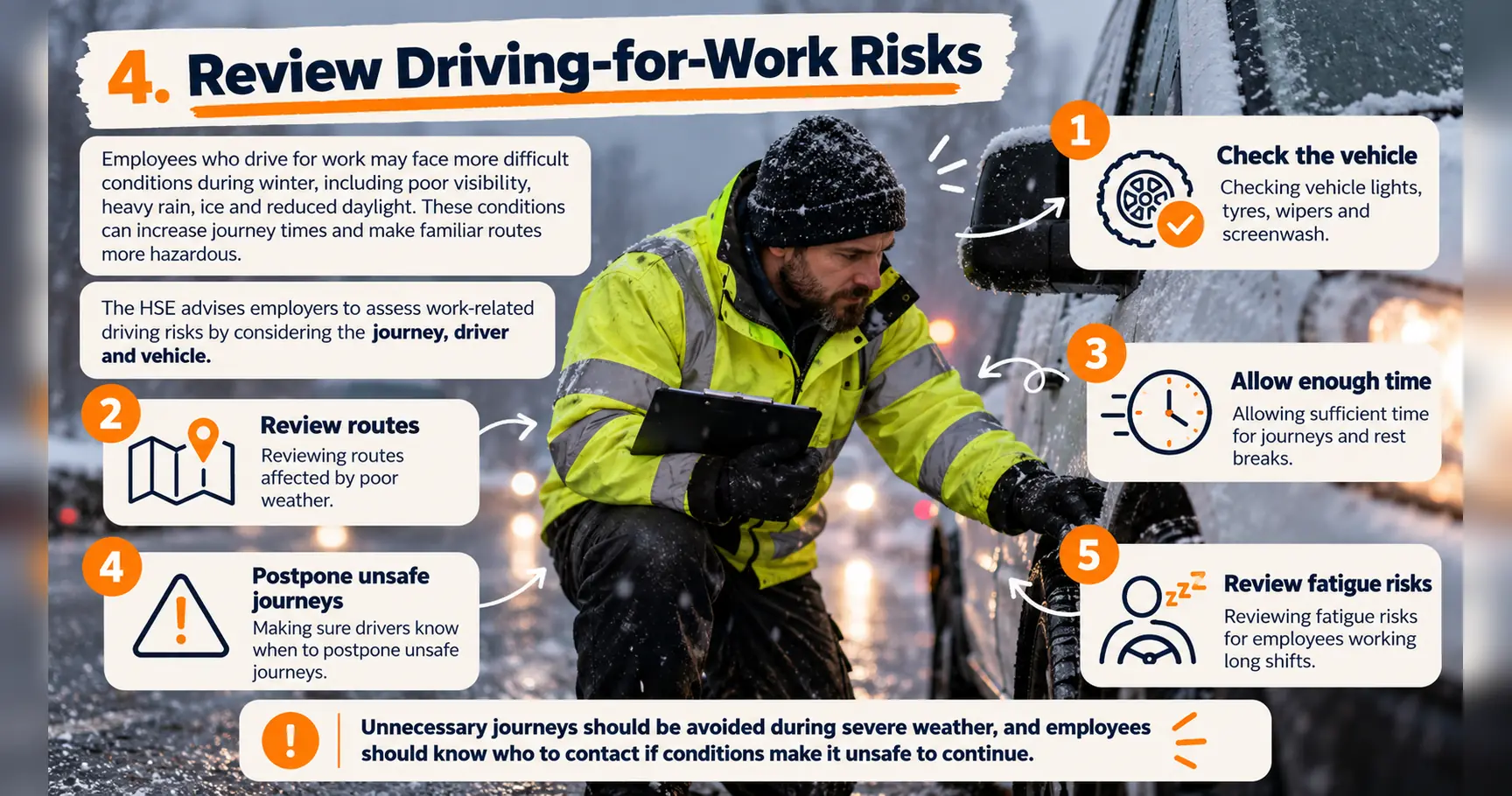
Employees who drive for work may face more difficult conditions during winter, including poor visibility, heavy rain, ice and reduced daylight. These conditions can increase journey times and make familiar routes more hazardous.
The HSE advises employers to assess work-related driving risks by considering the journey, driver and vehicle.
Winter driving checks should include:
- Checking vehicle lights, tyres,
wipers, and screenwash.
- Reviewing routes affected by poor weather.
- Allowing sufficient time for journeys and rest breaks.
- Making sure drivers know when to postpone unsafe journeys.
- Reviewing fatigue risks for
employees working long shifts.
Unnecessary journeys should be avoided during severe weather, and employees should know who to contact if conditions make it unsafe to continue.
5. Check Hi-Vis Clothing and PPE
Reduced daylight and poor weather can make employees harder to see, particularly around moving vehicles and machinery.
Before winter, inspect existing personal protective equipment and check whether additional supplies are needed. This may include high-visibility clothing, weather-resistant workwear, protective footwear and gloves suitable for the work being carried out.
Damaged equipment should be replaced, and employees should understand when particular items are required.
PPE must be suitable for the risks identified, but it shouldn’t replace other safety measures such as lighting and pedestrian segregation.
6. Check Heating, Ventilation and Carbon Monoxide Risks
As temperatures fall, workplaces may begin using heating systems that haven’t been needed for several months. Heating equipment should be inspected and maintained, particularly where gas appliances, temporary heaters or fuel-powered equipment are used.
Carbon monoxide is particularly dangerous because it cannot be seen or smelled. Poorly maintained fuel-burning appliances or equipment used in unsuitable locations can expose employees to harmful concentrations.
Before winter, check that heating equipment is suitable, ventilation openings are unobstructed and any necessary servicing has been completed.
Carbon monoxide detection may also be needed, depending on the equipment being used and the risks identified.
Half-Term and Quiet Periods: Don’t Overlook Contractor Risks
School half-term and other quieter periods often provide opportunities for maintenance, refurbishment and repairs. However, fewer employees on site can also mean fewer people available to supervise work, respond to incidents or notice unsafe conditions.
For example, a contractor carrying out electrical maintenance during half-term may have fewer people working nearby, but that doesn’t necessarily make the job safer. Changes to emergency arrangements, site access or the availability of staff could all affect how the work should be managed.
Before contractors arrive, make sure their risk assessments and method statements reflect the planned work and site conditions.
Contractor management during half term should include checking:
- Relevant risk assessments and
method statements (RAMS).
- Contractor competence and required training.
- Site inductions and emergency arrangements.
- Permits to work where required.
- Supervision, communication, and
access arrangements.
- How completed work and
outstanding hazards will be handed back.
Contractors should know who their main contact is, what to do in an emergency and which areas of the site they can access.
Site managers should also know who is attending, what work they’re completing and who will check the area before normal operations resume.
RAMS That Don’t Take All Day
Risk assessments and method statements are important for planning work safely, but preparing them can take longer than necessary when information is spread across different documents and spreadsheets.
Health and safety managers may spend hours searching for previous assessments, updating control measures and checking whether the correct version has been approved.
Using a structured RAMS template can reduce some of this administration by providing a consistent format for identifying hazards, recording control measures and explaining work methods.
However, assessments must still reflect the task being carried out and the conditions on site. Reusing an old document without reviewing it could mean important hazards are missed, particularly during winter when weather and reduced daylight may require additional precautions.
Digital RAMS management can make documents easier to prepare, update and review by keeping assessments and supporting information together.
Make Winter Safety Checks Part of Your Routine
Completing a winter safety checklist at the start of the season is useful, but conditions can change throughout the colder months. External lights can fail, grit supplies may run low, and walkways that were clear yesterday could become slippery overnight.
Regular inspections allow managers to identify these issues and arrange any necessary work. Instead of relying on emails or spreadsheets, organisations can schedule inspections, assign corrective actions and monitor outstanding tasks.
If an inspection identifies faulty lighting in a loading bay, for example, the issue should be recorded and assigned to the person responsible for repairs. Once completed, the area should be checked again to confirm the problem has been resolved.
Keeping accurate records makes it easier to see which actions remain outstanding and whether reported hazards have been dealt with.
How Evalu-8 EHS Can Help
Evalu-8 EHS helps health and safety teams manage risk assessments, inspections, contractor information and corrective actions in one platform.
Managers can schedule inspections, assign tasks, monitor completion dates and keep relevant records together rather than managing everything through separate documents.
The platform’s RAMS management functionality also supports the creation and management of risk assessments and method statements, reducing repetitive administration.
For organisations managing multiple sites or contractors, having this information accessible makes it easier to follow up on outstanding safety actions.
Preparing Your Workplace for Winter
The clock change is a reminder to review workplace safety arrangements before colder weather arrives. Checking lighting, walking surfaces, lone working procedures and driving arrangements can help identify problems before conditions deteriorate.
Contractor work should also be reviewed, particularly during quieter periods when fewer employees may be available to oversee activities.
Winter inspections should continue throughout the season, with any hazards recorded and followed up until they’re resolved.
Download Your Winter Workplace Safety Checklist
Want to make safety inspections and follow-up actions easier to manage?Book a demo of Evalu-8 EHS to see how the platform can help you manage inspections, risk assessments, and corrective actions.