HR
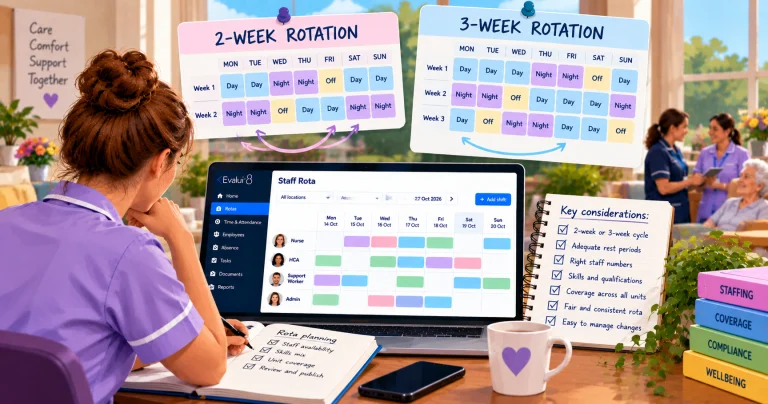
Rotating patterns in healthcare: How 2-week and 3-week cycles should work
Why healthcare teams use rotating rota patterns Healthcare rotas need to do more than fill shifts. They need to maintain safe coverage, share less…
Blog
Practical guidance on health, safety and HR management from the Evalu-8 team.
Why healthcare teams use rotating rota patterns Healthcare rotas need to do more than fill shifts. They need to maintain safe coverage, share less…
Why multi-unit scheduling is a different kind of challenge Some hospices are planning rotas for more than one service at once. That might mean…
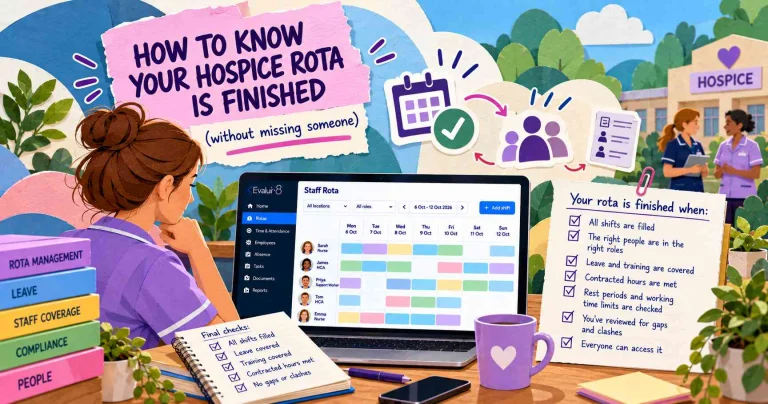
When a rota looks finished but isn’t One of the most frustrating parts of rota planning is that a schedule can look complete long…
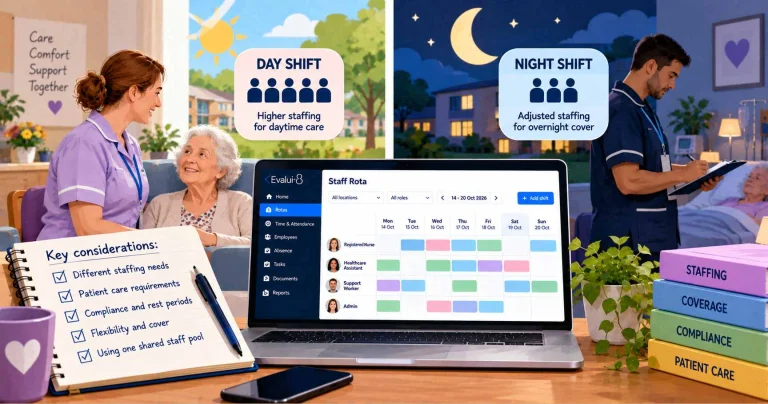
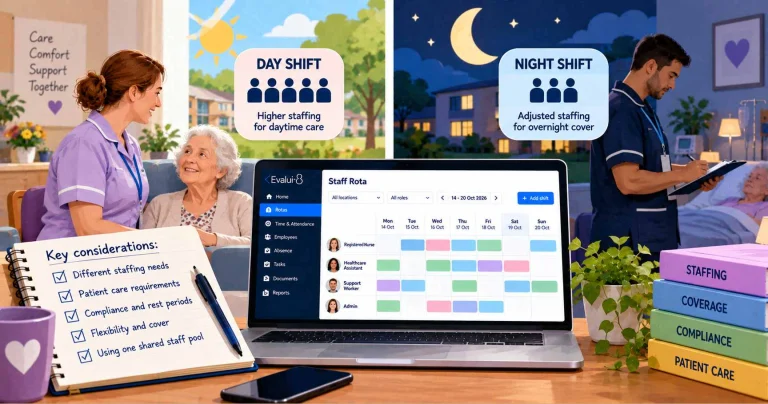
Why hospice staffing changes between day and night Hospice services operate continuously, but the demands of care change throughout the day. During daytime hours,…
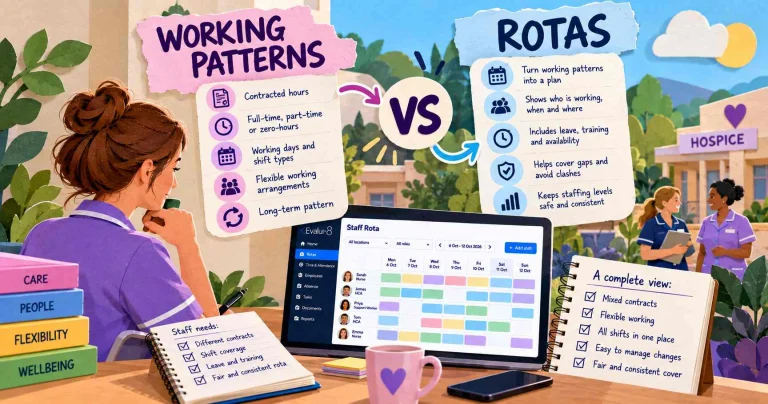
Why this becomes a challenge in hospices Hospice scheduling is rarely as simple as assigning people to shifts. Most teams include a mix of…
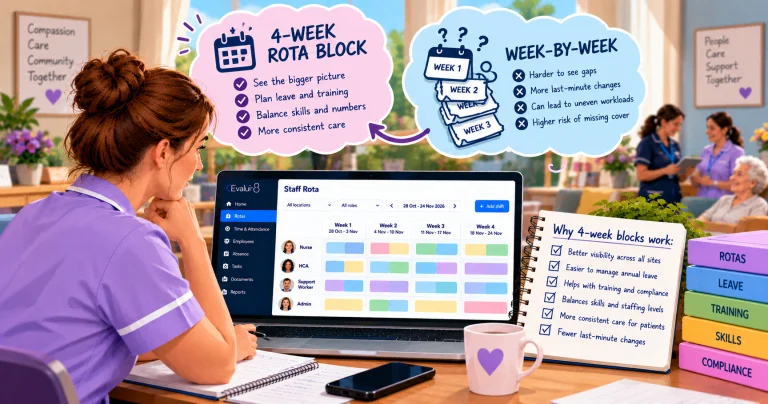
Why structured rota cycles matter in hospice care Hospice scheduling must balance two priorities: ensuring safe clinical coverage and protecting staff wellbeing. Because teams…
Why this simple check prevents rota mistakes One of the most common scheduling mistakes isn’t complicated. It happens when scheduled hours drift away from…
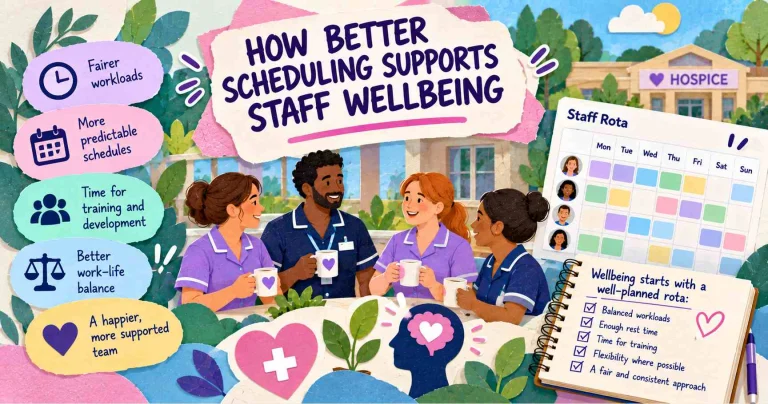
The hidden stress of finalising a hospice rota Finishing a rota often feels like the final step in a long process. Shifts have been…
Safe staffing ratios ensure hospices have the right number of nurses and carers available to deliver safe, compassionate care. Coverage-based rotas help managers plan…
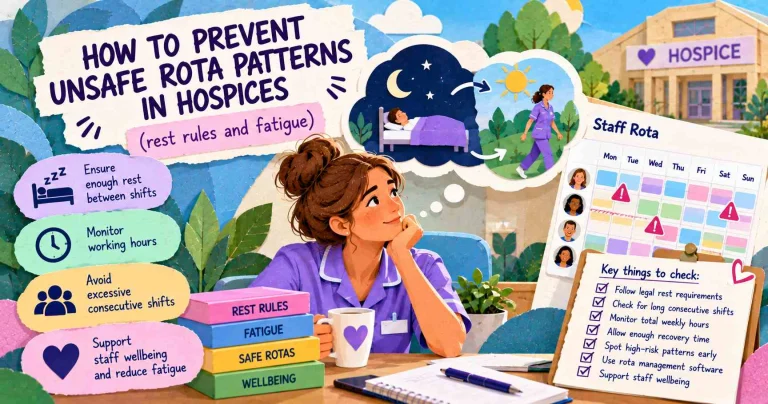
Why safe rota patterns matter in hospice care Hospice care requires clinical precision, emotional resilience and deep compassion. When rota patterns begin to create…