
Manufacturing safety inspection software built around the live operation
Schedule consistent checks, capture useful evidence where work happens, and carry every finding through to verified close-out.
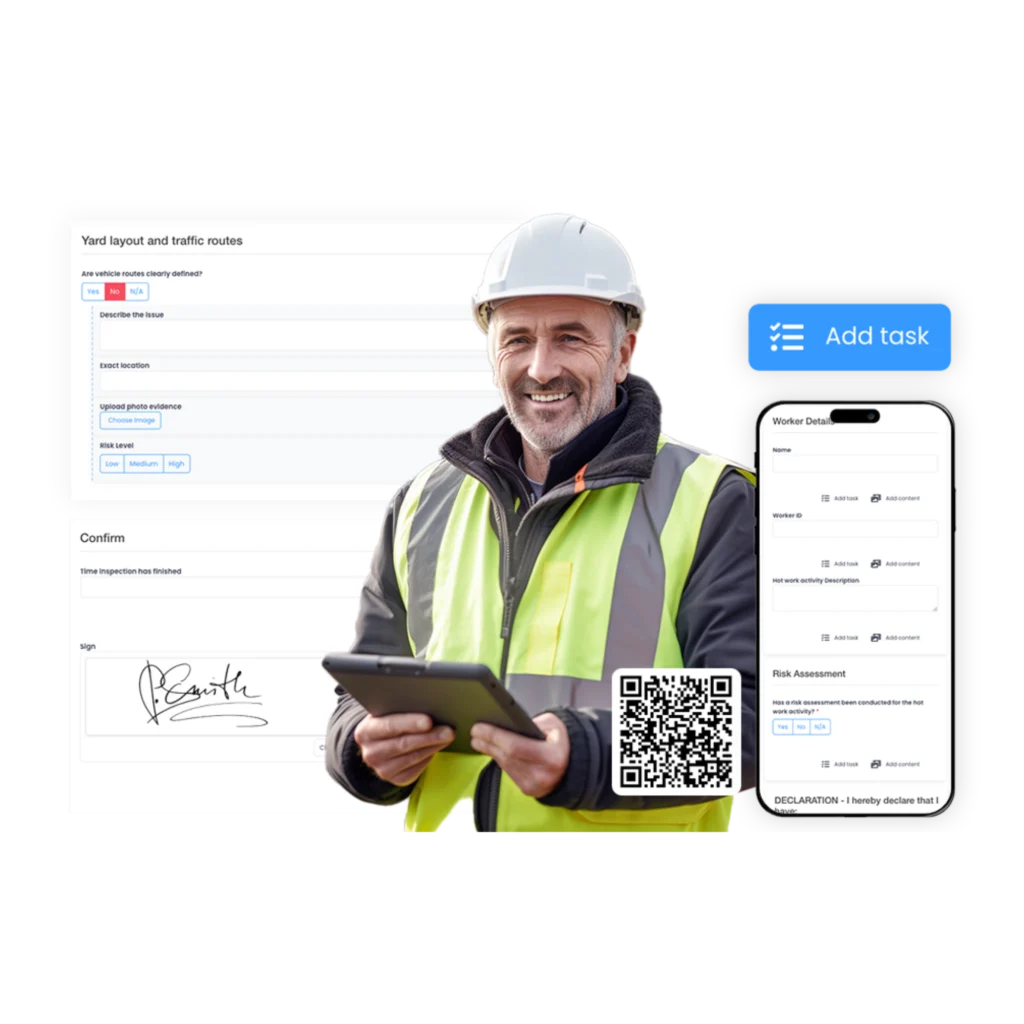
Evalu-8 EHS helps manufacturing safety teams replace paper forms, disconnected photographs and email chasing with one structured inspection trail. Keep a common standard across sites while reflecting machinery, production lines, shifts and work activities.
You are in good company. Trusted by H&S teams from companies like







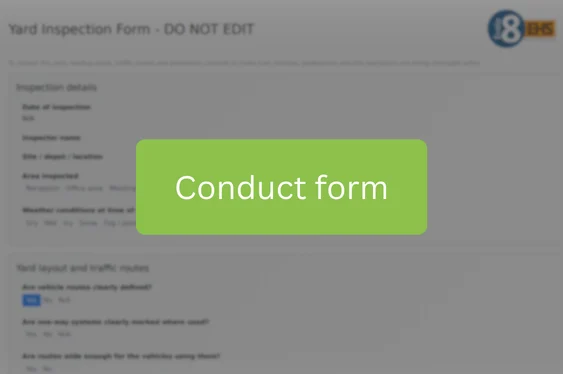
Follow the manufacturing inspection from standard to verified close-out
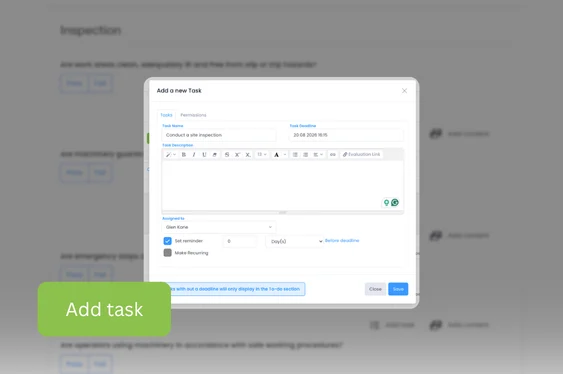
Turn failed checks into clear and proportionate corrective action
Create a controlled core for questions that should apply everywhere, then add the site, line, and activity detail needed to inspect the real operation. The result is comparable where it helps, but specific enough to identify local breakdowns.
- Set organisation-wide questions for shared safety standards.
- Add local machinery, process, and shift conditions.
- Review templates when layouts or operations change.
Schedule the right check for the place, risk and role
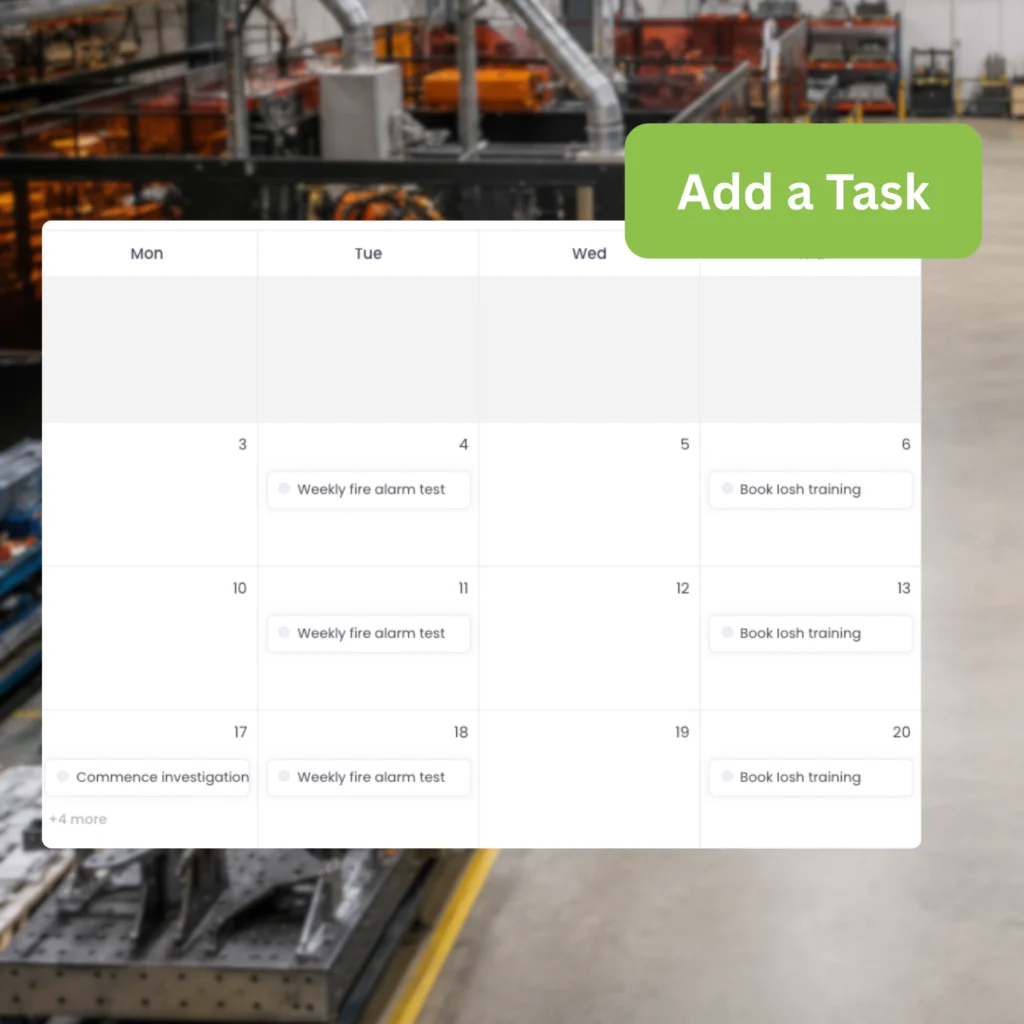
Separate routine shift checks, focused inspections, and formal inspections so every activity has a clear purpose. Assign the manufacturing area, responsible role, and due date before the check is expected, then make gaps visible early.
- Match frequency to risk and changing conditions.
- Assign the site, line, role, and due date.
- See upcoming, completed, and overdue checks.
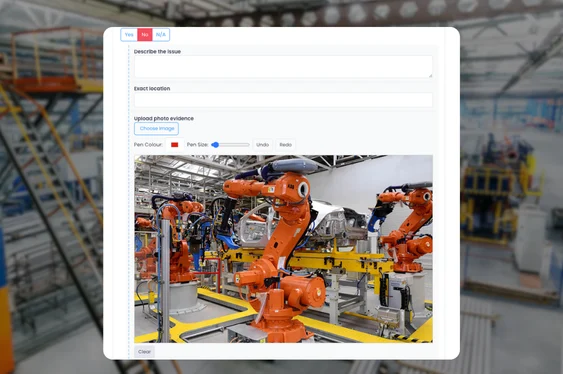
Capture evidence that explains what the inspector actually found
Keep the question, manufacturing location, activity, observation, and photograph together. A reviewer should be able to understand what was expected, what differed, and whether any immediate control was put in place before planned follow-up begins.
- Record the site, area, shift and activity.
- Attach photographs and notes to the relevant question.
- Escalate immediate danger outside normal workflow.
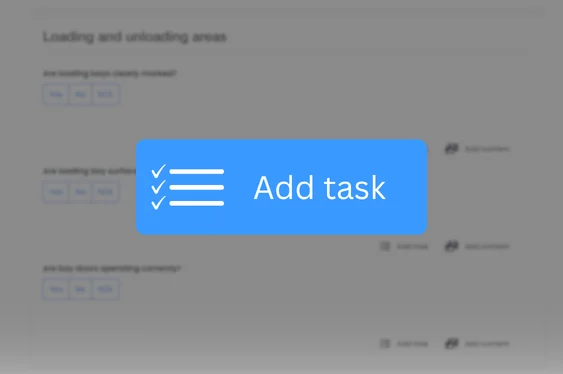
Turn failed checks into clear and proportionate corrective action
Carry the original finding into the action instead of copying a vague summary into an email. Set the priority, named owner, deadline, and expected completion evidence so the manufacturing team knows exactly what needs to change.
- Keep the action linked to its source finding.
- Set a named owner and proportionate deadline.
- Make blocked and overdue actions visible.
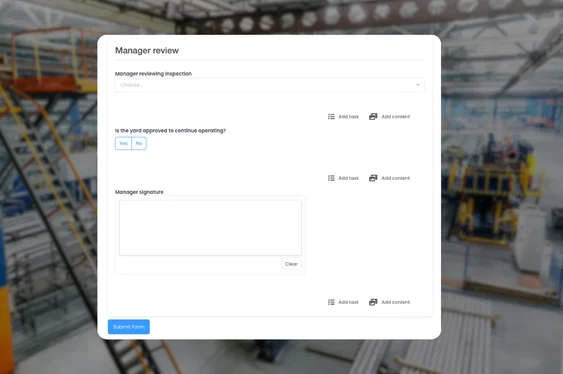
Separate task completion from evidence-led verification
A completion note shows that work was carried out. Verification asks whether it addresses the original finding and leaves the intended control effective. Keep both stages visible and retain the decision, evidence, and history together.
- Define useful completion evidence in advance.
- Give verification to an appropriate reviewer.
- Reopen action when the control remains ineffective.
Keep manufacturing checks consistent without hiding local risk
Build manufacturing checks around observable conditions
Useful questions tell the inspector what to examine and what acceptable control looks like. A question such as “Is the machine area safe?” leaves too much open to interpretation. The template should direct attention to a defined machine, guard, isolation point, process or work activity.
- Layer the template. Combine core standards with site, line and task-specific questions.
- Make questions evidence-ready. Ask for the observation, location and supporting record needed to understand a failure.
- Keep governance clear. Control who can change templates and when a revision should take effect.
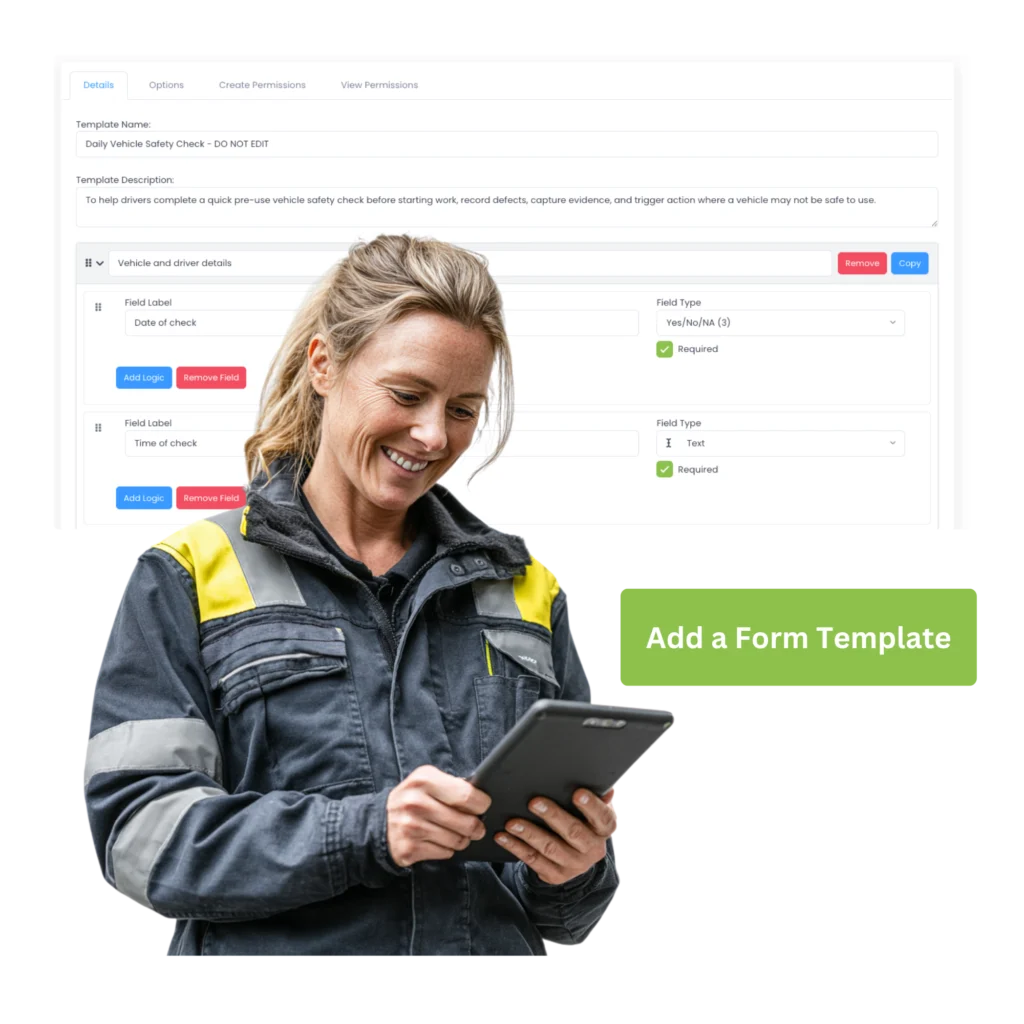
Put the right check in the right hands
Match the check to the risk, place and responsible role
A manufacturer rarely needs every question at the same frequency. Scheduling should reflect how quickly conditions can change, the consequence of failure, previous findings, incidents and the people available to carry out a meaningful check.
- Assign ownership before the check is due. Make the site, area, role and deadline explicit.
- Use proportionate frequencies. Separate routine shift checks from focused inspections and formal inspections.
- See gaps early. Review due, completed and overdue activity without rebuilding a spreadsheet.
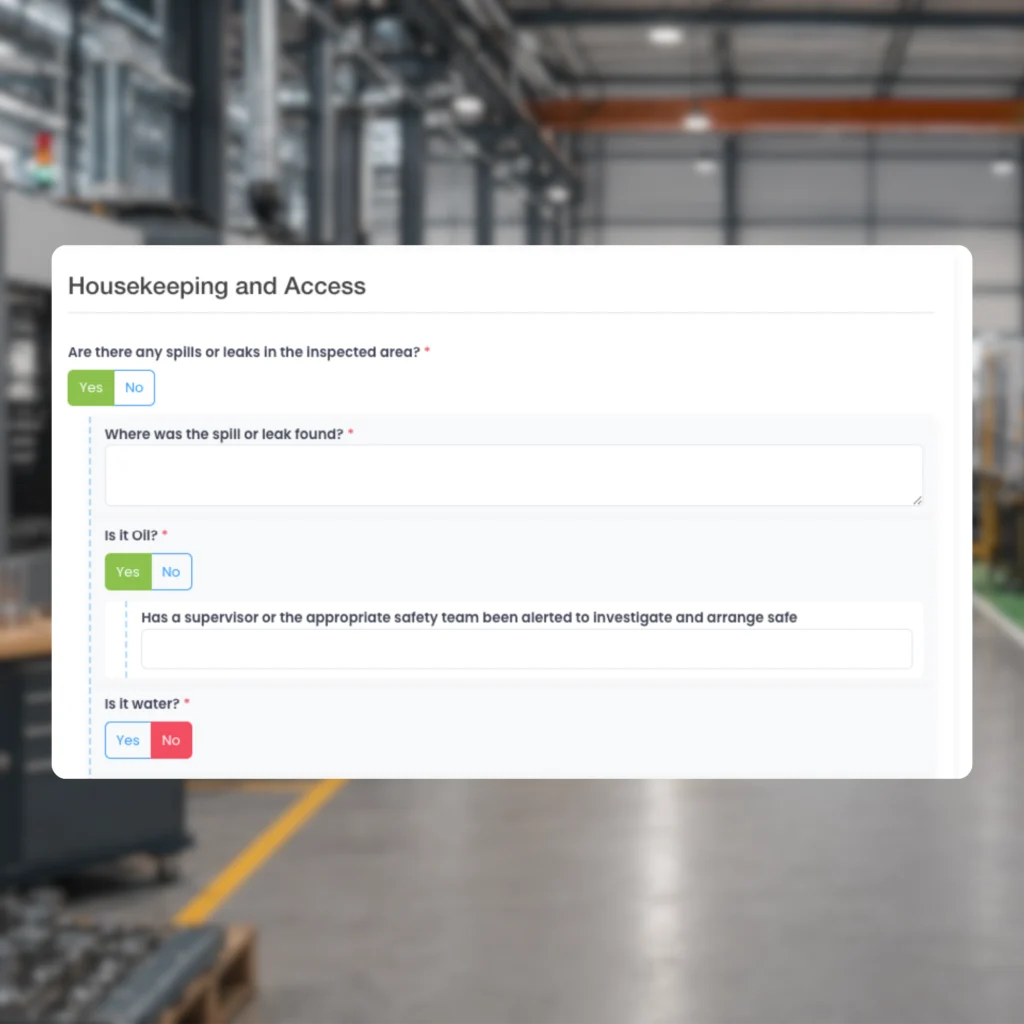
Give every finding the context needed for action
Capture enough evidence to support the next decision
The record should let a reviewer understand what was expected, what the inspector observed, and why the result matters. Evalu-8 EHS can organise notes, photographs, and findings in the inspection record, while the inspector remains responsible for the quality of the observation and any immediate judgement.
- Record the operational context. Include the site, line, shift, activity and equipment where relevant.
- Attach evidence to the question. Keep photographs and notes beside the finding they support.
- Respond to immediate danger. Do not wait for software workflow where work must be stopped, isolated or controlled at once.
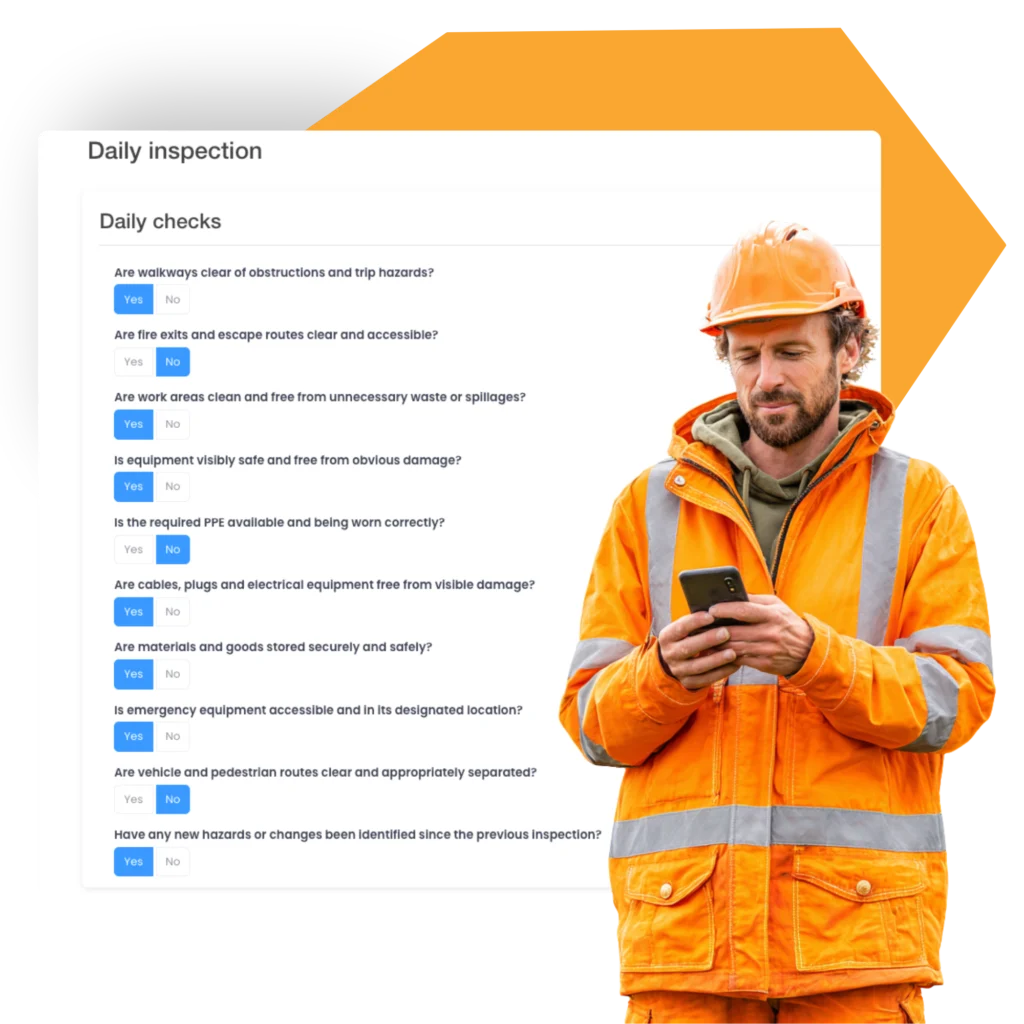
Manufacturing inspections that support the full inspection journey
Keep one standard without hiding local risk
Use controlled core questions across the group, then reflect the machines, processes, guarding and work activities at each manufacturing.
Give every finding enough operational context
Keep the question, location, observation, photograph and immediate response together so the reviewer can understand what happened.
Control action through to verified closure
Assign ownership and deadlines, retain completion evidence and let an authorised reviewer decide whether the original risk is now controlled.
See a manufacturing inspection move from schedule to close-out
Follow one machine-area inspection from the site-specific template and assigned schedule through evidence capture, corrective action, completion and verification, then review the position across several manufacturing sites.
Give failed checks a clear route to action
Turn failed checks into owned, proportionate action
A finding needs a response that reflects its seriousness. Some conditions require immediate containment before the inspection continues. Others can move into planned corrective work, but every action still needs a clear owner, deadline and expected evidence.
- Keep the source visible. Link the action to the question, observation and evidence that created it.
- Set clear accountability. Name the owner, priority, deadline and the change required.
- Track exceptions. Make overdue, blocked or reassigned actions visible to the people responsible for oversight.
Adapt the inspection programme to the manufacturing operation
Use one controlled process while adapting the assessment, evidence and plan to the project being completed.
Discrete manufacturing
Machinery, assembly cells and material movement across changing production schedules.
Process manufacturing
Chemicals, pressure, temperature and process controls that need specialist inspection questions.
Food and drink production
Hygiene, machinery, cleaning, substances and maintenance around live production.
Fabrication and engineering
Cutting, welding, lifting, guarding and maintenance across workshops and yards.
Packaging and converting
Fast-moving lines, changeovers, guarding and operator intervention points.
Multi-site manufacturing groups
Shared standards across plants with different machinery, layouts, processes and local risks.
Connect the information from inspection design to verified close-out
The inspection record should carry useful context forward rather than forcing every reviewer, action owner or site manager to reconstruct what happened.
-
Define
Set the standard, site, area and observable question.
-
Schedule
Carry forward the owner, frequency, shift and due date.
-
Inspect
Record the observation, location, photograph and immediate response.
-
Act
Keep priority, owner and deadline linked to the finding.
-
Verify
Review completion evidence against the original condition.
-
Learn
Use repeat themes to improve controls and the inspection programme.
What is manufacturing safety inspection software?
Manufacturing safety inspection software helps organisations plan and record manufacturing safety inspections, capture evidence against defined questions, assign corrective actions and retain the history through to reviewed close-out.
It connects the site, line, shift, question, observation, evidence, owner and verification decision in one structured process. The software supports organisation and visibility, while competent people remain responsible for deciding what to inspect, judging the condition found and confirming whether the risk is controlled.
How manufacturing inspections sit alongside other key safety records
Risk assessments
Identify hazards, affected people and the controls required for manufacturing work.
Inform the inspection standard.Equipment records
Show checks, servicing, maintenance and examinations for work equipment.
Do not replace specialist or statutory checks.Incident records
Capture events, investigations, causes and the action taken afterwards.
Help focus future inspections.Training records
Show learning, authorisation and recorded competence information.
Support, but do not prove live competence.RAMS and permits
Control defined higher-risk, non-routine or authorised work.
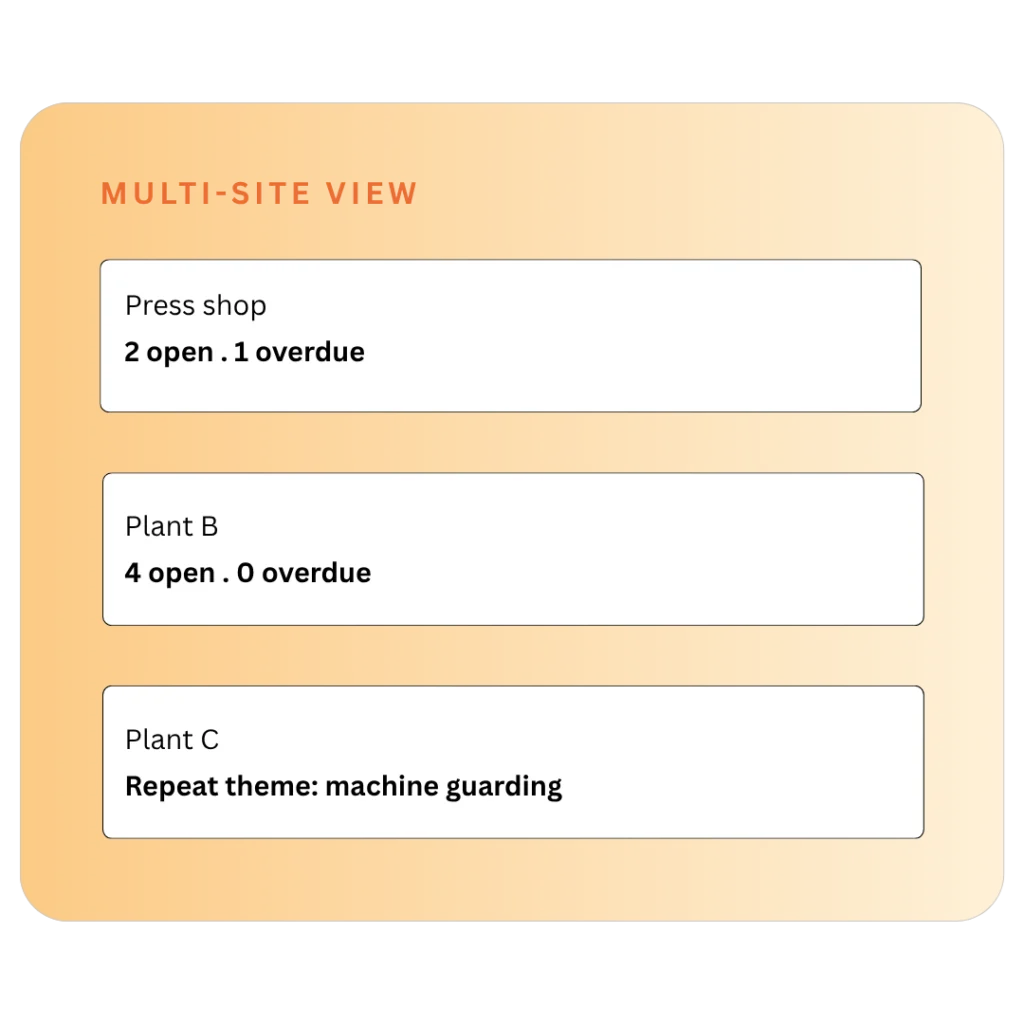
SControl the activity, not the inspection itself.See which sites need attention before actions drift
See where attention is needed without relying on one headline score
Multi-site views can help a group safety lead spot overdue actions, gaps in scheduled activity and repeated themes. They should support enquiry, not flatten unlike operations into a league table.
- Filter activity by site, area, owner and status.
- Review serious individual findings as well as aggregate results.
- Use trends to challenge the inspection programme, controls and local support.
What health and safety law expects from manufacturers
In Great Britain, employers must protect employees and others affected by their work, assess risk and maintain effective arrangements for planning, organisation, control, monitoring and review. The law does not prescribe one document called a manufacturing safety inspection, but inspections and audits can form part of how an organisation checks whether its arrangements are present and working.
HSE work-equipment and risk-management guidance directs attention to the machinery, people and work processes, including machinery selection, guarding, inspection, maintenance, training and safe use. The inspection programme should reflect the real operation and change when risks, layouts, equipment or work patterns change.
- Health and Safety at Work etc. Act 1974Sets general duties to protect employees and others who may be affected by the undertaking.
- Management Regulations 1999 Require suitable and sufficient risk assessment and effective arrangements for planning, control, monitoring and review.
- HSE work equipment inspection guidance Explains when work equipment needs inspection and why deterioration should be found and remedied before it creates risk.
- HSE machinery safety and PUWER guidanceExplains duties concerning suitable equipment, safe use, guarding, controls, maintenance, inspection and training.
Questions manufacturing safety buyers should ask
Is manufacturing safety inspection software the same as a digital checklist?
No. A checklist may capture answers, but a useful inspection system should also manage templates, schedules, evidence, findings, ownership, deadlines, completion and verification. Buyers should test the complete journey rather than judging the form alone.
Is manufacturing safety inspection software the same as a digital checklist?
A common core can make standards consistent, but local questions should reflect the site layout, machinery, processes, shift activities, and emergency arrangements. One unchanged template risks missing material differences.
Can every manufacturing site use the same inspection template?
No. Risk assessments identify hazards, affected people and controls. Inspections and inspections can test whether arrangements are present and working, but they do not automatically replace a suitable and sufficient risk assessment.
Can every manufacturing site use the same inspection template?
Evalu-8 EHS can keep actions linked with the EHS record that raised them, with owners, due dates, status, and evidence. Confirm the exact inspection-to-task workflow during the product demonstration.
Does Evalu-8 replace manufacturing risk assessments? +
Evalu-8 publicly supports task visibility across sites. A multi-site buyer should ask to see how inspection schedules, permissions, templates, filters, and dashboards work for its own structure before deciding.
Does Evalu-8 replace manufacturing risk assessments? +
No. Compliance depends on the organisation’s risks, arrangements, competent decisions, and effective action. Software can organise and evidence parts of that process, but cannot guarantee the outcome.