
RAMS Software for Steel Fabricators
Build site-specific RAMS around the steelwork, fabrication process, lift, installation sequence and work area.
Evalu-8 EHS helps steel fabricators keep the assessment, method, drawings, review, current version and workforce acknowledgement together from workshop preparation to site installation.
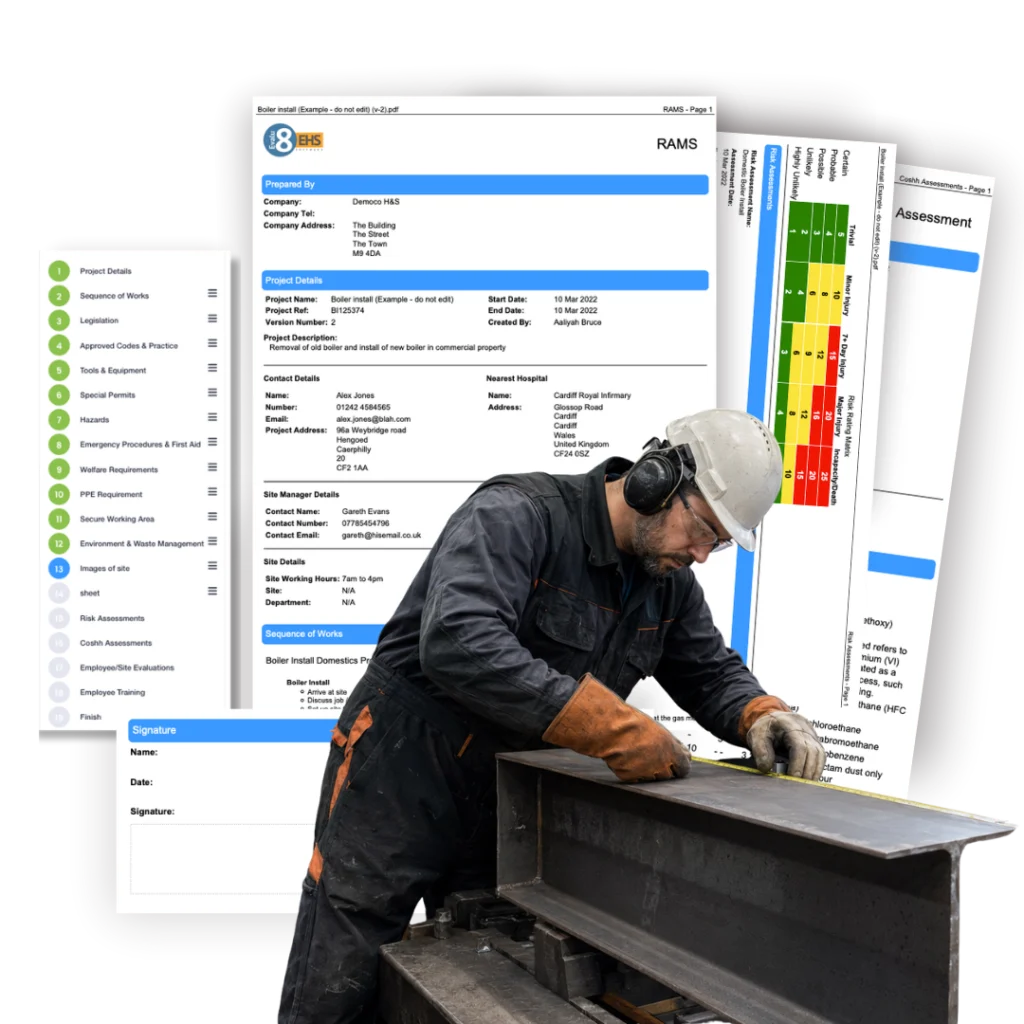
Built for controlled RAMS management across UK organisations








Build, approve and issue steel-fabrication RAMS in one connected process
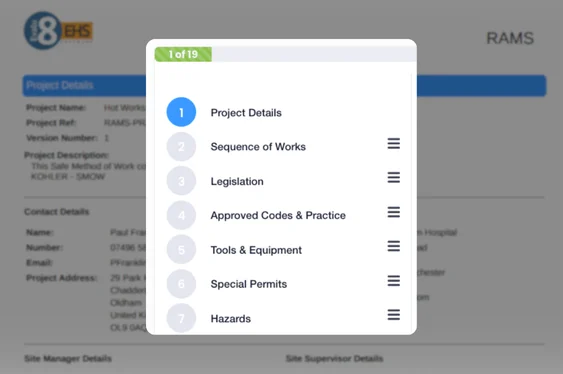
Start with a controlled structure for the complete steelwork job
Bring the assessment, workshop and site sequence, equipment, lifting arrangements, PPE, access, and emergency actions into one organised RAMS. The structure supports the author, while competent people remain responsible for technical decisions.
- Keep assessment and method information together.
- Prompt authors for relevant steelwork arrangements.
- Produce one controlled job record.
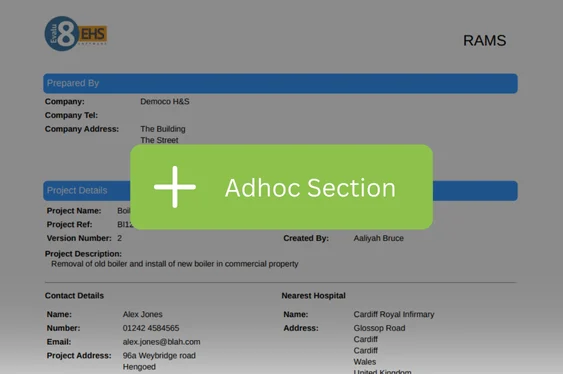
Adapt controlled content to the actual steelwork and site
Reuse approved methods and controls, then challenge them against the sections, weights, connections, access, lifting arrangement, weather and surrounding activity. Keep the benefit of a repeatable standard without issuing a generic method.
- Reuse approved method and control content.
- Add ad-hoc sections for unusual work.
- Require project-specific author decisions.
Make the scope and site constraints clear from the start
Record the client, location, ACM, condition, quantity, work area, access, occupancy, and interfaces that shape the plan. Keep survey extracts, photographs, and drawings close to the job rather than in a separate email chain.
- Capture material and work-area details.
- Attach relevant survey information.
- Record access and surrounding constraints.
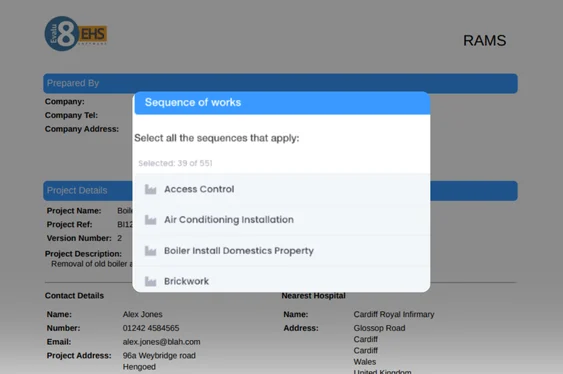
Set out a sequence from workshop preparation to handover
Describe how steel will be prepared, loaded, delivered, lifted, positioned, connected, stabilised, and handed over. Connect each stage with the people, equipment, controls, and hold points needed for safe completion.
- Sequence workshop and site activities.
- Connect lifting, access and stability arrangements.
- Include change and emergency actions.
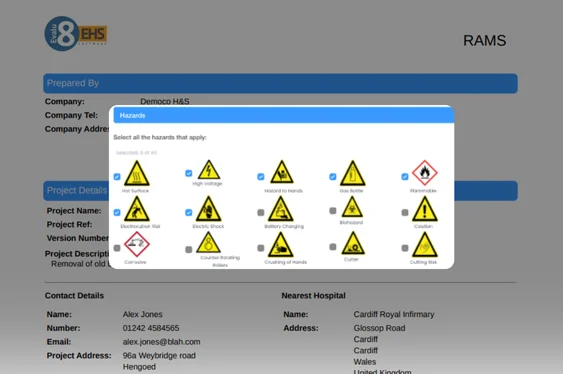
Connect fabrication and erection hazards to each stage
Record welding fume, hot work, machinery, sharp edges, manual handling, suspended loads, work at height and instability where they arise. Avoid a generic list by linking hazards to the task and people affected.
- Cover workshop and site hazards.
- Identify who may be affected.
- Keep hazards connected to the method.
Put the actual steelwork and site into every RAMS
Build the document around the real work package
A useful RAMS starts with the steelwork and the place where it will be fabricated, delivered or installed. Record the sections, weights, drawings, work area, access, interfaces and people involved before selecting the method.
- Capture the real scope. Record members, connections, location and planned work.
- Keep source information close. Attach drawings, photographs and relevant plans.
- Define the interfaces. Include deliveries, access, other trades and live operations.
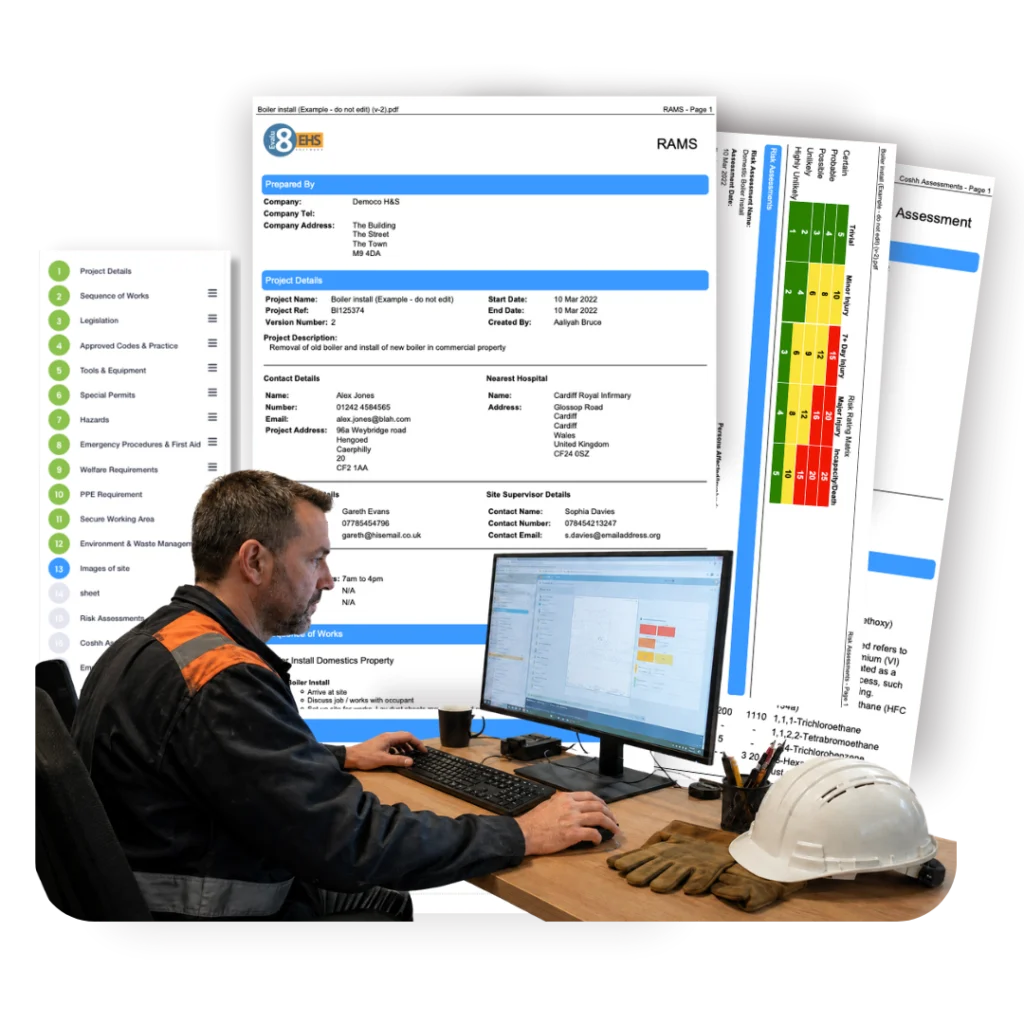
Reuse proven methods without making steelwork RAMS generic
Standardise repeat work and challenge what changes
Approved fabrication and installation methods can save drafting time, but the author still needs to test them against the actual sections, weights, lifting arrangement, connections, access, weather and surrounding activity.
- Reuse controlled content. Start from approved methods and precautions.
- Require job-level editing. Adapt the sequence to the actual project.
- Protect the standard. Control who can amend shared library content.
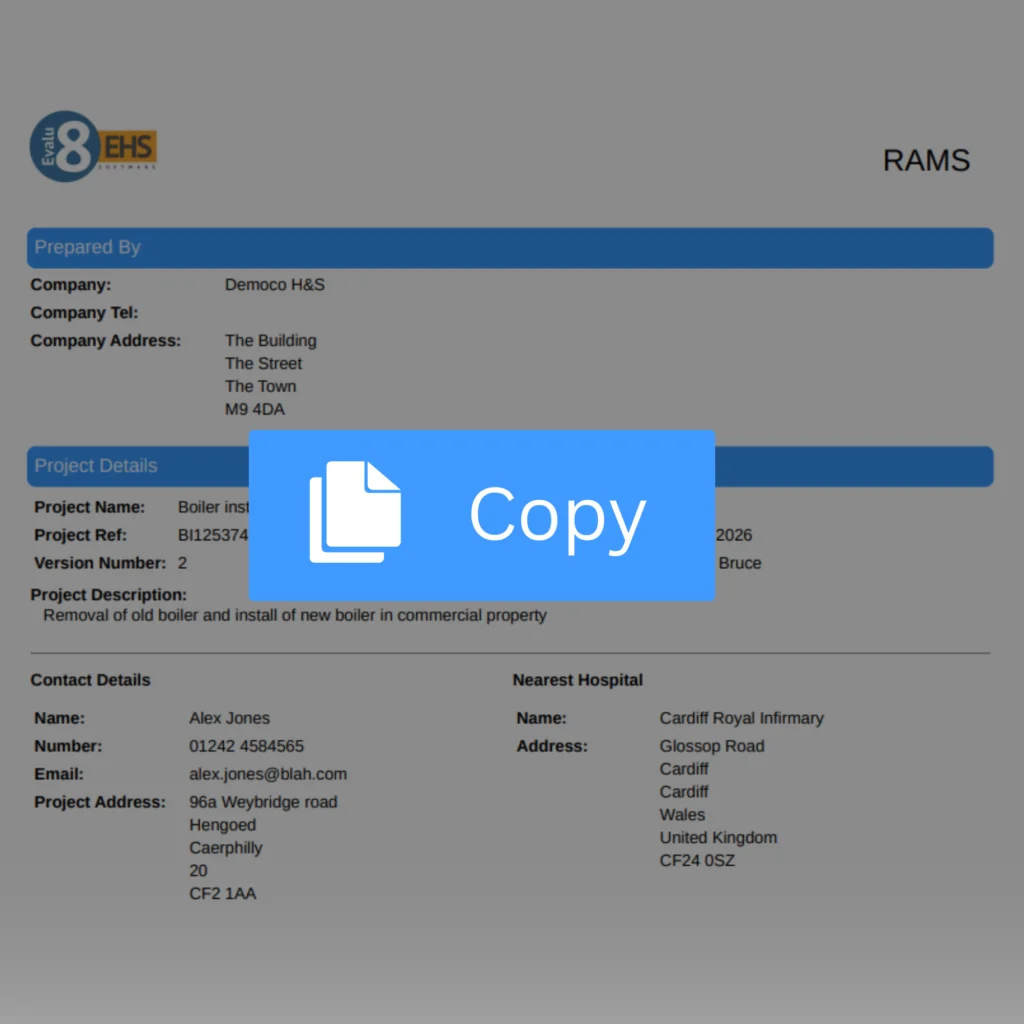
Build ad-hoc RAMS around unusual steelwork
Customise every RAMS to suit the job
Not every fabrication or installation package will fit an existing template. Add ad-hoc sections when the job involves an unusual connection, temporary support, restricted access or additional client requirement.
- Add what the job needs. Create sections for project-specific information.
- Customise the structure. Include details outside the standard template.
- Keep it site-specific. Record the hazards, controls and method for the actual work.

RAMS that support the complete steelwork journey
Create site-specific steelwork RAMS
Build around the sections, work area, fabrication process, lift and installation sequence rather than copying a broad construction template.
Keep drawings, review and versions connected
Retain supporting information and document history so reviewers can identify what was approved and issued.
Show who received the current document
Keep workforce acknowledgement tied to the version issued before workshop or site work begins.
See steelwork RAMS move from scope to site acknowledgement
Follow a fictional portal-frame project through job details, fabrication and erection sequence, hazards and controls, drawings, review, current-version issue, workforce acknowledgement and controlled change.
Make every steelwork change visible before reissue
Keep the reviewed method and current version clear
Approval should show which RAMS was reviewed, who reviewed it and what changed. When the steelwork, crane position, access, weather limits, equipment, connections or erection sequence changes, the method should return through the appropriate review before reissue.
- Record named review. Keep reviewer, date and decision visible.
- Explain each revision. Show why the document changed.
- Retain the history. Preserve earlier versions without leaving them current.
Adapt the RAMS to the steelwork being controlled
Use one controlled process while adapting the assessment, evidence and plan to the project being completed.
Workshop fabrication
Cutting, drilling, welding, grinding and handling steel within a controlled fabrication environment.
Structural-steel erection
Delivery, lifting, positioning, bolting and stabilising frames on active construction sites.
Stairs and balustrades
Installation involving awkward components, interfaces, access equipment and occupied areas.
Plant platforms and gantries
Work around machinery, services, production areas and restricted access.
Alterations and strengthening
Survey-led work involving temporary support, existing structures, hot work and changing discoveries.
Repair and maintenance
Planned or reactive steelwork where isolation, access, permits and surrounding activity must be clear.
Connect the information from steelwork scope to site handover
The RAMS should carry useful information forward instead of forcing workshop, project and site teams to reconstruct the job.
-
Scope
Record steelwork, drawings, weights, location and planned activities.
-
Fabricate
Set out workshop processes, equipment, hazards and controls.
-
Plan site work
Connect delivery, lifting, access, connections and stability.
-
Review and issue
Approve the method and make the current version available.
-
Control change
Review changed conditions before continuing under a revised method.
-
Handover
Retain completion information, final issue and project history.
What is RAMS software for steel fabricators?
RAMS software for steel fabricators helps firms create, review, issue and control job-specific risk assessments and method statements for workshop fabrication, delivery, lifting and site installation.
It can keep information about the steelwork, work area, sequence, hazards, controls, equipment, drawings, versions and acknowledgements together. Competent people remain responsible for structural decisions, welding procedures, lifting plans, temporary stability, supervision and safe execution.
How steelwork RAMS sit alongside other controlled project records
Fabrication drawings
Define the members, connections, dimensions and project requirements.
Inform the scope and sequence.Lift plan
Plans the lifting operation, resources, equipment and responsibilities.
Supports the lift; is not replaced by RAMS.Welding records
Control relevant procedures, qualifications and inspection information.
Support fabrication quality and competence.Permit to work
Authorises defined higher-risk activity under site-specific conditions.
Controls the live activity where required.Equipment records
Record relevant inspections, examinations and equipment status.
Support suitability; do not replace pre-use checks.Put the current steelwork RAMS where work happens
Make controlled site access part of document issue
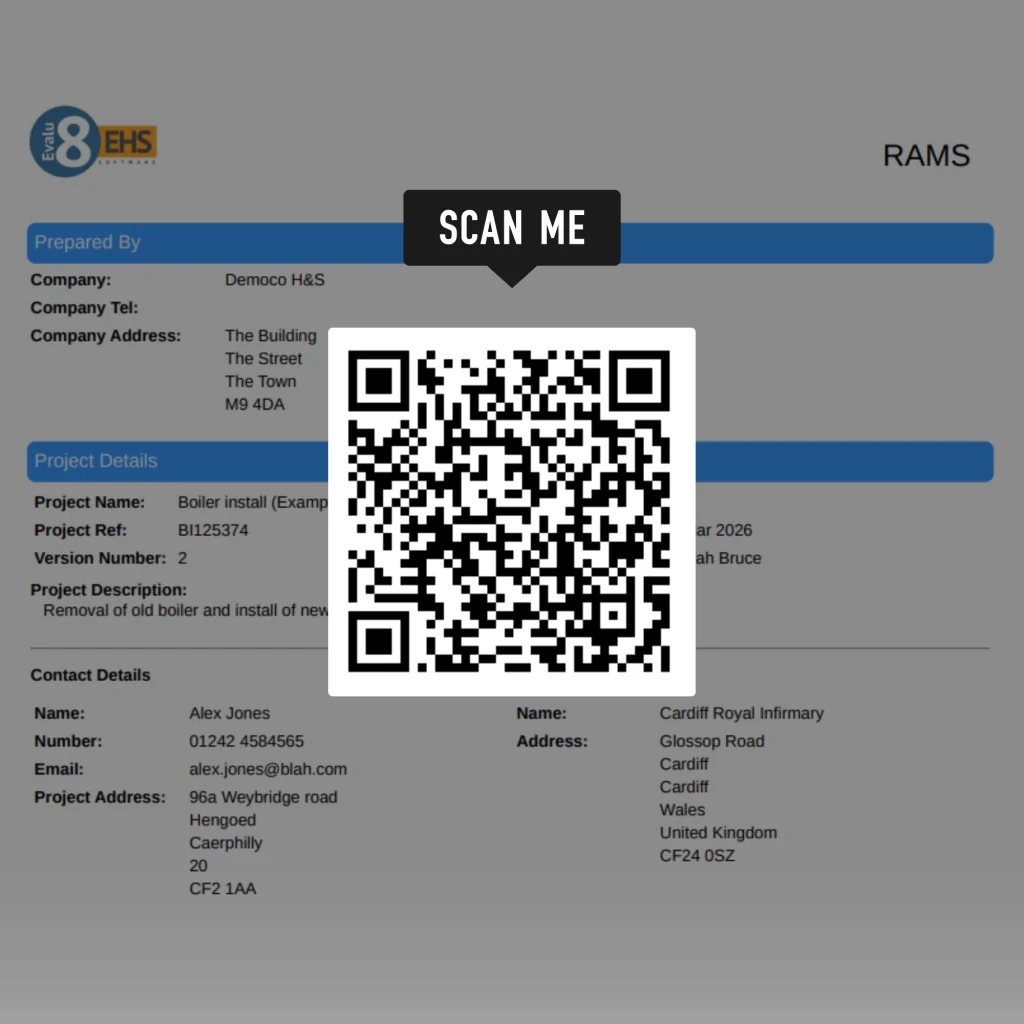
Site access should point to the approved current version, not a PDF saved to one supervisor’s phone. Where QR or mobile access is configured, teams can open the live record while the document owner retains control of revisions.
- Make the approved current issue easy to find.
- Reduce reliance on downloaded or renamed PDFs.
- Withdraw and reissue information after controlled change.
What Great Britain law expects from steelwork planning
Health and safety law does not require every job to use a document called a RAMS. It does require employers and contractors to assess risks, plan the work, apply suitable controls and provide relevant information, instruction, training and supervision
For construction steelwork, CDM 2015 requires work to be planned, managed and monitored. Welding fume falls under COSHH, work equipment under PUWER, lifting equipment and operations under LOLER, and work at height must be properly planned and carried out using suitable equipment. The exact duties depend on the work and circumstances.
- CDM Regulations 2015 Require construction work and the risks arising from it to be planned, managed and monitored by relevant dutyholders.
- COSHH and welding-fume guidance Require exposure to hazardous substances and process-generated welding fume to be prevented or adequately controlled.
- PUWER 1998 Covers suitable work equipment, maintenance, inspection, information, instruction and training.
- LOLER 1998 Requires lifting operations to be properly planned, appropriately supervised and carried out safely by competent people.
- Work at Height Regulations 2005 Require work at height to be planned, supervised and carried out by competent people using suitable equipment.
Questions steel fabricators should ask
What is RAMS software for steel fabricators?
It is software for creating, reviewing, issuing, and controlling job-specific risk assessments and method statements for workshop fabrication, delivery, lifting, and site installation.
What is RAMS software for steel fabricators?
Yes. Evalu-8 supports templates and method libraries. Each copied document still needs to be checked and adapted to the actual steelwork, site, access, lifting arrangement, connections, people and surrounding activity.
Can we reuse RAMS for repeat steelwork?
Yes. Project-specific sections can record unusual connection methods, temporary support, restricted access, additional client requirements or other information outside the standard structure.
Can we reuse RAMS for repeat steelwork?
Evalu-8’s public RAMS information supports diagrams, plans, photographs, and supporting documents. These records inform the RAMS but retain their own purpose and competent ownership.
Can ad-hoc sections be added for unusual work?
No. A lift plan, welding procedure, fabrication drawing, permit, or equipment examination record has a distinct purpose. The RAMS may reference or include relevant information but does not make those records interchangeable.
Can ad-hoc sections be added for unusual work?
Evalu-8 publicly supports digital signatures, timestamps and acknowledgements. The contractor should ensure each acknowledgement refers to the applicable version and accompanies a suitable briefing.
Can drawings, lift plans and photographs be attached?
Review when the steelwork, weight, lifting arrangement, crane position, access, weather, connections, temporary stability, equipment, people, surrounding activity or programme changes, or when the method is no longer suitable.
Can drawings, lift plans and photographs be attached?
Evalu-8 should not be treated as structural-design, detailing, welding-quality, crane-planning or temporary-works software. It is strongest where controlled RAMS need to sit within a broader EHS workflow.
Does the RAMS replace the lift plan or welding procedure?
No. Software can structure, communicate, and evidence parts of the process. Compliance depends on competent assessment, design, planning, control, supervision, implementation, and review.