
RAMS Software for Asbestos Removal Contractors
Build site-specific RAMS around the real ACM, enclosure, removal method, workforce, and work area.
Evalu-8 EHS helps asbestos contractors keep the risk assessment, method statement, supporting plans, review, approval, current version, and operative acknowledgement together. Reuse controlled content without turning specialist removal work into a generic document.
You are in good company. Trusted by H&S teams from companies like








Every installation RAMS, under your control
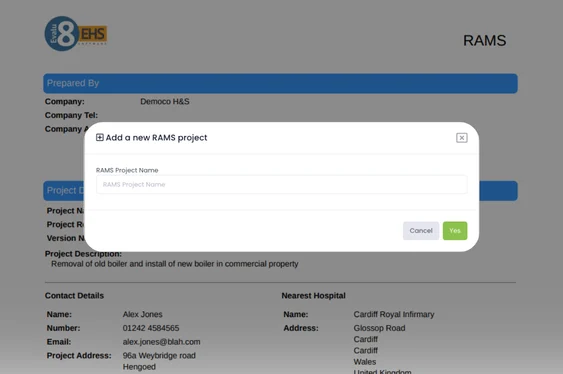
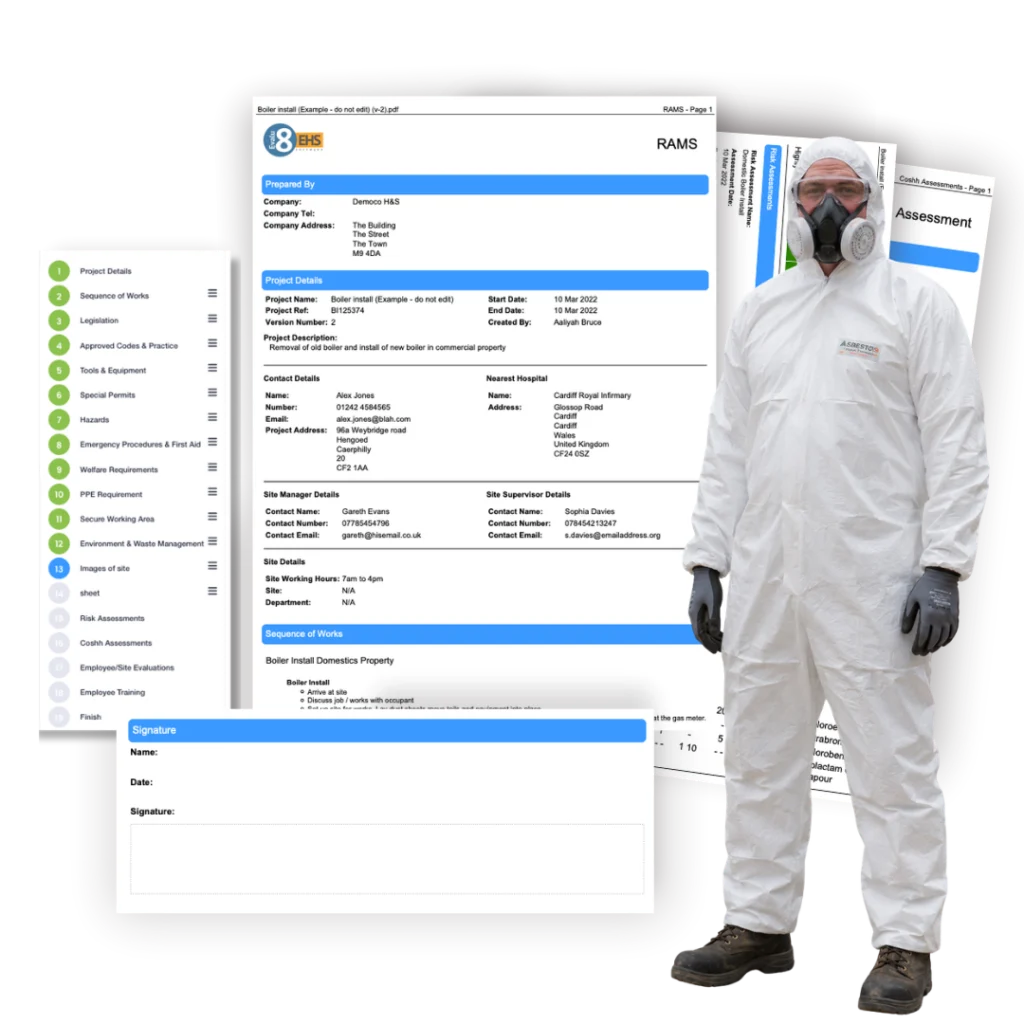
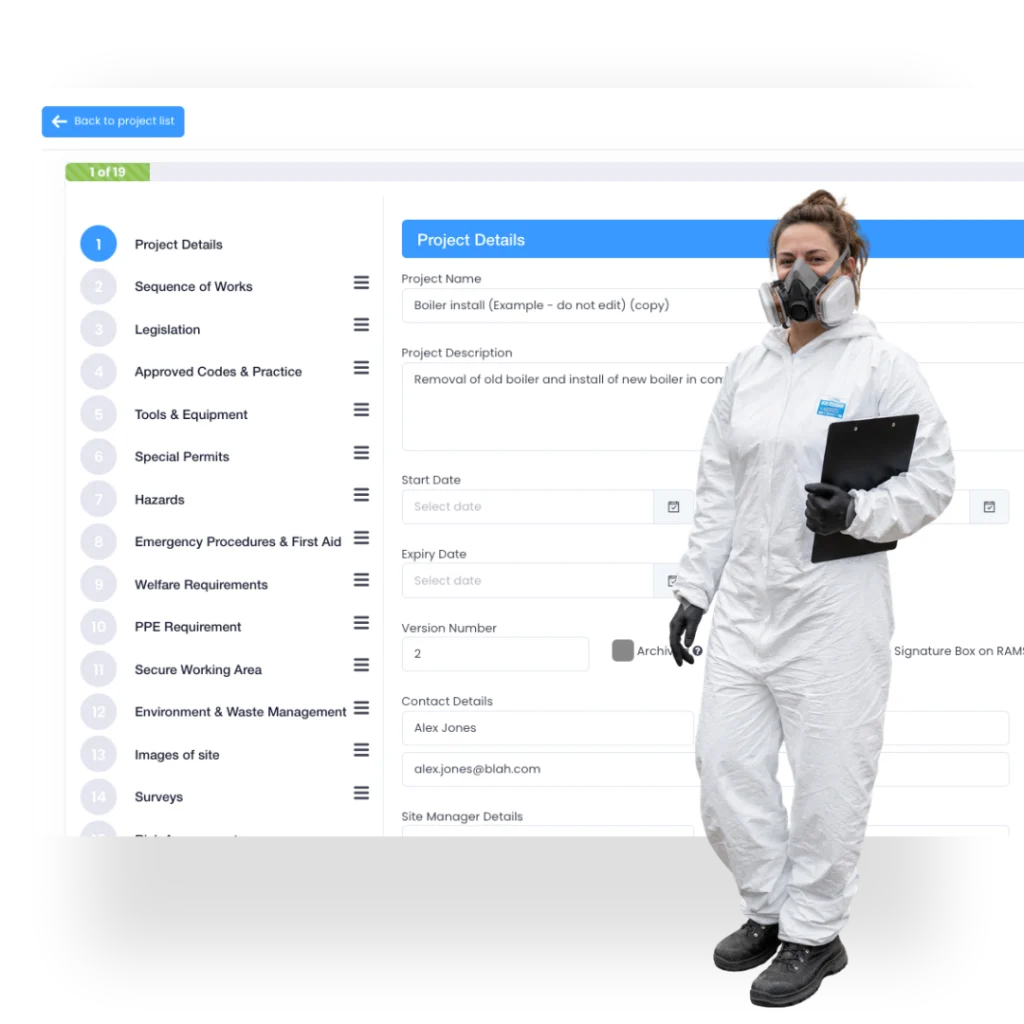
Start with a controlled structure for the complete job
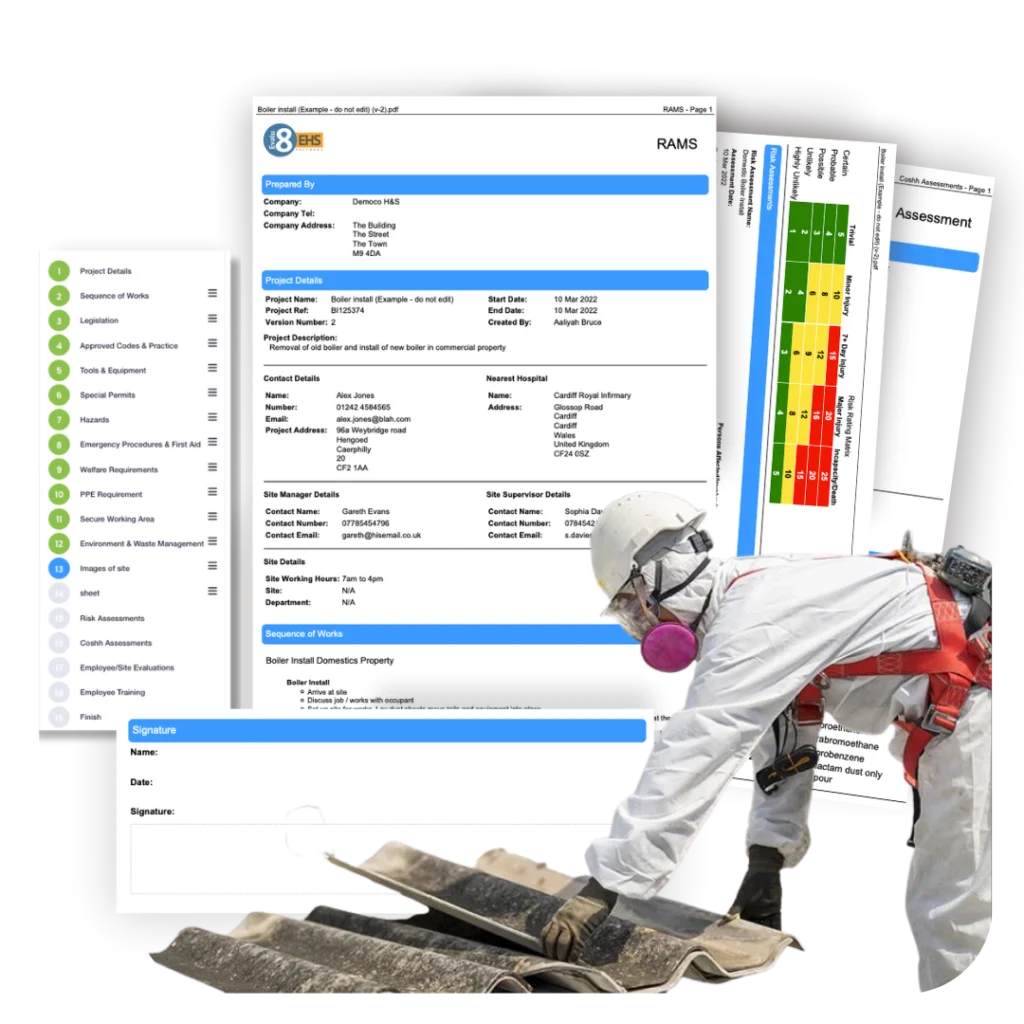
Bring the assessment, removal sequence, enclosure information, equipment, PPE/RPE, decontamination, waste arrangements and emergency response into one organised RAMS. The structure supports the author without making the technical decisions for them.
- Keep assessment and method information together.
- Prompt authors for relevant supporting arrangements.
- Produce one controlled job record.
Adapt approved content to the actual asbestos removal site
Reuse controlled methods and controls, then challenge them against the identified ACM, fixing, access, enclosure, services and surrounding activity. The author keeps the benefit of a repeatable standard without issuing a generic method.
- Reuse approved method and control content.
- Require site-specific author decisions.
- Protect shared libraries from uncontrolled editing.
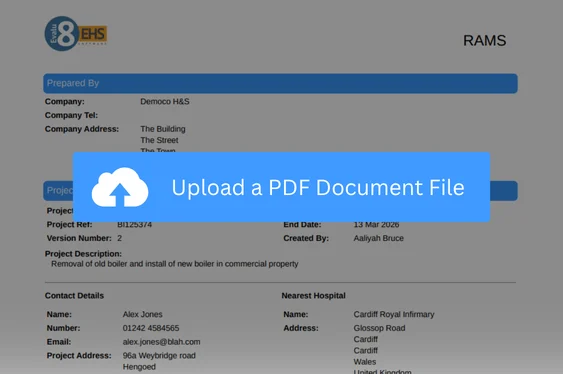
Make the scope and site constraints clear from the start
Record the client, location, ACM, condition, quantity, work area, access, occupancy and interfaces that shape the plan. Keep survey extracts, photographs and drawings close to the job rather than in a separate email chain.
- Capture material and work-area details.
- Attach relevant survey information.
- Record access and surrounding constraints.
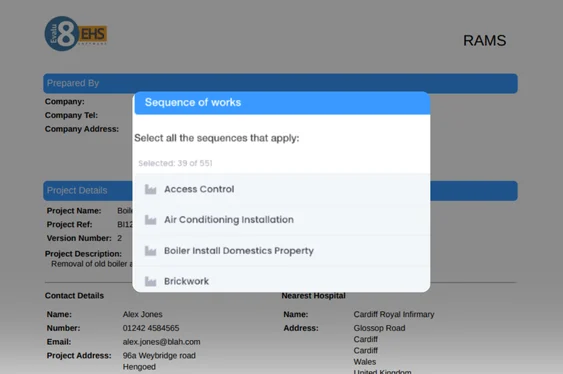
Set out a removal sequence that follows the real work
Describe how the area will be prepared, the enclosure established, controlled removal completed, waste transferred, cleaning undertaken, and the work handed into the clearance process. Competent authors remain responsible for the method.
- Sequence preparation through handover.
- Connect people, equipment and controls.
- Include change and emergency arrangements.
Prove who received the current RAMS before work starts
Issue the approved version to supervisors and operatives, then retain names, timestamps and document version with each acknowledgement. Reissue and rebrief affected people after controlled change.
- Tie acknowledgement to the document version.
- See outstanding sign-offs before work.
- Repeat briefing after material change.
Put the actual ACM and work area into every RAMS
Build the document around the asbestos removal scope
A useful RAMS starts with what is known about the material and the work. Record the identified ACM, its condition and location, the intended disturbance, the work area, the people involved and the surrounding constraints before selecting the method.
- Capture the real scope. Record ACM, location, quantity and planned work.
- Keep source information close. Attach survey extracts, photographs and drawings.
- Define the interfaces. Include access, occupancy, services and adjacent work.
Reuse proven methods without creating generic asbestos RAMS
Standardise what stays controlled and challenge what changes
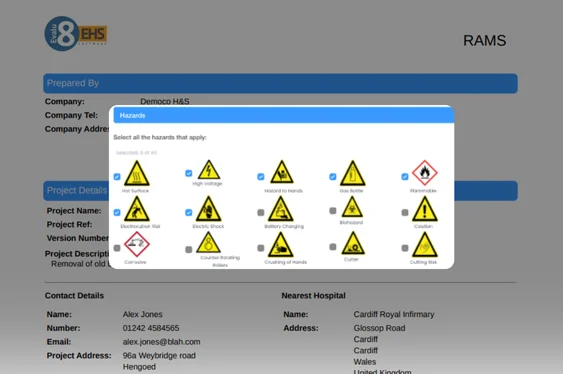
Approved removal methods and control measures can save drafting time, but the author still needs to test them against the actual material, enclosure, access, services, workforce and surrounding conditions.
- Reuse controlled content. Start from approved methods and precautions.
- Require job-level editing. Adapt the sequence to the actual site.
- Protect the standard. Control who can amend shared library content.
Build ad-hoc RAMS around the work in front of you
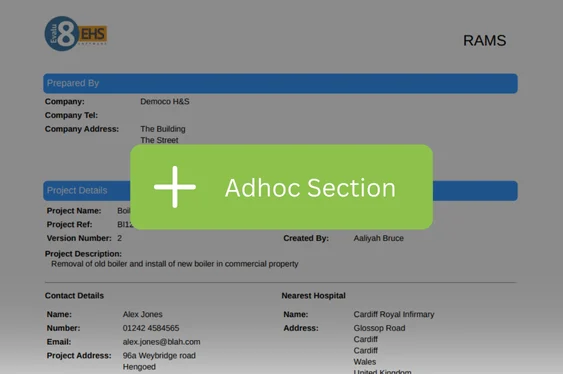
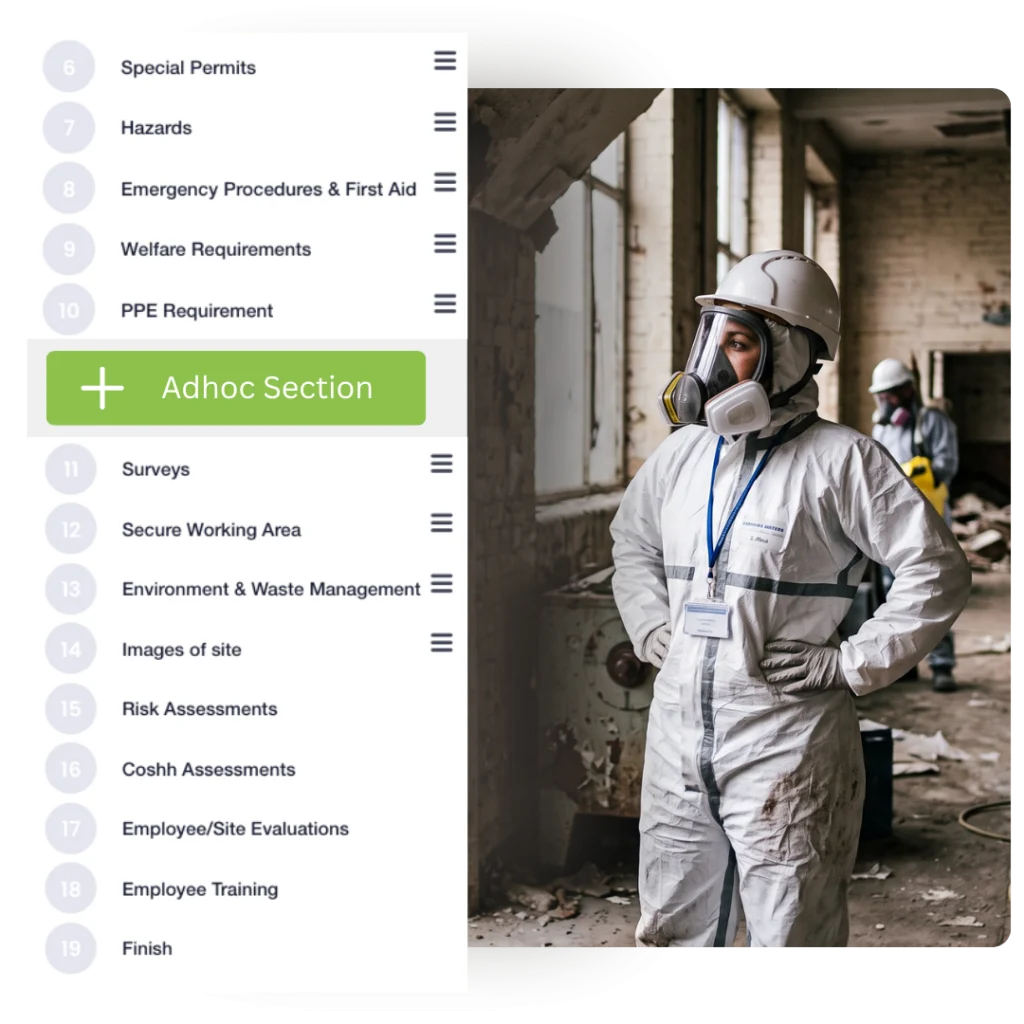
CUSTOMISE THE RAMS TO SUIT THE JOB
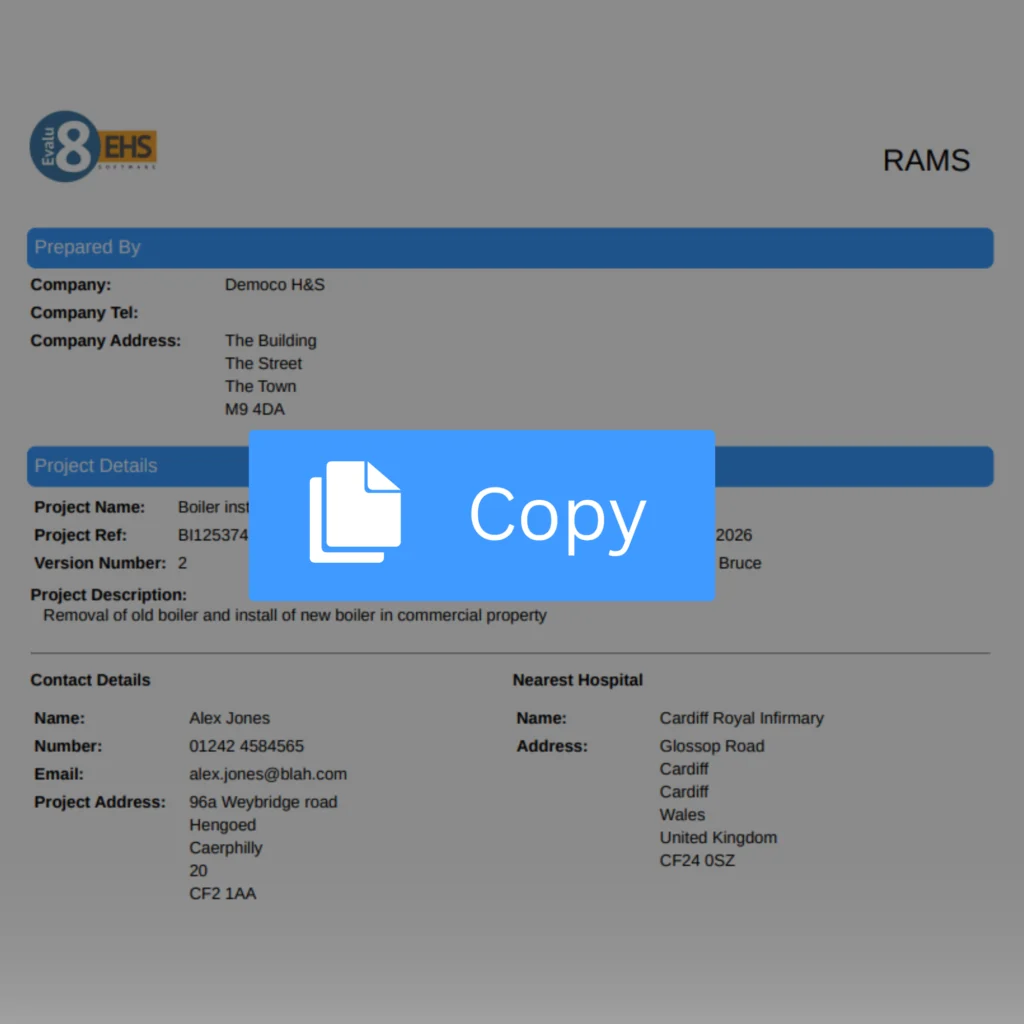
Not every asbestos removal job will fit neatly into the same structure. Evalu-8 lets you add ad-hoc sections so the RAMS can be adapted around the actual work, site conditions and information that needs to be recorded.
- Add what the job needs. Create additional sections for project-specific information.
- Adapt the structure. Include details that sit outside your standard RAMS template.
- Keep it site-specific. Build the document around the work being carried out.
RAMS that support the full asbestos-work journey
Create site-specific removal RAMS
Build around the ACM, work area, method, enclosure and people involved rather than copying a broad asbestos template.
Keep plans, approval and versions connected
Retain supporting information and document history so reviewers can identify what was approved and issued.
Show who received the current document
Keep workforce acknowledgement tied to the version used before removal work begins.
See asbestos RAMS move from scope to operative acknowledgement
Follow a fictional AIB-removal job through scope, method, enclosure layout, hazards and controls, approval, current-version issue, workforce acknowledgement and controlled change.
Make every approval and controlled change visible
Keep the reviewed method and current version clear
Approval should show which document was reviewed, who reviewed it and what changed. When the scope, enclosure, access, equipment or method changes, the RAMS should return through the appropriate review before it is reissued.
- Record named review. Keep reviewer, date and decision visible.
- Explain each revision. Show why the document changed.
- Retain the history. Preserve earlier versions without leaving them live.
Adapt the RAMS to the asbestos work being controlled
Use one controlled process while adapting the assessment, evidence and plan to the project being completed.
AIB removal
Controlled removal of boards, linings, partitions and ceiling elements within a defined work area.
Pipe insulation and lagging
Work involving friable insulation, access constraints, controlled techniques and waste arrangements.
Sprayed coatings
Higher-risk work requiring licensed-contractor planning and tightly controlled removal arrangements.
Asbestos cement projects
Non-licensed or notifiable work where the method still needs to reflect condition, breakage and work scale.
Encapsulation and repair
Planned work where preparation, access, controls, coating system and handover must be clear.
Refurbishment and demolition
Removal coordinated with principal contractors, other trades, programme changes and site handover.
Connect the information from asbestos survey to project handback
The RAMS should carry reliable information forward rather than forcing each stage of the project to begin again.
-
Survey information
Confirm the premises, material, condition and evidence.
-
Classify the work
Record the competent licensed, NNLW or non-licensed decision.
-
Assess the risks
Consider exposure, controls, equipment and emergencies.
-
Prepare the plan
Build the site-specific sequence and arrangements.
-
Review and brief
Resolve comments and issue the applicable version.
-
Complete and retain
Keep completion, clearance and waste records together.
What is RAMS software for asbestos removal contractors?
RAMS software helps businesses create, review, issue and maintain job-specific risk assessments and written plans of work for projects involving asbestos-containing materials.
It brings the premises, material, people, hazards, controls and work sequence into one structured record. Survey extracts, photographs, plans and other evidence remain connected, while version histories and acknowledgements show which document was issued and who received it.
How asbestos RAMS sit alongside other important project records
Asbestos survey
Identifies the known or suspected location, amount and condition of ACMs.
Informs the assessment and plan.Notification record
Shows that the relevant licensed-work or NNLW notification process has been completed.
Supports project administration.Enclosure and layout
Shows the controlled area, airlocks, baglocks, decontamination and waste route.
Supports the planned method.Analytical records
Retains monitoring, clearance and reoccupation evidence where applicable.
Supports controlled handback.Waste and completion
Records waste movement and relevant completion information.
Supports the project history.Put the current asbestos RAMS where work happens
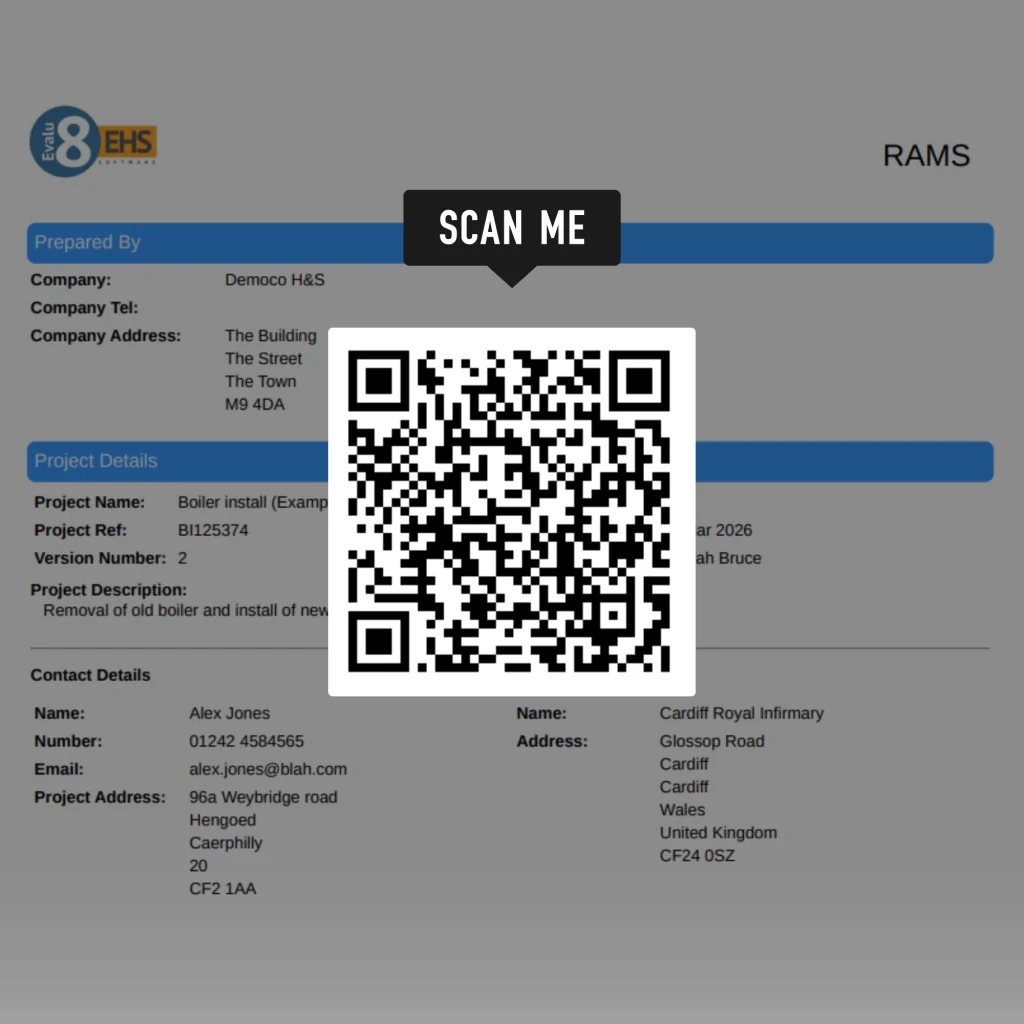
Make controlled site access part of document issue
Site access should point to the approved current version, not a PDF saved to one supervisor’s phone. Where QR or mobile access is configured, teams can open the live record while the document owner retains control of revisions.
- Make the approved current issue easy to find.
- Reduce reliance on downloaded or renamed PDFs.
- Withdraw and reissue information after controlled change.
What Great Britain law expects from asbestos work planning
The Control of Asbestos Regulations 2012 requires employers to assess asbestos risk and, before work begins, prepare a suitable written plan of work describing how the work will be carried out. The plan must be followed so far as reasonably practicable, with departures addressed where needed.
Most higher-risk work requires an HSE licence. HSE states that licensable work must be notified to the appropriate enforcing authority using ASB5, normally at least 14 days before work begins. These decisions and duties belong to the employer and competent people, not the software.
- Control of Asbestos Regulations 2012 Cover assessment, plans of work, licensing, notification, prevention or reduction of exposure, training and control arrangements.
- HSE licensable-work guidance Explains higher-risk work requiring a licensed contractor and the notification route.
- HSG247 licensed contractors’ guide Provides guidance on planning, enclosures, removal, waste, clearance and decontamination.
- Hazardous-waste requirements Control waste classification, consignment and movement through separate environmental records.
Questions asbestos removal contractors should ask
What is RAMS software for asbestos removal contractors?
It is software for creating, reviewing, issuing and controlling job-specific risk assessments and method statements, with supporting plans, approvals, versions and workforce acknowledgement kept together.
What is RAMS software for asbestos removal contractors?
No. The written plan of work is a legal requirement under CAR 2012. It may be created within or held alongside a RAMS pack, depending on the organisation’s structure, but software does not replace the competent preparation or implementation of that plan.
Does RAMS software replace the asbestos plan of work?
Yes. Mobile and QR access direct field teams to the current approved document and its supporting plans or instructions.
Does RAMS software replace the asbestos plan of work?
No. The employer must determine whether work is licensed, notifiable non-licensed or non-licensed using competent judgement and current HSE guidance.
Can Evalu-8 decide whether work is licensed or NNLW?
Evalu-8’s public RAMS information supports attachments including diagrams, plans and photographs. Confirm how these appear in the issued pack during the demonstration.
Can Evalu-8 decide whether work is licensed or NNLW?
Evalu-8’s public RAMS information supports attachments including diagrams, plans and photographs. Confirm how these appear in the issued pack during the demonstration.
Can Evalu-8 decide whether work is licensable?
Review when the ACM, scope, enclosure, access, services, equipment, workforce, method, waste route, surrounding activity or programme changes, or when an incident, failed control or site finding shows the plan is no longer suitable.
Can Evalu-8 decide whether work is licensable?
No. Notification, air-monitoring, four-stage clearance, certificate of reoccupation and waste records have separate purposes. They may inform or support the project record but are not interchangeable.
Can enclosure layouts and photographs be attached?
No. Software can structure, communicate and evidence parts of the process. Compliance depends on competent assessment, planning, control, supervision, implementation and review.