
Why structured rota cycles matter in hospice care
Hospice scheduling must balance two priorities: ensuring safe clinical coverage and protecting staff wellbeing. Because teams are often smaller than hospital departments, rota planning needs to provide both stability and fairness over time.
This is why many hospices build rotas in four-week blocks rather than scheduling week by week. A longer rota cycle makes it easier to distribute shifts evenly, manage rest periods and ensure safe staffing coverage across the entire rota period.
Rota management software helps hospice managers plan these longer rota cycles while maintaining visibility of leave, contracted hours and coverage levels before schedules are published.
What is a 4-week rota?
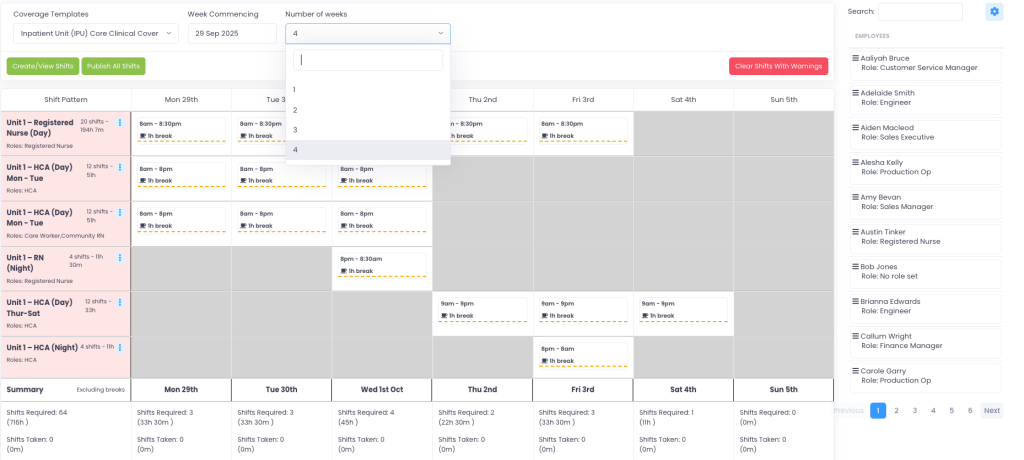
A four-week rota is a scheduling structure where shifts are planned across a full four-week cycle rather than one week at a time.
Instead of managers rebuilding the schedule every week, they create a rota that accounts for:
Day and night coverage requirements
Weekend distribution
Rest periods between shifts
Contracted working hours
Leave requests and availability
Once the full cycle is created, it repeats or is adjusted for the next rota period.
This approach gives managers a clearer view of how shifts are distributed across the team.
Why week-by-week rotas often break down
When rotas are built one week at a time, managers only see a small part of the bigger picture.
At first this can feel flexible, but over time several issues start to appear:
- The same staff repeatedly work weekends
- Night shifts are unevenly distributed
- Overtime builds gradually without visibility
- Rest periods between shifts become inconsistent
- Managers spend hours rebuilding the rota each week
These issues rarely occur because managers are careless. They occur because weekly scheduling makes it difficult to track fairness and workload patterns over time.
A four-week rota helps reveal those patterns earlier.
Why four-week rotas work better for hospices
Planning rotas across a four-week cycle gives hospice managers a wider perspective on staffing.
Instead of solving coverage problems week by week, managers can see how shifts are distributed across the full rota period.
This improves several areas of scheduling:
- Fair distribution of weekends and nights
- Better visibility of contracted hours
- Reduced overtime accumulation
- Improved rest periods between shifts
For hospice teams where fatigue and emotional resilience are real concerns, this longer planning window helps protect staff wellbeing.
How coverage-based and people-based rotas fit into 4-week planning
Hospice scheduling usually combines two rota approaches.
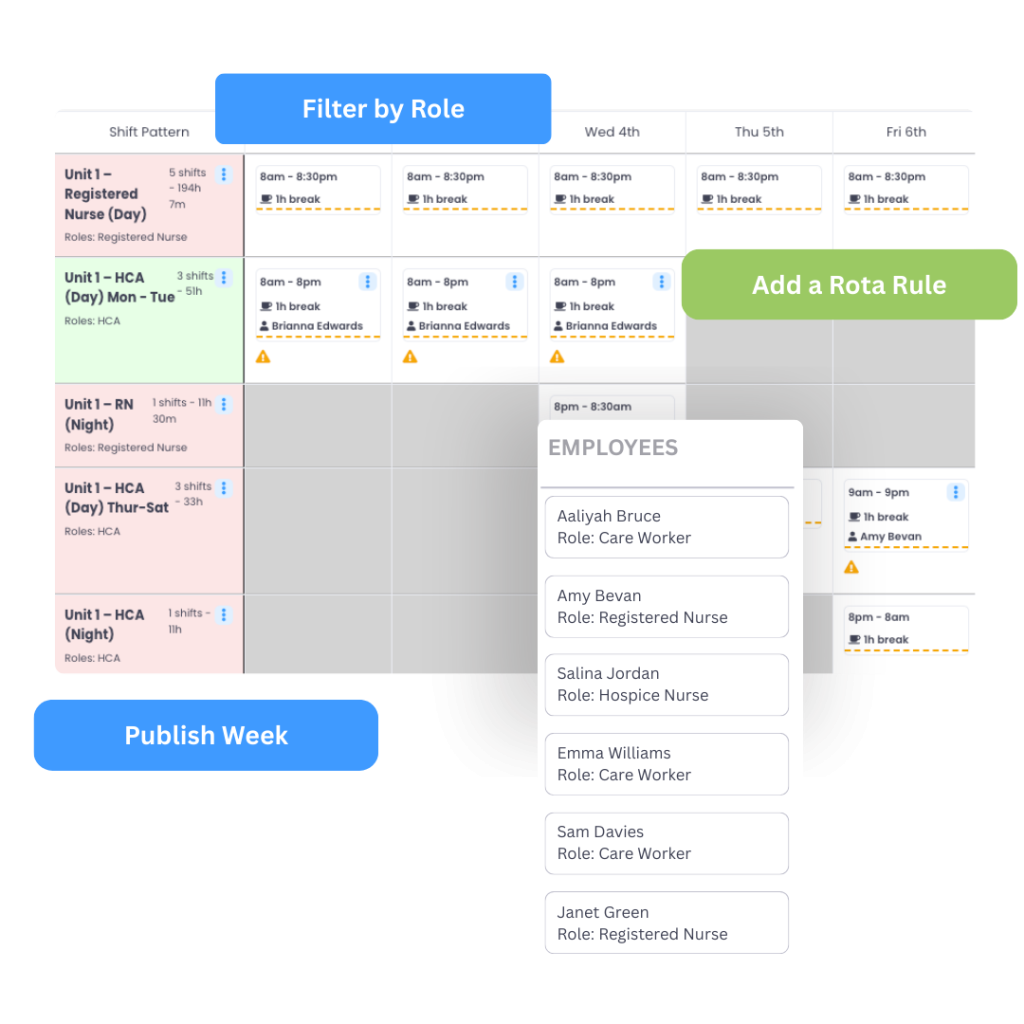
Coverage-based rotas
Focus on ensuring the required number of staff are present for each shift. Managers define the coverage needed first, then assign staff to meet those requirements.
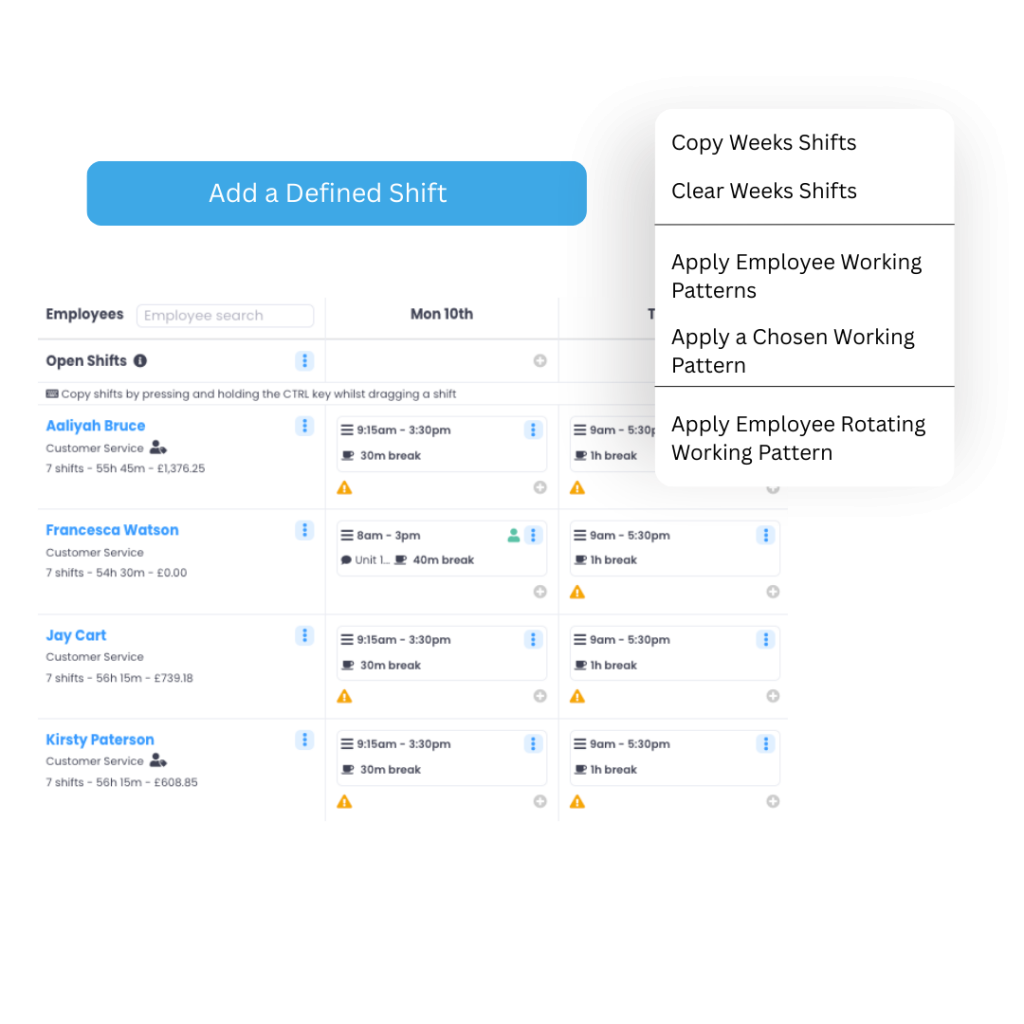
People-based rotas
Focus more on fairness across the team. Managers consider contracted hours, availability and balanced shift distribution before finalising the rota.
When hospices plan rotas across four weeks, these two approaches can work together more effectively. Managers can ensure safe coverage levels while also distributing shifts fairly across the rota cycle.
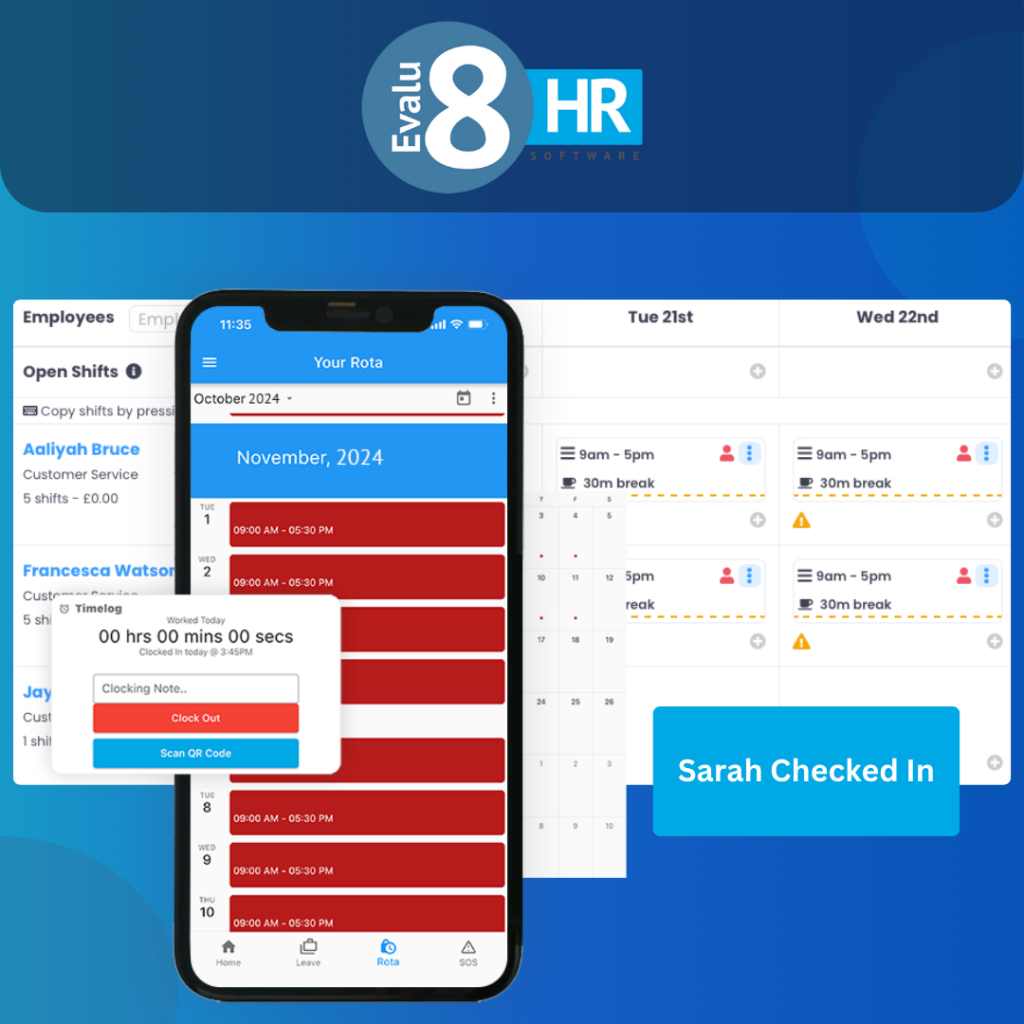
How Evalu-8 HR supports 4-week hospice rotas
Managing a four-week rota manually can quickly become complex. Managers must track coverage requirements, leave, contracted hours and overtime patterns across multiple weeks at the same time.
Evalu-8 HR includes rota software for hospices designed to support both coverage-based and people-based rotas within longer scheduling cycles.
Managers can define the coverage required across shifts and then assign staff while maintaining visibility of leave, contracted hours and overtime thresholds across the entire rota period.
Because scheduling is connected to absence tracking and working patterns, potential issues become easier to identify before rotas are published.
For hospice teams planning rotas across four-week blocks, Evalu-8 HR makes it easier to:
- Maintain safe staffing coverage across the rota cycle
- Distribute nights and weekends more fairly
- Monitor contracted hours across multiple weeks
- Reduce reactive rota adjustments
- Move away from fragmented spreadsheet scheduling
Evalu-8 HR helps hospices plan rotas with greater visibility and consistency, supporting safer coverage planning while protecting staff wellbeing.
Want to see how structured rota management works in practice?
Visit our rota management software for hospices page.
Why structured rota cycles support staff wellbeing
Hospice teams work in emotionally demanding environments where fatigue and burnout can develop gradually.
When rotas are planned week by week, it becomes harder to maintain fairness across the team. Over time this can lead to uneven workloads and increased stress.
Planning rotas across four-week cycles improves predictability, fairness and recovery time between shifts.
For hospice teams, that stability can make a meaningful difference.
Summary
Many hospices build rotas in four-week blocks because it provides greater visibility of staffing coverage, fairness and rest periods. Week-by-week scheduling often breaks down as complexity grows, making it harder to maintain balanced workloads.
By planning rotas across longer cycles and using structured rota management software, hospices can maintain safe staffing levels while protecting staff wellbeing.
In hospice environments, stable scheduling supports stable care.
FAQs
Four-week rotas allow managers to distribute shifts, weekends and nights more evenly across the team while maintaining safe staffing coverage.
Weekly rotas make it harder to track fairness, overtime and rest patterns over time, which can lead to uneven workloads.
A coverage-based rota focuses on ensuring the required number of staff are present for each shift before assigning individuals.
Yes. Rota software for hospices improves visibility of coverage levels, leave and contracted hours across the full rota cycle, helping managers plan more effectively.