
For UK businesses, accurate time and attendance tracking is essential. Whether you’re managing shift workers, remote teams, or in-office staff, having the right system in place saves time, reduces errors, and ensures compliance with employment laws.
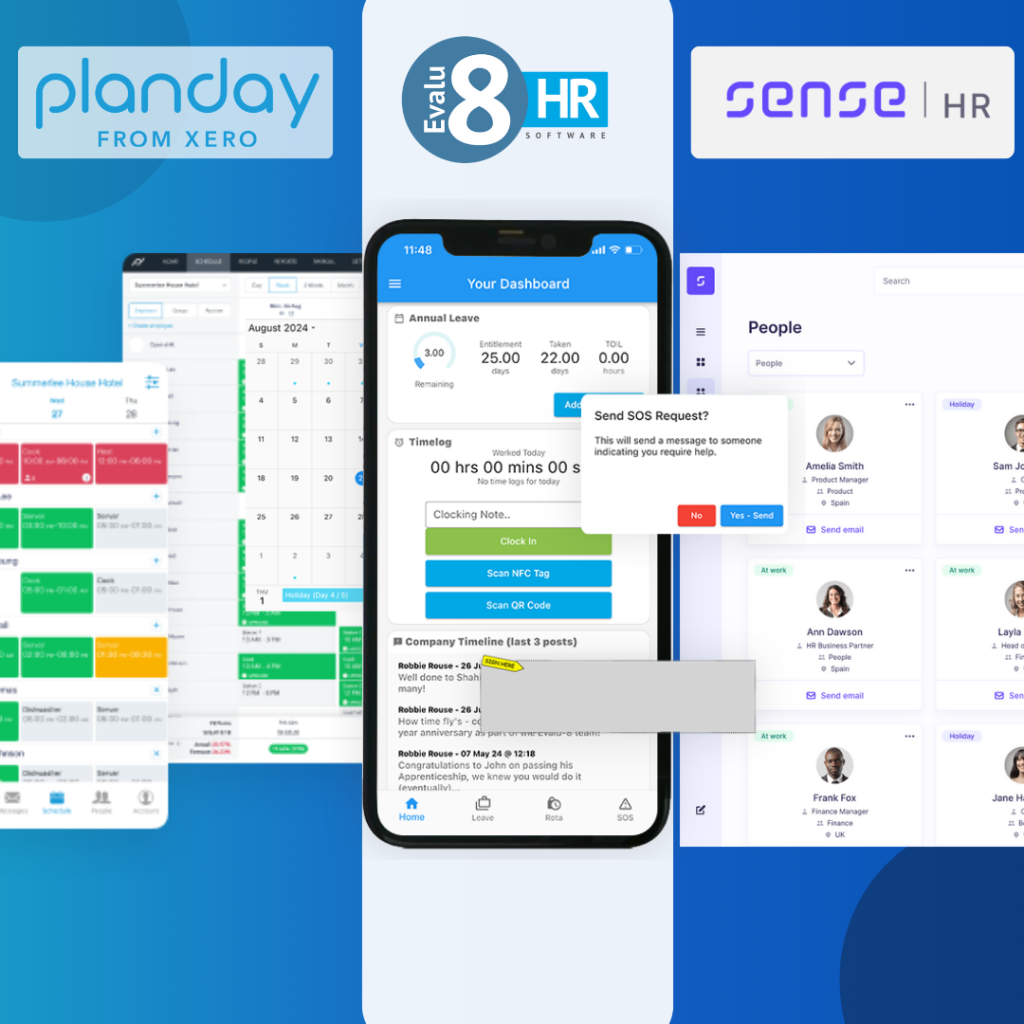
With so many options available, choosing the right T&A software can be overwhelming. In this guide, we’ll compare three leading solutions: Evalu-8 HR, Sense HR, and Planday, helping you decide which is best suited to your business.
Helpful summary
Overview: This article compares three of the top time and attendance software solutions for UK businesses: Evalu-8 HR, Sense HR, and Planday. We analyse their features, reliability, automation capabilities, and ease of integration.
Why trust us: Evalu-8 HR provides an all-in-one workforce management solution, built with UK employment regulations in mind. Our expertise in HR and workforce automation ensures that businesses have the best tools to streamline operations.
Why it matters: Selecting the right T&A software isn’t just about tracking hours, it impacts payroll accuracy, compliance, and overall productivity.
Action points: Explore our detailed comparison to understand which software fits your business needs. If you want a fully automated, all-in-one HR and time-tracking solution, Evalu-8 HR is the clear choice.
How to choose the best time & attendance software: A decision-making framework
To help you assess which software is right for your business, consider these key factors:
- Do you need full HR integration?
- Do you require automated compliance tracking?
- Are you looking for seamless payroll syncing?
- Do you need a self-service portal for employees?
- Do you want to eliminate manual adjustments?
If you answered yes to most of these, Evalu-8 HR is your best choice.
Sense HR
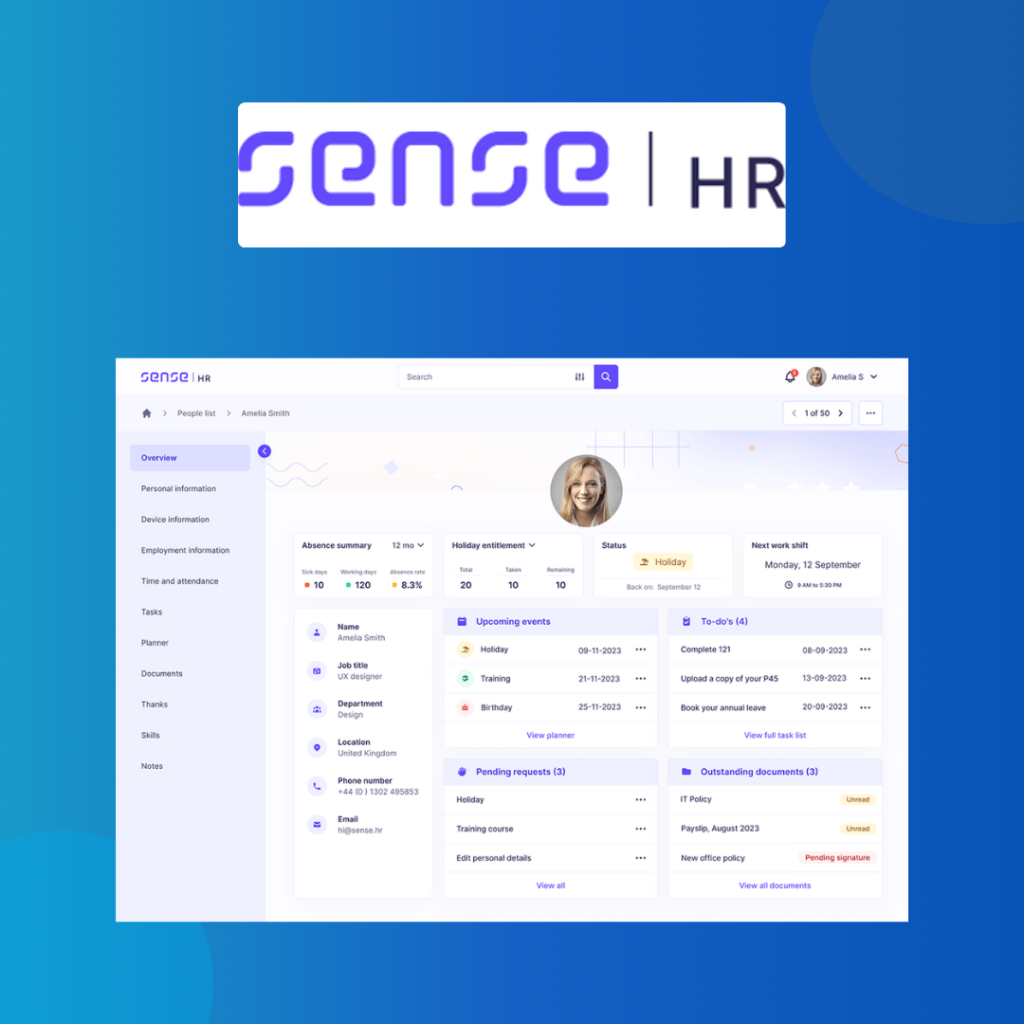
Sense HR is a UK-based HR system that combines core HR tools with hardware-led time and attendance tracking. Its Presence and Automate modules use clocks, badges, tags and gateways to show who is in, out, or at a particular location in real time, which can be useful for organisations with deskless, frontline or multi-site teams.
Core features
- Versatile clocking options: Employees can clock in and out via physical Sense Clocks, mobile devices, or wearable badges and tags, giving managers multiple ways to capture attendance data accurately.
- Location-aware attendance: Sense’s gateways and indoor location tools can detect when employees enter or leave defined zones, helping build more detailed timesheets and visibility of who is on site at any given time.
- Real-time dashboards: Managers can see who is in, who is working remotely, and which locations are staffed, supporting workforce planning and basic compliance monitoring.
- Integrated HR records: Time and attendance data feeds into the wider Sense HR system, which also supports core HR records, holidays, absence tracking, and other essentials.
Advanced features
- Presence & safety tools: Indoor zone control and presence tracking can support lone-worker protection and automatic fire roll-call, reducing reliance on manual headcounts during evacuations.
- Automations & workflows: Higher-tier plans include workflow automation so approvals, reminders, and certain HR processes can run in the background once configured.
- Integrations with other systems: Sense can integrate with external HR and payroll tools via APIs and webhooks, or connect its T&A system to other HR platforms using Sense Automate.
Constraints and functionality gaps
Hardware-led setup: To get the full benefit of Sense’s time and attendance capabilities, most organisations will need to invest in proprietary hardware such as clocks, gateways, badges or tags. This can increase upfront costs and add extra steps around procurement and implementation compared with software-only tools like Evalu-8 HR.
Potential complexity for smaller teams: The focus on indoor location tracking and multi-site presence can feel like overkill for smaller businesses that mainly need simple rotas and clocking. These teams may prefer a lighter-weight system that is faster to roll out and easier for non-technical admins to manage. (This is less a flaw and more a fit issue.)
Feature tiers and packaging: Some of the more advanced time and attendance, automation and presence features sit on higher-tier plans, meaning businesses may need to move beyond the entry-level pricing to unlock the full experience. Evalu-8 HR, by comparison, lets you start with low-cost HR licences and bolt on Time & Attendance as needed.
Pros & cons
Pros
Strong for location-based visibility: Excellent if you specifically want to know who is in, out, or in a particular zone, especially in hybrid, multi-site, or frontline environments.
Modern hardware option: Sense’s clocks, badges, and tags offer flexible ways for people to clock in without needing to log into a browser every day.
Broad HR capability: Beyond T&A, Sense HR covers core HR administration, absence, documents, and other essentials in one system.
Cons
Extra cost and overhead from hardware: The reliance on proprietary devices means there are more moving parts (and potential costs) than with a purely software-based platform. This may be hard to justify if you just need straightforward time tracking.
Heavier implementation for simple needs: Configuring presence zones, gateways, and hardware can make rollout more involved than systems that only need a browser or mobile app login. Smaller teams may find this slows down time-to-value.
Not as rota-focused as some alternatives: While Sense handles time and attendance well, its biggest differentiator is presence and location data rather than deep rota-building. Businesses whose main priority is advanced rotas tightly linked with T&A and HR may find Evalu-8 HR better aligned to that specific use case.
Pricing
Sense HR’s pricing starts from around £3 per employee per month for core HR functionality, with Presence, Automations and more advanced time and attendance options available on higher-tier plans. Pricing is per employee, billed monthly or annually, and there are no long-term contracts, but organisations should also budget for any Sense hardware they plan to deploy
Why you may want to consider this vendor
Sense HR is best suited to organisations that specifically want hardware-led presence tracking and are comfortable with the extra setup and cost that involves. For many UK businesses that mainly need simple, software-first rotas and time & attendance alongside core HR, a more streamlined alternative such as Evalu-8 HR is likely to feel easier to roll out and manage day to day.
Planday
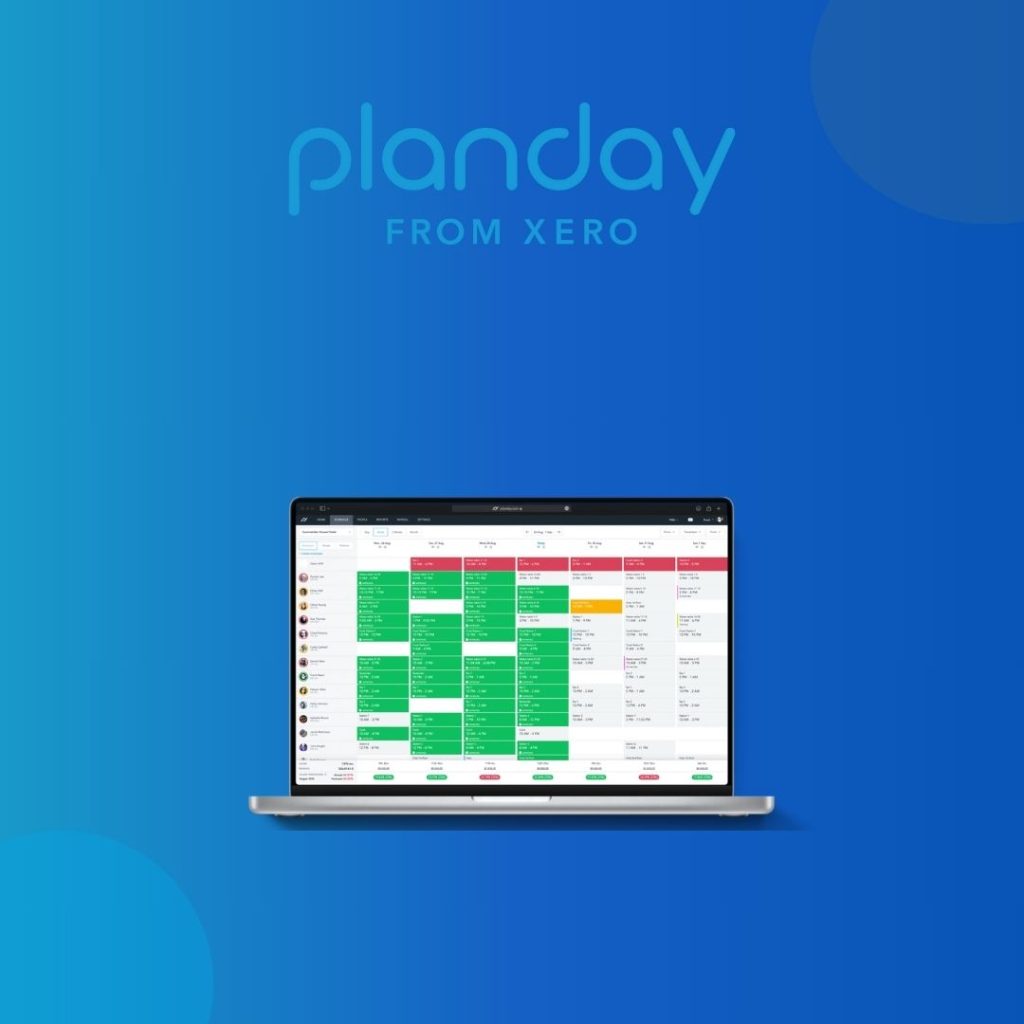
Planday is a workforce management solution best known for its shift scheduling and team communication tools. Its time and attendance functionality is built into the platform and is designed to support rota-driven businesses such as hospitality, retail, and healthcare. For UK employers with hourly teams, shift variability, or 7-day operations, Planday gives a relatively smooth way to track time worked, manage shift patterns, and link attendance to payroll-style reports.
However, while Planday is strong in classic shift-based environments, it isn’t a full HR platform. Core areas like employee records, leave management, onboarding, and compliance tracking usually sit in other systems or rely on integrations. That can create extra admin and more room for error if you’re trying to maintain a single source of truth across HR and T&A.
In contrast, Evalu-8 HR brings HR, rotas, time and attendance, and payroll exports into one system, so you’re not stitching together multiple tools. And while Sense HR leans into hardware-led presence tracking and Planday focuses on shift scheduling, Evalu-8 HR combines advanced rota building, flexible clocking, and full HR records in a single UK-focused platform, making it the stronger choice if you want a genuinely end-to-end solution rather than a point tool.
Core features
Real-time clock in and clock out via mobile app or tablet kiosk
Time stamps automatically linked to scheduled shifts
Automatic timesheet generation based on hours worked vs planned shifts
Break and overtime tracking
Manager approval workflows for finalising hours before payroll
Absence logging integrated with shift schedules
Advanced features
Punch rounding, grace periods, and auto-approval rules to reduce admin
Location-based clock-ins using geofencing
Time tracking alerts for early/late clock-ins or unapproved overtime
Integration with multiple payroll providers
Detailed reporting on attendance patterns, labour costs, and shift compliance
Employee self-service for shift swaps, time-off requests, and availability updates
Constraints and functionality gaps
Not a full HR platform, employee records, documents, policies, and onboarding must be managed elsewhere or integrated via third parties
Limited absence management basic leave tracking exists, but lacks the depth of a full HRIS (e.g. maternity tracking, Bradford Factor, compliance alerts)
Time and attendance tools are heavily rota-dependent, making it less ideal for salaried, hybrid, or project-based teams
Payroll integrations exist, but some require manual exports or third-party middleware
Some businesses may find the interface less intuitive compared to newer platforms focused on simplicity
Pros & cons
Pros
Strong time tracking for shift-based or hourly workforces
Seamless link between scheduled shifts and actual hours worked
Real-time data and mobile clocking options
Solid reporting for labour cost control and scheduling compliance
Payroll-ready output and integration options
Cons
Lacks integrated HR functionality, requiring separate software for full employee lifecycle management
Not well suited to salaried or fixed-hour teams
Absence management and compliance tracking are limited
Some set-up and training may be required for smaller teams
Pricing
Planday uses a tiered pricing model:
The Starter package includes basic scheduling and time tracking, typically starting around £2–£3 per user per month
More advanced features, including payroll integrations and reporting tools, are available on higher plans which can range up to £6–£8 per user per month
Custom pricing is usually provided based on business size, complexity, and required integrations
While cost-effective for rota-heavy teams, the need for additional HR tools may increase overall spend.
Why you may want to consider this vendor
Planday is a solid option for UK businesses with classic, shift-heavy operations, but it’s narrowly focused. It brings together rotas, clocking, and payroll alignment in one tool, which works well if your main challenge is filling shifts and getting hours into payroll. Outside of that, it offers limited depth, especially once you need proper HR records, training, or more complex compliance tracking.
However, compared with Evalu-8 HR, Planday starts to show gaps. Evalu-8 HR delivers fully integrated HR and time and attendance in a single platform, so employee records, leave, absence, documents, training, rotas, and T&A all live in one place. With Planday, you’re relying on extra systems or integrations to manage the full employee lifecycle, which means more admin, more overlap, and more room for things to slip.
Evalu-8 HR: The ultimate all-in-one time & attendance solution
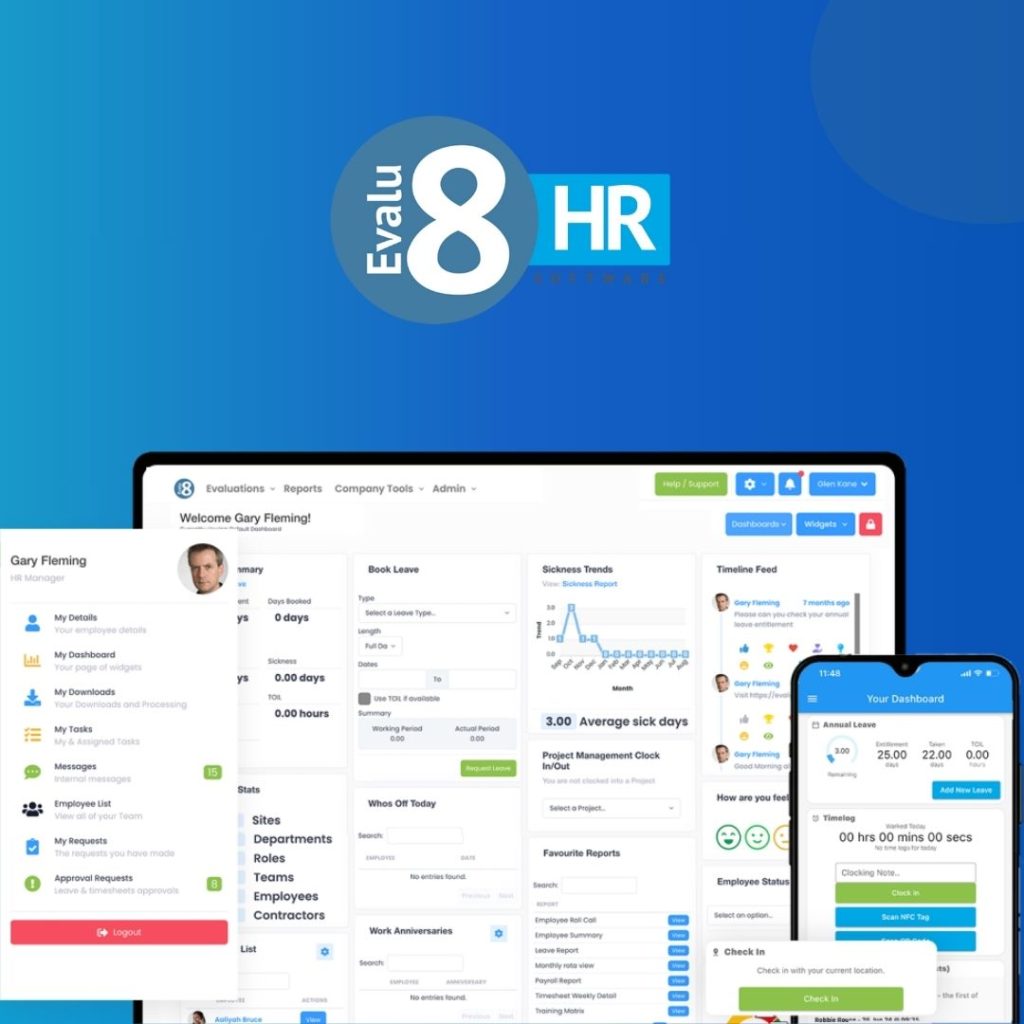
Evalu-8 HR offers a fully integrated time and attendance module as part of its broader HR platform, providing UK businesses with a centralised, real-time view of workforce activity. Unlike standalone time tracking tools that require additional HR software to manage absence, leave, and payroll, Evalu-8 brings everything together in one place.
Designed with flexibility and accuracy in mind, the platform supports a wide range of working patterns from shift-based teams and salaried staff to hybrid and remote workers. The system links directly to rotas, leave management, overtime approvals, and performance tracking, giving users confidence that time data is accurate and aligned with HR compliance.
For organisations looking to reduce manual input, automate calculations, and manage time more intelligently without the complexity or high costs of enterprise tools, Evalu-8 HR offers a compelling and scalable solution.
Core features
Flexible, real-time clocking: Staff can clock in and out via mobile app, browser, tablet kiosk, QR code, or geolocation. That means one system works for office, hybrid, and frontline teams without extra hardware.
Automatic calculations you can trust: Working hours, overtime, lateness, and breaks are calculated automatically from clocking data, reducing manual spreadsheet work and cutting down on payroll disputes.
Built for different working patterns: Multiple time profiles let you handle salaried, hourly, and flexible contracts side by side, so complex rotas still feed into a single, accurate timesheet view.
Controls to prevent misuse: Clocking restrictions based on shift times or locations help prevent early/late clocking and “buddy punching”, improving accuracy and protecting labour costs.
Joined-up HR and attendance data: Time entries link directly to leave, sickness, and other absence records, so managers see the full picture without jumping between systems or reconciling data.
Clear approvals and audit trails: Manager approval workflows for timesheet changes or exceptions keep edits under control, with a full audit trail that supports compliance and internal reporting.
Advanced features
Intelligent rota and working pattern integration
Rotas, time profiles and contracted hours all live in the same system, so clocking data is automatically checked against the correct pattern – including variable shifts, nights, split shifts and rotating weekends. Managers see instantly whether staff are working as planned, without manual cross-checking.Geofenced mobile clocking for remote and multi-site workers
Employees can clock in from the mobile app, but only within approved locations or geofenced areas. That makes it ideal for home workers, mobile teams, and multi-site operations where you need proof of presence on a specific site, not just a generic “I’m at work” tap.Real-time alerts for issues and exceptions
Configurable alerts notify managers about missed clock-ins, late starts, early finishes, or hours that fall outside expected thresholds. Instead of spotting problems weeks later in payroll, they can correct issues on the same day and keep labour costs under control.Custom reporting on time and attendance
Build reports on time compliance, contracted vs actual hours, overtime usage, and absence patterns, alongside high-level payroll summaries. Data can be filtered by site, department, role, or individual, giving HR and finance the insight they need for forecasting and audits.Payroll-ready data and export options
Evalu-8 HR automatically applies pay rules and calculations to approved timesheets, then exports clean, structured data in the format your payroll provider needs. This reduces manual keying, lowers the risk of errors, and speeds up each pay run.Optional biometric device support for higher security
For environments where you need extra assurance that the right person is clocking in, Evalu-8 can work with biometric devices (such as fingerprint or facial recognition terminals). This helps prevent buddy punching and provides a stronger audit trail for regulated or high-security sites.
Constraints and functionality gaps
Offline clocking functionality (without mobile signal) is not yet available, but is on the product roadmap
Biometric clocking requires third-party hardware (integrated, but not native)
While highly flexible, organisations with unionised or highly complex workforce management requirements may still require some custom configuration support
Pros and cons
Pros
Fully integrated with HR, leave, rotas, and payroll exports
One system for people data, shifts, absence, and pay, no juggling tools or spreadsheets.Configurable time rules for different roles and patterns
Set different rules for salaried, hourly, night shifts, and flexible workers so calculations stay accurate.Real-time visibility of attendance and hours
See who’s in, who’s late, and who’s in overtime at a glance.Mobile and desktop access with flexible clocking
Staff can clock in via mobile, browser, tablet, or QR code, wherever they’re working.Built-in reporting for audits and payroll
Quickly pull reports for payroll checks, compliance, and management oversight.UK-based development and support team
Local product and support, aligned to UK regulations and work practices.
Cons
Offline clocking is not yet supported
Biometric clocking is supported but relies on external devices
May require configuration support for highly complex shift rules (though this is included in onboarding)
Pricing
Evalu-8 HR is priced to support small and mid-sized UK businesses without sacrificing depth or flexibility:
The Core HR package is just £2.50 per licence, per month, which includes absence, leave, document management, performance, and training
The time and attendance module can be added for an additional £2.50 per licence, per month
Other add-ons such as rotas, asset tracking, and compliance monitoring are available.
This transparent, modular pricing structure allows businesses to scale as they grow, paying only for the features they need.
Why you may want to consider this vendor
Evalu-8 HR is built for UK organisations that want one joined-up system for people, rotas, and time, not a patchwork of tools and hardware. Time and attendance sits in the same place as HR records, leave, sickness, rotas, and payroll exports, so you always have one version of the truth when it comes to who worked, when, and what they should be paid.
It’s also software-first. Staff clock in via mobile, browser, tablet or QR code, with optional geofencing and device support if you need extra assurance, rather than having to commit to proprietary hardware from day one. Rules for overtime, breaks, working patterns and roles are configurable, so the system matches how your organisation actually runs.
Where Evalu-8 HR often compares favourably is how clean and focused it feels versus other options in this space:
Compared with Sense HR
Sense HR leans heavily on proprietary hardware and indoor presence tracking, which can add cost and complexity for businesses that mainly want solid rotas and accurate time capture. Evalu-8 HR gives you advanced T&A and rota tooling without needing to roll out gateways, badges or specialist clocks across every site.Compared with Planday
Planday is strong for hospitality-style scheduling, but its broader HR and compliance picture often relies on other systems and add-ons. That can leave you managing integrations and duplicate data. Evalu-8 HR keeps HR, time, rotas, and reporting in one place, which is usually simpler for UK organisations that don’t want to stitch together multiple platforms.
If you want accurate, real-time attendance data that flows straight into HR, reporting, and payroll, and you prefer a UK-focused platform with responsive local support, Evalu-8 HR is likely to feel cleaner, more joined up, and easier to justify than hardware-heavy or single-focus alternatives.
Final decision: Which time & attendance software should you book a demo With?
Evalu-8 HR is the only solution that provides full automation, seamless payroll integration, and compliance tracking in a single system. Book a free demo today to see how it can transform your workforce management.
Got questions? Let’s get them answered
Frequently asked questions
Evalu-8 HR is the best choice due to its full automation, built-in compliance tracking, and seamless HR integration.
No, Planday is mainly a scheduling tool. You will need additional software for payroll, compliance, and workforce tracking.
It automatically tracks hours and integrates directly with payroll systems, eliminating errors and manual admin work.
Yes! Book a free demo to see how Evalu-8 HR can revolutionise your workforce management.