
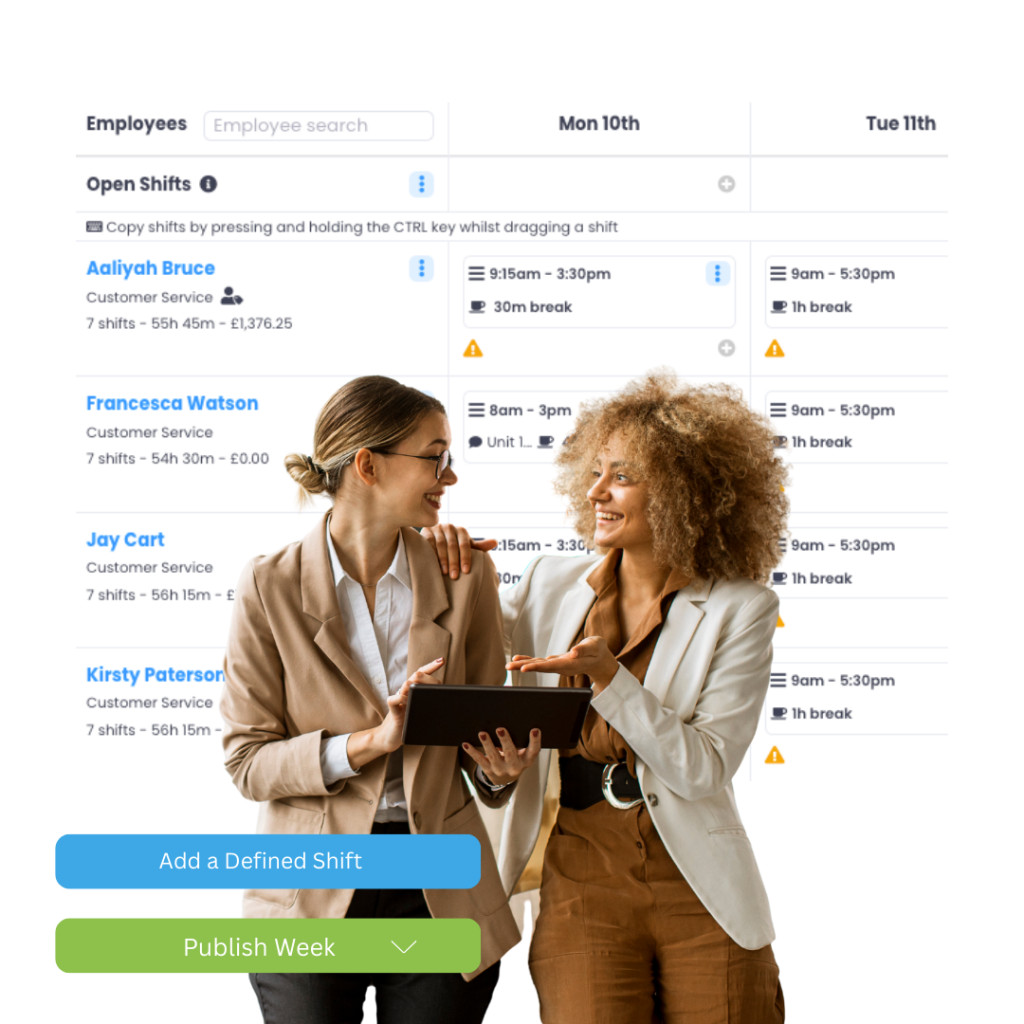
Why spreadsheets become the default
For many organisations, spreadsheets were never a strategic decision. They were a starting point. When a team is small, using Excel or Google Sheets to manage annual leave, staff rotas, and basic HR records feels practical. The tools are familiar, flexible, and already available.
At first, it works. But spreadsheets are designed for calculation and storage. They are not designed to manage people, enforce rules, or maintain real-time visibility across teams.
As headcount grows, processes become layered. Overtime rules become more nuanced. Absence tracking becomes more important. Rotas become more complex. What once felt manageable begins to feel fragile.
The hidden risks of spreadsheet-based HR
The risk with spreadsheets isn’t obvious on day one. It shows up gradually. A formula is overwritten accidentally. Two managers edit separate versions of the same file. A leave request is recorded in one tracker but not reflected in the rota. Overtime is calculated manually and slightly differently each time.
None of these issues feel catastrophic in isolation. But together, they introduce uncertainty. Spreadsheet-based HR systems depend heavily on manual control. There is rarely a clear audit trail. Version control becomes difficult. Visibility across departments is limited. Data is often siloed in individual files. As teams grow, these risks multiply.
Why staff scheduling is usually the breaking point
Staff scheduling is often the first process to expose the limits of spreadsheets. Managing a rota for five people is one thing. Managing rotating shifts across multiple roles, overtime thresholds, and absence requests is another.
Spreadsheets don’t naturally:
- Apply overtime rules automatically
- Flag when someone exceeds contracted hours
- Highlight leave clashes before publishing
- Show historical distribution patterns
Managers end up building rotas reactively. Time is spent correcting rather than planning. Changes are communicated manually. Errors surface after the schedule is already live. At that stage, spreadsheets are no longer saving time. They are consuming it.
When it’s time to replace spreadsheets
Most organisations don’t switch systems because they want new software. They switch because the cost of staying the same becomes higher than the cost of change.
Common signals include increasing payroll queries, recurring overtime disputes, duplicated HR records or managers struggling to get a clear overview of who is working and when.
When HR and scheduling start to feel like constant maintenance rather than structured processes, spreadsheets have likely reached their limit.
What replacing spreadsheets actually means
Replacing spreadsheets does not mean adding unnecessary complexity. It means introducing structure.
Modern HR and rota management software centralises employee records, absence tracking, contracted hours, and scheduling into one connected system. Instead of relying on separate files for leave, rotas, and time tracking, everything sits within a single environment.
Rules can be applied consistently. Data updates in real time. Managers can see the context before publishing schedules. The shift is not from simple to complicated. It is from manual to controlled.
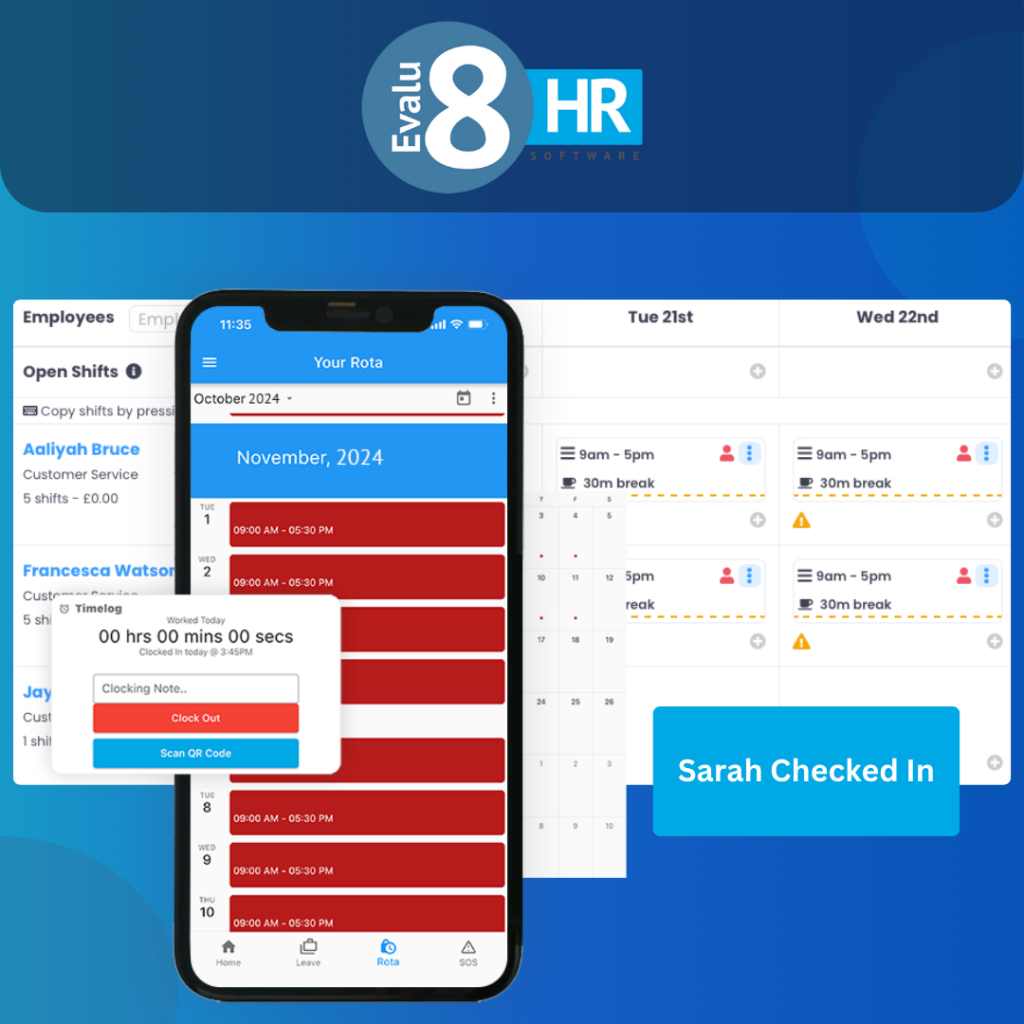
How Evalu-8 HR supports structured scheduling
Replacing spreadsheets works best when the new system removes manual work rather than simply replicating it digitally.
Evalu-8 HR brings staff scheduling, absence tracking, and contracted hours into one connected environment. Instead of maintaining separate leave trackers and rota spreadsheets, managers can see the full picture before publishing a schedule.
Because overtime thresholds and working patterns can be configured within the system, rules are applied consistently rather than manually calculated each week. This reduces the risk of errors, duplicated files and last-minute corrections that often come with spreadsheet-based processes.
The goal isn’t to make scheduling more complicated. It’s to remove the fragility that spreadsheets introduce and replace it with visibility and control.
Two types of rotas you can have in rota management software
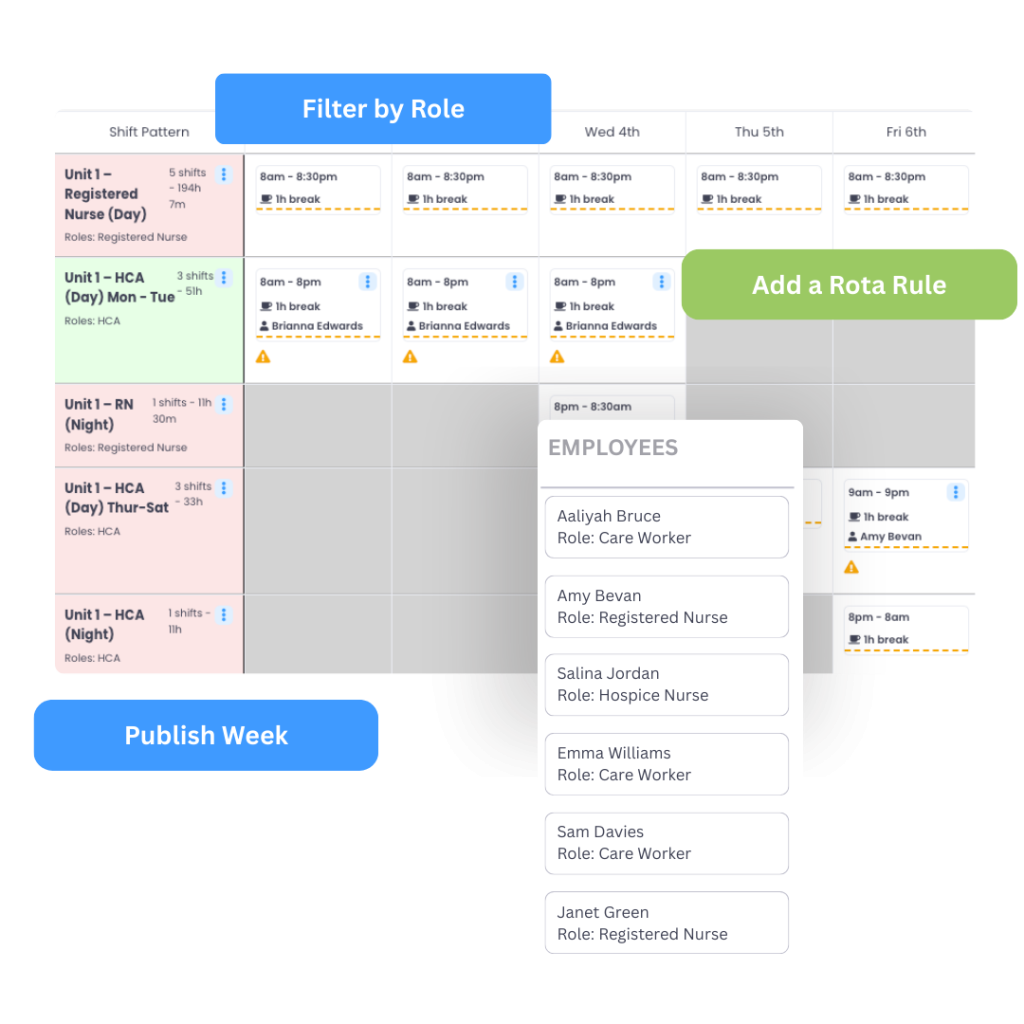
Coverage-based rota
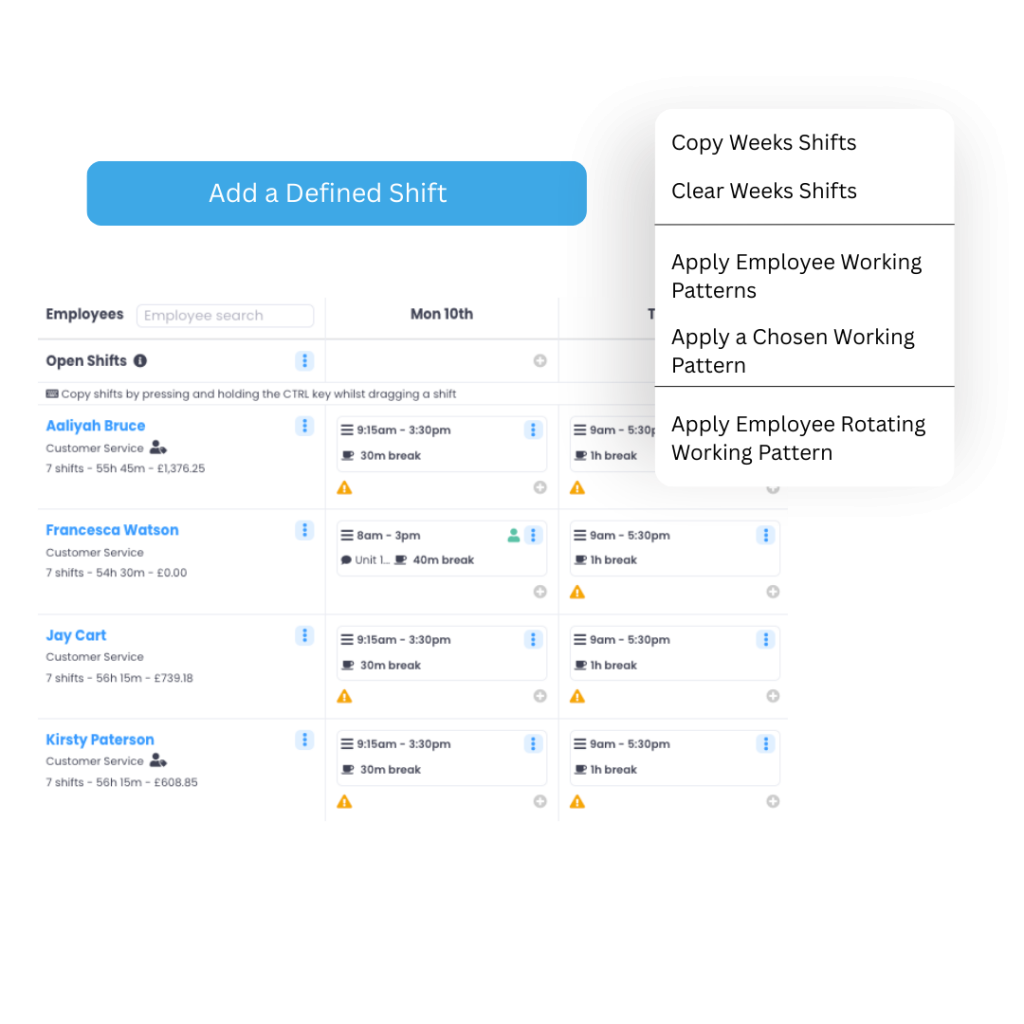
People-based rota
Not all rotas are built in the same way.
Most scheduling approaches fall into two simple categories: coverage-based rotas and people-based rotas. The difference comes down to what you prioritise first.
Coverage-based rotas
A coverage rota starts with the question:
“How many people do we need, and when?”
The focus is on making sure enough staff are in place at the right times. Shifts are created to meet demand, and then people are assigned to fill those gaps.
This approach is common in industries where operational coverage is critical, such as manufacturing, warehousing, facilities management, and multi-site operations.
The priority is keeping services running safely and efficiently. The challenge? It can be harder to see long-term fairness if the focus is always on filling shifts first.
People-based rotas
A people rota starts with a different question:
“How do we schedule fairly for our team?”
Here, managers consider contracted hours, availability, and balanced shift distribution before finalising coverage.
This model is often used in care settings, hospitality, retail, and smaller service teams. In these environments, staff wellbeing and fairness are just as important as coverage levels.
As a result, organisations can:
- Build rotas faster with clear visibility of leave and contracted hours
- Apply overtime rules consistently across teams
- Reduce payroll errors caused by manual calculations
- Give employees clearer access to their shifts and schedules
- Replace fragmented spreadsheets with one structured, reliable system
If you’d like to explore how structured rota management works in more detail:
Visit our rota management software page.
A practical approach to moving away from spreadsheets
Transitioning away from spreadsheets works best when it is deliberate rather than rushed.
1. Map your current spreadsheet usage
Start by identifying exactly how spreadsheets are used across HR and scheduling. Where are errors most common? Where does duplication occur? Where do managers lose the most time?
Understanding the current landscape prevents simply digitising the same inefficiencies.
2. Define what the new system must handle
Clarify what the replacement needs to manage. This often includes leave tracking, rota scheduling, overtime rules, employee access and centralised reporting.
The goal is not to add features. It is to remove fragility.
3. Plan a controlled data migration
Data migration should be structured and secure. Clean the data before moving it. Ensure roles and permissions are clear from day one.
A messy migration recreates spreadsheet problems in a new system.
4. Train for process, not just platform
Training should focus on how processes will change, not just where to click. Managers need to understand the new structure behind scheduling, not just how to publish a rota.
5. Phase out spreadsheets gradually
Old files should not disappear overnight. Phase them out once confidence in the new system is established.
Change works best when it feels controlled rather than disruptive.
The bigger impact of replacing spreadsheets
Replacing spreadsheets with HR and staff scheduling software is not just a technical upgrade. It affects accuracy, transparency, and employee experience.
When rotas are built using structured rules rather than manual calculations, disputes decrease. When leave is tracked centrally, visibility improves. When managers can rely on one system rather than multiple files, confidence increases. Spreadsheets are flexible. But structured systems scale. And as organisations grow, scalability becomes essential.
FAQs: Replacing spreadsheets for HR and staff scheduling
Spreadsheets can work for small teams, but they become inefficient as headcount and complexity increase. Replacing spreadsheets for HR and staff scheduling reduces manual errors, improves visibility and ensures overtime and leave rules are applied consistently. A structured system also removes version control issues and provides clearer audit trails.
The biggest risks include formula errors, overwritten data, duplicated files and inconsistent overtime calculations. Spreadsheets also make it difficult to track long-term shift distribution patterns or flag scheduling conflicts before publishing. Over time, these risks can lead to payroll disputes and reduced employee trust.
Replacing spreadsheets does not have to be disruptive if planned carefully. Most modern HR and rota management systems allow secure data migration and phased implementation. The cost is often offset by time savings, reduced payroll errors and improved operational control.
Rota management software improves accuracy by applying configured overtime rules automatically, showing leave and contracted hours in real time and highlighting potential clashes before schedules are finalised. This reduces reliance on manual checks and memory-based decision making.
It’s usually time to replace spreadsheets when rotas take several hours to build, payroll queries increase, leave tracking becomes fragmented or managers struggle to maintain visibility across teams. If scheduling feels reactive rather than structured, spreadsheets have likely reached their limit.