
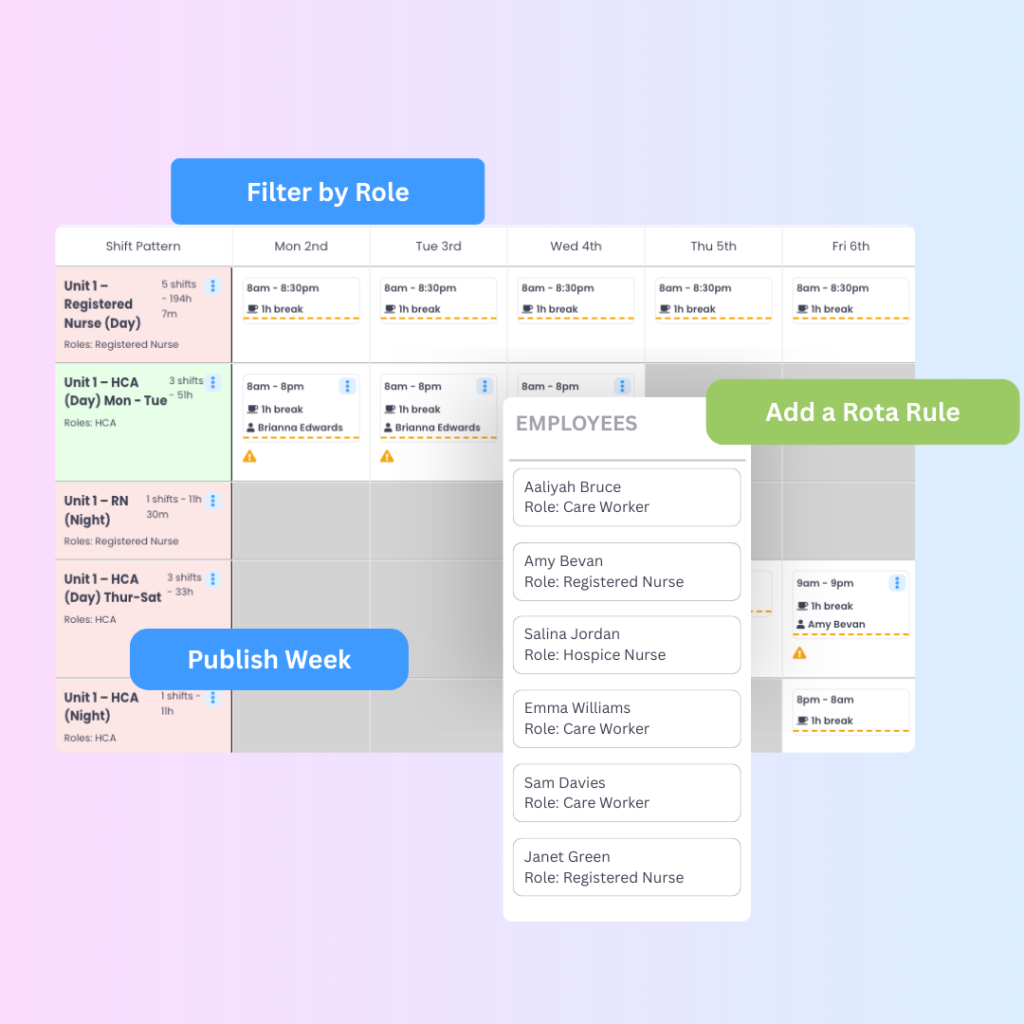
The hidden stress of finalising a hospice rota
Finishing a rota often feels like the final step in a long process. Shifts have been filled, leave requests have been considered and coverage appears to be in place.
But many hospice managers still experience the same moment of doubt before publishing a schedule:
“Have I actually covered everything?”
In hospice environments where teams are small and care requirements are high, missing even one shift or staff member can create immediate pressure on the team.
Knowing when a rota is truly complete is therefore an important part of safe scheduling.
Why it’s easy to miss something
Hospice rotas often need to balance several factors at the same time. Managers must ensure the right number of staff are present, while also respecting contracted hours, rest periods and leave requests.
When rotas are built manually, it becomes easy to overlook small details.
Common issues include:
- A staff member accidentally left without shifts
- A shift that still has no assigned staff
- Coverage gaps caused by leave requests
- Overtime building without being noticed
These mistakes rarely happen because managers lack experience. They usually happen because the rota is being reviewed across multiple spreadsheets, notes or email threads.
The simple checks before publishing a hospice rota
Before publishing a rota, managers should review the schedule from several perspectives.
First, confirm that every required shift has coverage. This ensures patient care needs are fully supported across the rota period.
Second, review each staff member individually. Checking the rota from the perspective of the employee helps identify missing shifts or scheduling errors that may not appear when looking at the schedule overall.
Third, compare contracted hours with scheduled hours. This helps prevent overtime accumulation and ensures fairness across the team.
Finally, review leave and absence entries. Ensuring leave is already reflected in the rota prevents unexpected gaps later.
These checks provide reassurance that the rota is complete and balanced.
Why this process becomes harder over time
As hospice teams grow and shift patterns become more complex, confirming that a rota is finished becomes more difficult.
Managers may need to review multiple files, recalculate hours or cross-check leave requests manually. Each additional step increases the risk that something small is missed.
Over time this can lead to reactive scheduling where changes are made after the rota has already been published.
This is one reason many organisations are moving away from spreadsheet-based scheduling.
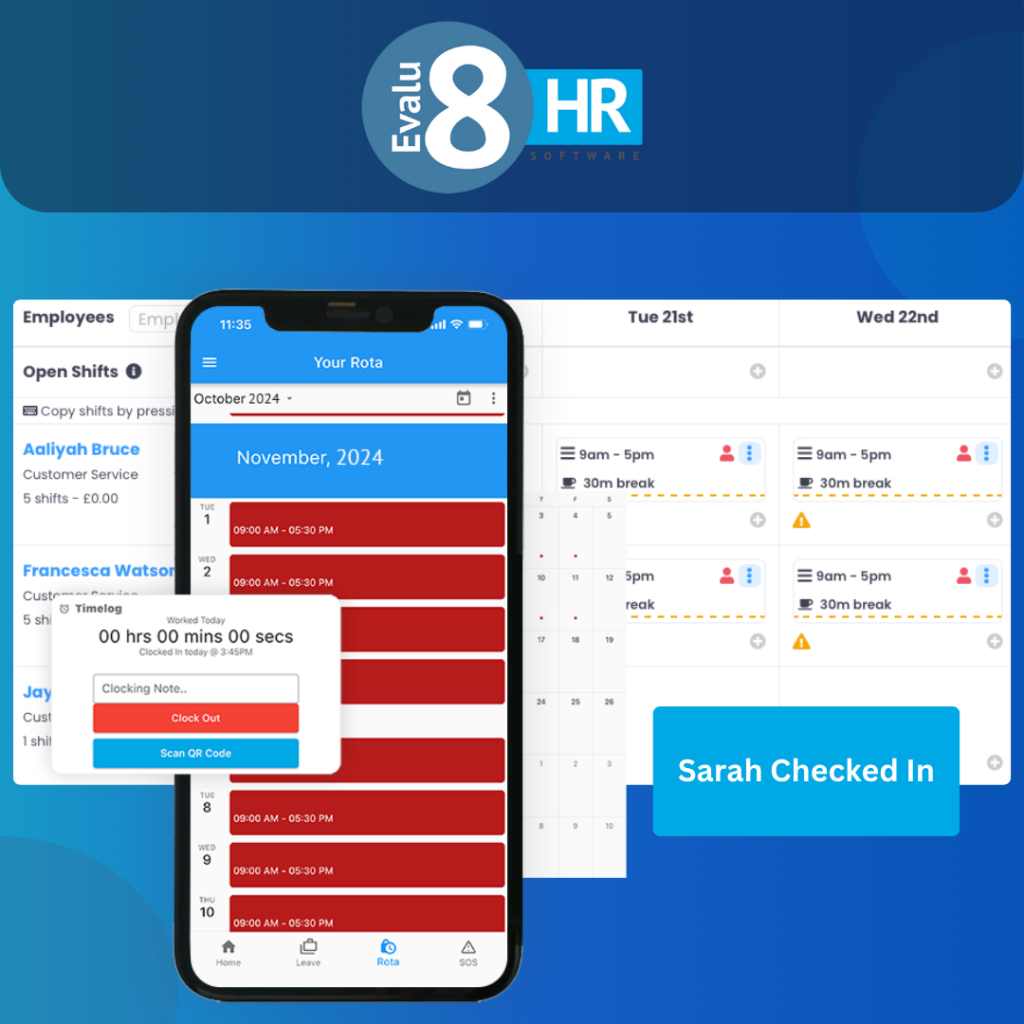
How Evalu-8 HR helps managers confidently finish a hospice rota
One of the biggest challenges in rota planning is visibility. Managers need to see coverage levels, staff hours and leave information clearly before publishing a schedule.
Evalu-8 HR includes rota management software for hospices designed to provide this visibility while rotas are being built. Instead of relying on manual checks, managers can review coverage levels, contracted hours and working patterns in one place.
Because the rota is connected to absence tracking and employee contracts, it becomes easier to confirm that each shift is covered and that staff hours remain balanced across the rota cycle.
For hospice teams managing demanding schedules Evalu-8 HR helps:
- Ensure every required shift has the appropriate clinical coverage
- Maintain visibility of staff leave before publishing rotas
- Compare contracted hours with scheduled hours more easily
- Reduce the risk of missing staff or shifts
- Move away from fragmented spreadsheet scheduling
This structured approach gives managers greater confidence that the rota is complete before it goes live.
Want to see how rota management software supports structured scheduling
Visit our rota management software for hospices page.
When a hospice rota is truly finished
A rota is finished when three things are clear:
Every shift has the required coverage
Every staff member has appropriate scheduled hours
Leave and absence have already been accounted for
When these checks are completed across the full rota cycle, managers can publish the schedule with confidence. In hospice environments, where teams depend on each other to deliver compassionate care, that certainty matters.
Summary
Knowing when a hospice rota is finished is not simply about filling shifts. It requires confirming coverage, reviewing staff hours and ensuring leave has been properly accounted for. Without clear visibility, these checks can become difficult to maintain as rotas grow more complex.
Rota management software helps hospice managers confirm that schedules are complete before they are published, reducing the risk of missed shifts or unexpected gaps. Sometimes the most valuable part of scheduling is simply knowing the job is done.
FAQs
A hospice rota is complete when all required shifts are covered, staff hours align with their contracts and leave has been accounted for.
One of the most common mistakes is accidentally leaving a shift uncovered or scheduling staff inconsistently with their contracted hours.
Rota mistakes usually occur when managers rely on spreadsheets or manual checks, making it harder to track coverage, leave and working hours across the full rota cycle.
Yes. Rota management software improves visibility of shifts, coverage levels and staff hours, helping managers confirm that the rota is complete before publishing it.