
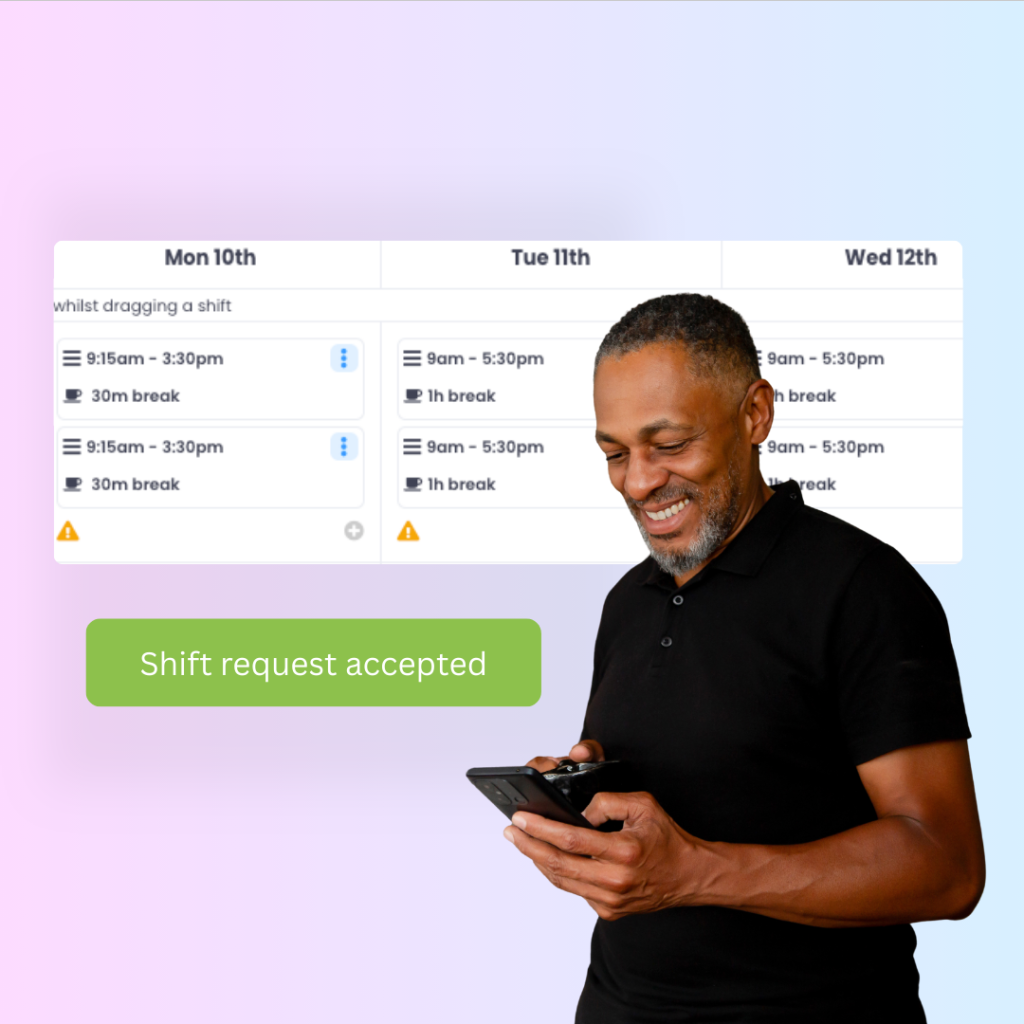
Better scheduling plays a direct role in employee wellbeing. When shifts are predictable, transparent, and fairly distributed, staff experience lower stress, improved work-life balance, and stronger trust in leadership. Rota management software supports staff wellbeing by centralising scheduling, applying overtime rules consistently, and improving visibility of leave and contracted hours. Structured rota management reduces reactive changes and helps organisations build healthier, more stable teams.
Why scheduling has a direct impact on wellbeing
Work schedules don’t just determine working hours.
They influence sleep patterns, family time, social commitments, and mental load. In shift-based environments, especially unpredictable or poorly managed rotas can quietly erode wellbeing over time.
Many organisations still rely on spreadsheets for scheduling. But without the structure of rota management software, maintaining fairness, visibility, and consistency becomes increasingly difficult as teams grow.
When employees can’t plan ahead, uncertainty increases. And uncertainty is one of the biggest contributors to workplace stress. Better scheduling reduces that uncertainty. It replaces last-minute surprises with clarity.
The hidden wellbeing cost of poor scheduling
Scheduling problems rarely show up as “rota complaints”. They show up as fatigue, disengagement, and frustration.
Common signs that scheduling is affecting wellbeing include:
- Frequent last-minute shift changes
- Employees struggling to plan personal commitments
- Repeated overtime without recovery time
- Tension between colleagues over shift allocation
- Increased short-notice sickness
How rota management software supports healthier scheduling
Better scheduling is not about perfection.
It’s about structure, visibility, and fairness.
This is where rota management software plays a critical role. By centralising leave, contracted hours, and shift patterns into one system, organisations can reduce manual errors and improve consistency.
In practice, structured rota management software helps ensure:
- Rotas are published with reasonable notice
- Overtime rules are applied consistently
- Leave is visible before schedules are finalised
- Working patterns are respected
- Changes are communicated clearly
When employees can see their shifts ahead of time and trust that rules are applied fairly, stress reduces significantly. Predictability supports wellbeing.
The psychological impact of predictability
Research in workplace psychology consistently shows that perceived control improves wellbeing.
When employees know:
- When they’re working
- When they’re off
- How overtime is allocated
- How shifts are distributed
… they experience less background stress.
Rota management software supports this by providing transparency and structured rule application rather than relying on memory or reactive adjustments.
It’s not just about hours worked. It’s about feeling that those hours are managed consistently.
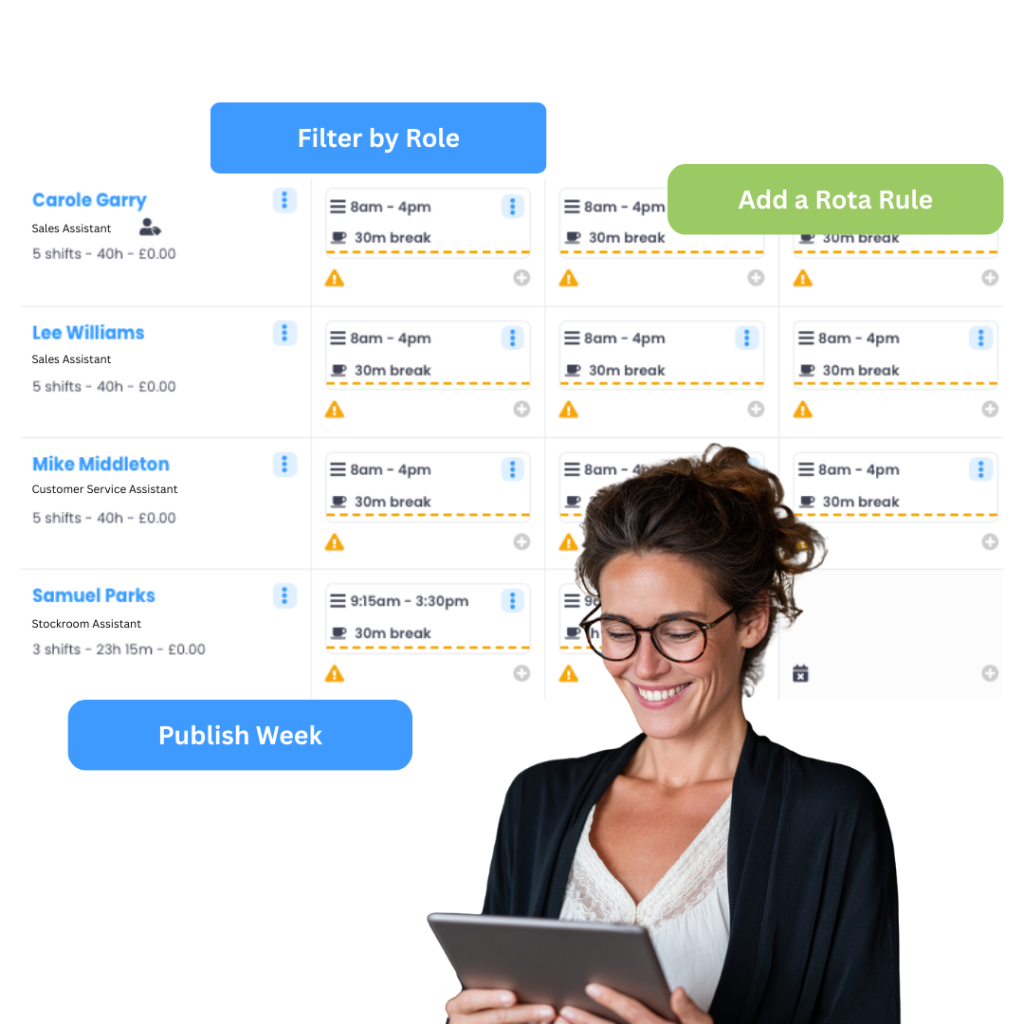
Practical steps to improve scheduling for staff wellbeing
Improving wellbeing through scheduling doesn’t require radical change. It requires intention and structure.
Here are practical steps organisations can take:
1. Publish rotas earlier
Providing shifts with adequate notice allows employees to plan personal commitments confidently.
2. Monitor overtime distribution
Use rota management software to track who is consistently working extended hours and ensure recovery time is built in.
3. Rotate less desirable shifts
Avoid repeatedly allocating unpopular shifts to the same individuals.
4. Reduce last-minute changes
Structured scheduling systems reduce the need for reactive amendments.
5. Make scheduling transparent
Employees should understand how decisions are made and how shifts are allocated. Small structural improvements often deliver significant wellbeing benefits.
If you’d like to explore how structured rota management works in more detail:
Visit our rota management software page.
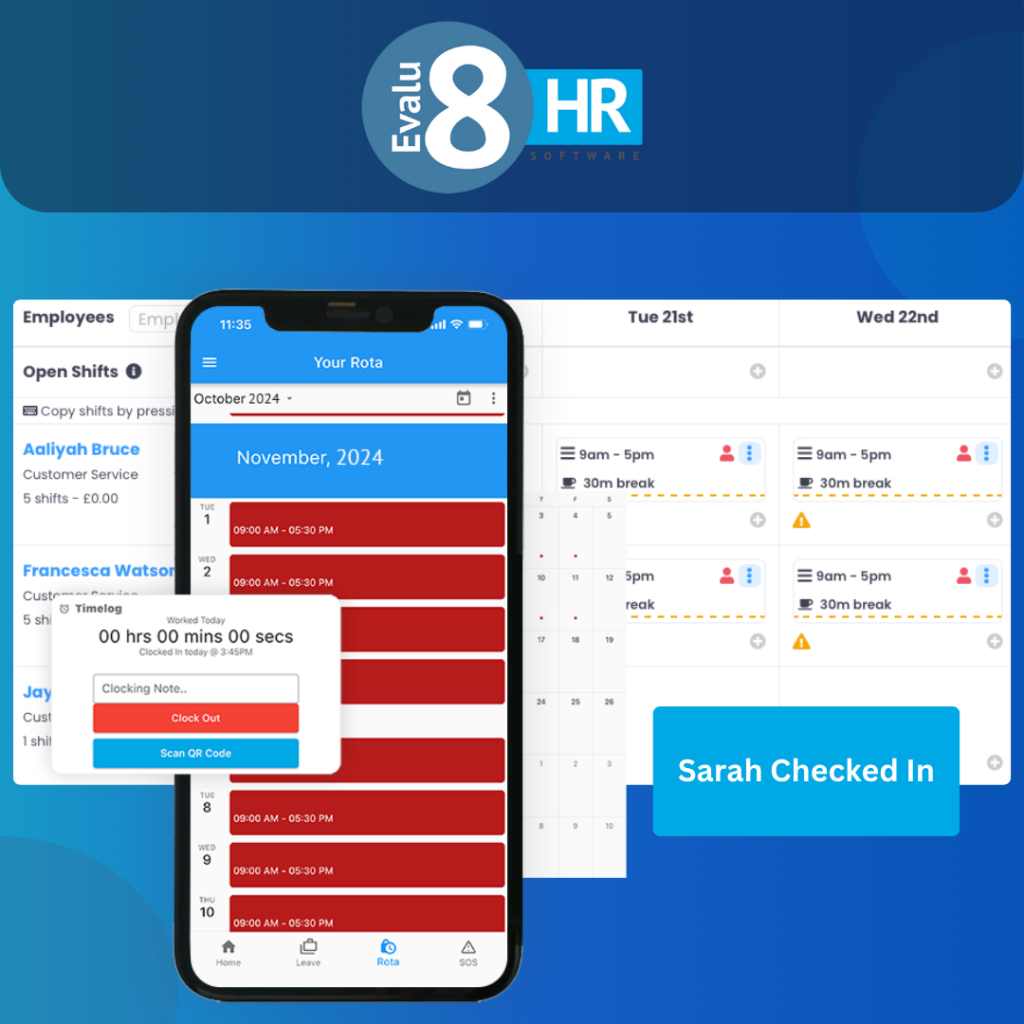
How Evalu-8 HR supports structured rota management
Many scheduling issues stem from lack of visibility rather than lack of care.
When rotas are built in spreadsheets, it’s difficult to see long-term patterns clearly. Overtime can accumulate unnoticed. Leave clashes may not surface until late.
Evalu-8 HR includes rota management software that connects scheduling with absence tracking and contracted hours. Managers gain full visibility before publishing shifts, and configured overtime rules are applied consistently across teams.
As a result, organisations can:
- Reduce reactive scheduling changes
- Apply overtime rules consistently
- Improve visibility of leave before publishing rotas
- Support more balanced shift distribution
- Give employees clearer access to their schedules
The aim isn’t to add complexity. It’s to create stability. And stability supports wellbeing.
When better scheduling becomes a cultural advantage
In competitive sectors such as hospitality, healthcare, and retail, staff wellbeing is closely linked to retention.
Employees increasingly value:
- Predictability
- Respect for personal time
- Transparent processes
- Balanced workloads
Rota management software doesn’t just improve operational efficiency, it supports a healthier, more sustainable working environment. Wellbeing doesn’t sit outside operations. It’s shaped by them.
FAQs: Rota management software and staff wellbeing
Yes. When shifts are structured fairly and recovery time is considered, employees are less likely to experience fatigue and burnout.
The biggest risks include formula errors, overwritten data, duplicated files and inconsistent overtime calculations. Spreadsheets also make it difficult to track long-term shift distribution patterns or flag scheduling conflicts before publishing. Over time, these risks can lead to payroll disputes and reduced employee trust.
Frequent sickness, frustration around shift allocation and difficulty planning personal time are common indicators.
No. Even small and mid-sized teams benefit from improved visibility and reduced manual scheduling errors.
Predictable, transparent scheduling supports morale and trust, both of which are closely linked to employee retention.