
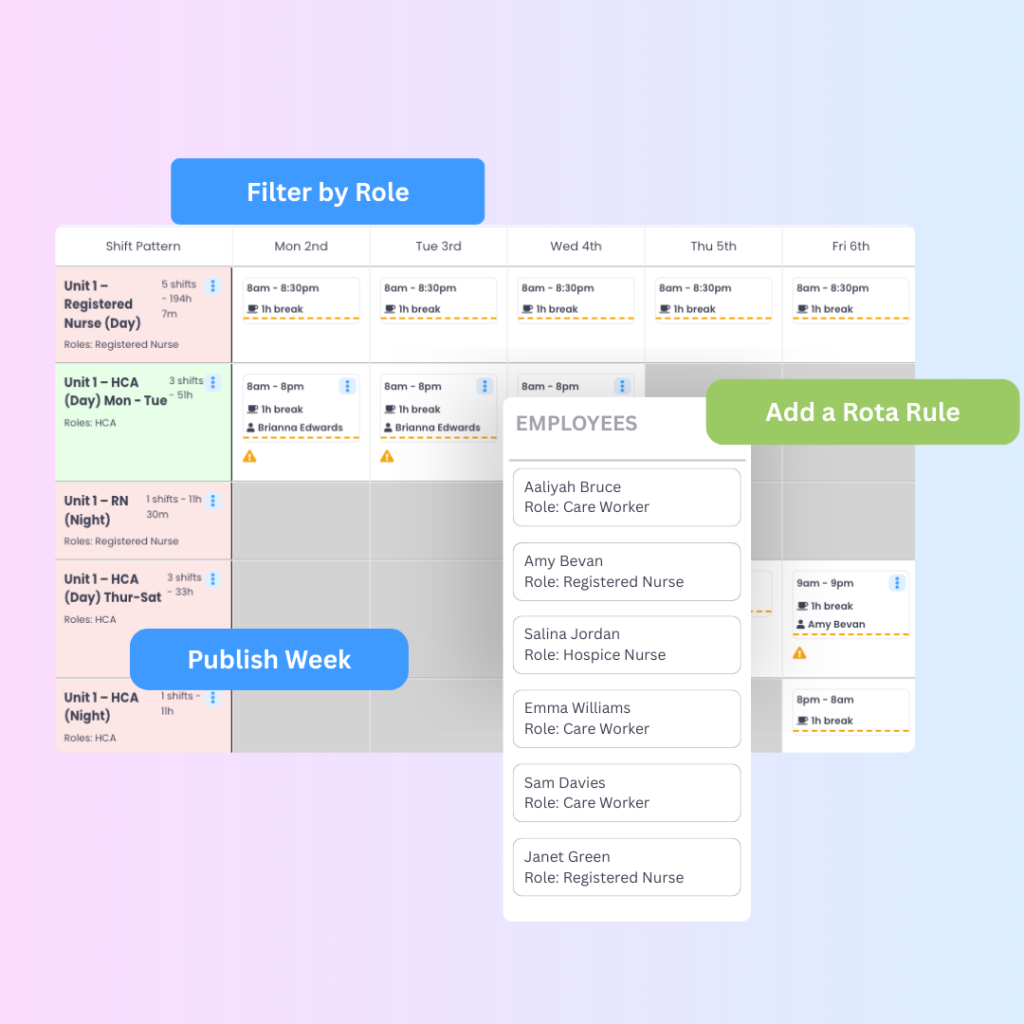
Why hospice staffing changes between day and night
Hospice services operate continuously, but the demands of care change throughout the day.
During daytime hours, patients may receive a wider range of services including medical reviews, therapy sessions, family visits, and administrative support. As a result, daytime rotas often require larger teams with a wider mix of roles.
Night shifts are typically quieter but still require safe clinical coverage. While fewer staff may be scheduled, those on shift must be able to respond quickly to patient needs and maintain safe care levels.
Because the responsibilities and activity levels differ, hospices usually schedule different staffing numbers for day and night shifts.
How hospices decide day and night staffing levels
Staffing levels are usually based on a combination of clinical guidance, patient needs, and operational experience.
Managers typically consider:
- The number of patients currently in care
- Clinical support requirements during each shift
- Patient monitoring needs overnight
- Safety policies around minimum staffing levels
For example, a hospice inpatient unit might require:
- Day shift: Three nurses and two healthcare assistants
- Night shift: Two nurses and one healthcare assistant
While the team size may change, the goal remains the same, maintaining safe and consistent patient care.
Why night shift planning requires extra care
Although night teams are usually smaller, they carry significant responsibility.
Night staff must manage patient needs with fewer colleagues available. This means rotas must be designed carefully to ensure that staff are not placed under unnecessary strain.
Challenges with night shift scheduling can include:
- Staff fatigue caused by repeated night shifts
- Overtime accumulating across rota cycles
- Difficulty maintaining fair shift distribution
- Coverage gaps caused by leave or sickness
Because night teams are smaller, even one missing staff member can have a large impact.
This is why hospice rota planning often focuses heavily on predictability and fairness, particularly when assigning night shifts.
Why day and night coverage works best with structured rotas
To manage different staffing levels effectively, many hospices use coverage-based rota planning.
Rather than assigning individuals first, managers begin by defining the staffing coverage required for each shift. Once the coverage requirement is clear, staff can then be allocated to fill those roles.
This approach helps ensure that:
- Day shifts have the right mix of clinical staff
- Night shifts maintain safe minimum coverage
- Staff workloads remain balanced across the rota cycle
When coverage is defined first, rota planning becomes easier to review and adjust.
How rota management software helps hospices manage shift differences
Managing different staffing levels across day and night shifts can become difficult when rotas are built in spreadsheets.
Managers often need to review multiple files, cross-check leave requests, and manually calculate working hours. Over time, this increases the risk of small mistakes appearing in the schedule.
This is where rota management software can make a significant difference.
By bringing scheduling, leave tracking, and employee contracts together in one system, rota management software improves visibility across the entire rota.
For hospice teams, this helps:
- Maintain appropriate staffing levels across day and night shifts
- Track employee availability before shifts are assigned
- Monitor contracted hours and overtime more clearly
- Reduce manual adjustments to the rota
With clearer oversight, managers can build rotas that balance operational needs with staff wellbeing.
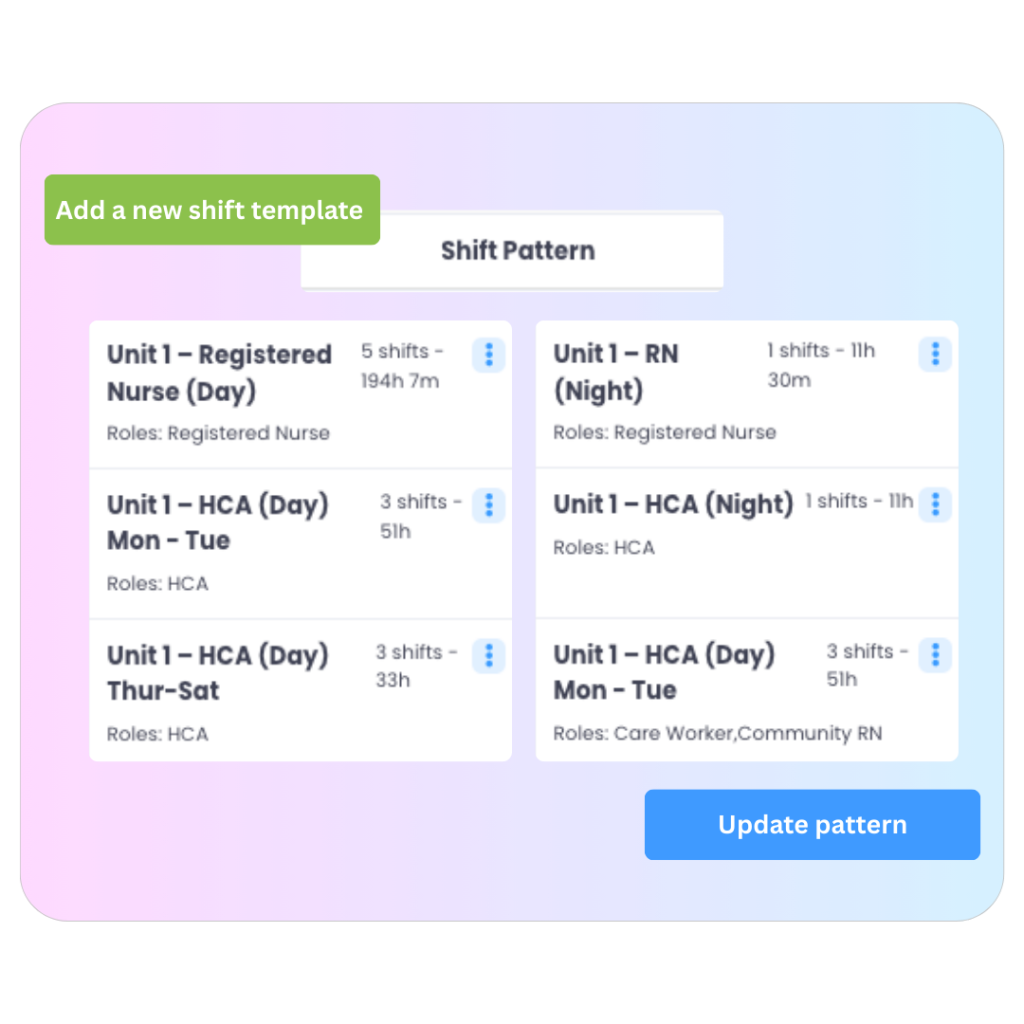
How Evalu-8 HR supports day and night hospice rotas
Hospice rota planning often requires managers to balance different staffing requirements across day and night shifts while still maintaining fairness for the team.
Evalu-8 HR includes rota software for hospices designed to support healthcare teams, allowing managers to define coverage requirements for each shift before assigning staff. This makes it easier to plan different staffing levels for day and night shifts while maintaining visibility of staff availability and working hours.
For hospice teams managing mixed shift patterns, this structured approach helps managers:
Spot coverage gaps early
Quickly identify unfilled shifts or weak night coverage, especially across weekends, so issues can be addressed before the rota is published.
Keep night shifts fair across the team
Track who is working night shifts across the rota cycle, helping managers distribute less desirable shifts more evenly.
Keep night shifts fair across the team
Track who is working night shifts across the rota cycle, helping managers distribute less desirable shifts more evenly.
Protect availability and contracted hours
Because leave, sickness, and contracted hours connect directly to the rota, managers can see when availability or working limits may affect scheduling and avoid accidental overtime spikes.
Rather than relying on manual checks across spreadsheets, managers gain a clearer view of staffing coverage across the entire rota period. This makes it easier to maintain safe staffing levels across both day and night shifts.
Want to see how rota management software supports structured scheduling
Visit our rota management software for hospices page.
Balancing care needs with staff wellbeing
Hospice rotas must always prioritise patient care. At the same time, fair shift distribution and predictable schedules play an important role in protecting staff wellbeing.
Day and night shifts may require different staffing levels, but the principles behind good scheduling remain the same: clear coverage planning, fair distribution of shifts, and visibility of staff availability.
When rotas are built with these factors in mind, teams are better supported and care delivery remains consistent across every shift.
Summary
Hospices often schedule different staffing levels for day and night shifts in order to match patient care needs throughout the day.
Planning these differences requires careful oversight of coverage levels, staff availability, and working patterns.
Coverage-based rota planning helps managers define staffing requirements first before assigning staff to shifts. When supported by rota management software, hospices gain clearer visibility of staffing levels and employee availability across the rota.
This structured approach helps ensure that both day and night shifts remain safely staffed while supporting fair and balanced rotas.
FAQs
Daytime care often includes more clinical activity, therapies and visits, which requires larger teams. Night shifts typically have fewer staff but still maintain safe clinical coverage.
A coverage-based rota defines the number of staff required for each shift before assigning individuals to fill those roles.
Hospices often rotate night shifts across the team and monitor working hours to prevent fatigue or overtime accumulation.
Yes. Rota management software improves visibility of coverage levels, staff availability, and working hours, helping managers maintain safe staffing across all shifts.