
Why multi-unit rotas are different
Many hospices operate across multiple care environments at the same time.
These might include inpatient units, community care teams, day services and outreach support. While each service has its own staffing requirements, teams often share the same pool of nurses, carers and support staff.
This creates a unique scheduling challenge.
Managers must ensure that every unit has safe staffing coverage while also making sure staff hours remain balanced and sustainable.
Planning rotas across multiple units therefore requires a clear view of both coverage needs and staff availability.
What is a shared staff pool?
A shared staff pool refers to a group of employees who can work across multiple hospice services or units.
Instead of assigning staff to only one area, managers schedule them where coverage is most needed.
For example, a hospice might share staff across:
Inpatient care units
Community nursing teams
Day care services
Specialist support roles
This flexibility helps hospices respond to changing care needs and manage staffing shortages more effectively.
However, it also increases the complexity of rota planning.
The coverage challenge in multi-unit rotas
When staff can work across multiple units, managers must track several things at once.
They need to understand:
Coverage requirements for each unit
Which staff members are qualified for each service
Leave and absence across the entire staff pool
Contracted hours and overtime patterns
Without a clear overview, it becomes easy for coverage gaps or scheduling conflicts to appear. This is why many hospices adopt coverage-based rota planning when managing shared staff pools.
How coverage-based rotas support shared staff pools
Coverage-based rotas begin with a simple principle:
Define the staffing coverage required first, then assign staff to meet those needs.
For multi-unit hospices, this means identifying how many staff members are needed in each service before allocating individuals to shifts.
By planning coverage across the entire rota period, managers can ensure that:
Every unit maintains safe staffing levels
Staff workloads remain balanced
Shifts are distributed fairly across the team
This approach helps hospices maintain consistent care while still using staff flexibly across multiple services.
Why spreadsheet scheduling struggles with shared staff pools
Shared staff pools create more variables than traditional rotas. Managers must coordinate multiple units, different shift patterns and individual contracts at the same time.
When rotas are managed in spreadsheets, it becomes difficult to maintain a clear overview. Managers often need to review multiple files, recalculate hours and manually check coverage levels across units.
Over time, this increases the risk of:
- Coverage gaps appearing unexpectedly
- Staff being double-booked across units
- Overtime accumulating unnoticed
- Managers spending excessive time adjusting the rota
As hospice services expand, this manual approach becomes harder to maintain.
How Evalu-8 HR supports multi-unit hospice rotas
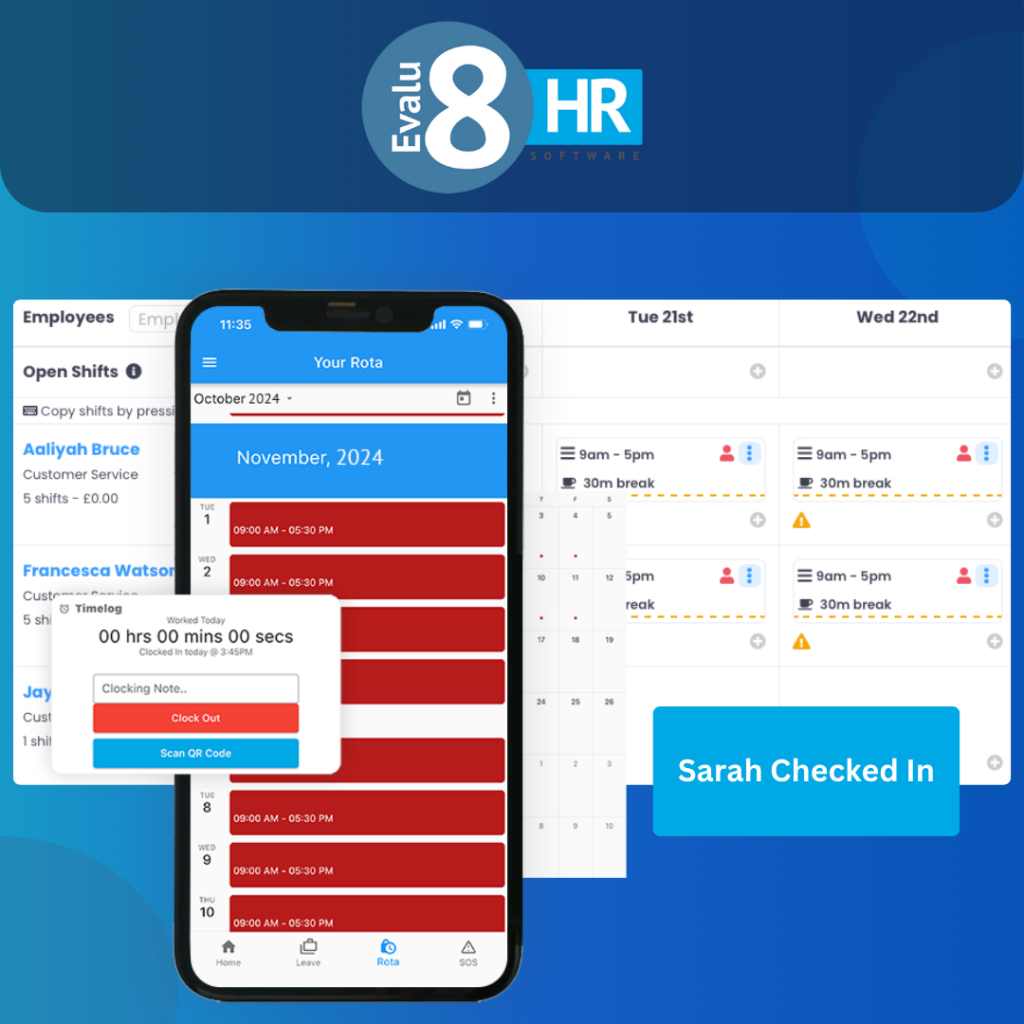
When you’re scheduling across multiple hospice units (inpatient, hospice at home, day services, community teams), the hard part is not “building a rota”. It’s keeping a clear view of what cover each unit needs and who is actually available across the shared pool, without creating gaps or overloading the same people.
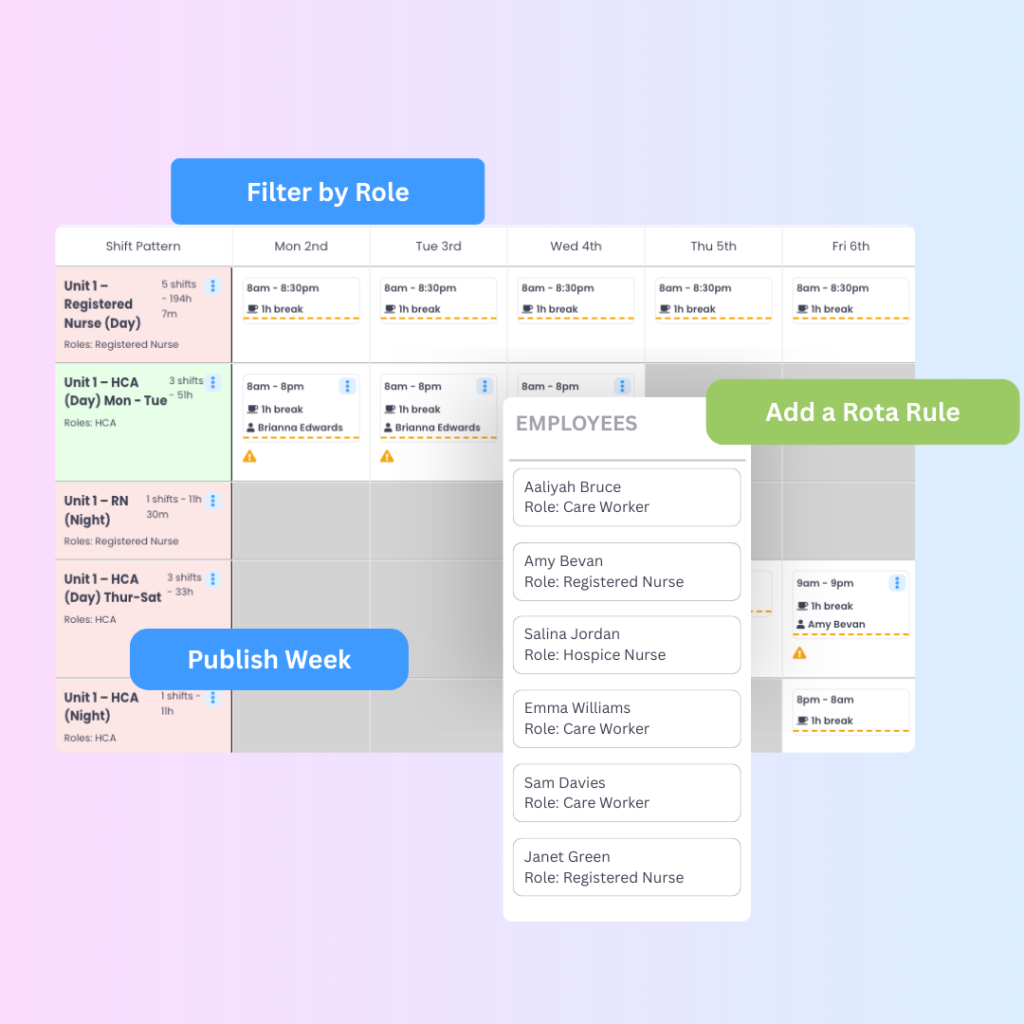
Evalu-8 HR’s rota is designed for coverage-led planning, which is especially useful when different services share the same staff. Instead of starting with a list of people and trying to fit it, start with the shifts and roles that must be covered, then assign the right staff.
Plan cover by unit first, then allocate staff
For multi-unit rotas, many hospices prefer a coverage rota view, where you can:
Make availability easier to see (because rotas don’t exist in a vacuum)
- Leave and sickness visibility (so you’re not finding out too late that you’ve rota’d someone who is off)
- Working patterns and contracts, so decisions aren’t made in isolation from contracted hours and agreed working arrangements
In a shared pool model, availability changes fast. Evalu-8 HR connects rota planning with the wider people picture, including:
- Set up coverage templates per service (for example, “Hospice at Home”, “Inpatient”, “Community”) with the roles and shift patterns you need covered
- See unfilled shifts clearly, and fill them from the shared staff pool (filtered by job role, so you’re not scrolling through everyone)
- View rotas over 2, 3, or 4 weeks, which makes it easier to spot thin patches across multiple units (not just next week’s gaps)
Want to see how rota management software supports structured scheduling
Visit our rota management software for hospices page.
Why structured multi-unit rotas matter
Hospice teams rely on each other to deliver consistent, compassionate care. When staffing is balanced across services, it becomes easier for teams to support one another without creating fatigue or coverage risks.
Planning rotas around coverage requirements and shared staff pools allows hospices to maintain safe staffing levels while still adapting to changing care needs.
In multi-service hospices, structured rota planning helps ensure the right people are in the right place at the right time.
Summary
Multi-unit hospices often rely on shared staff pools to support multiple services. While this flexibility helps organisations respond to changing care needs, it also makes rota planning more complex.
Coverage-based rotas help managers define staffing needs first and then allocate staff where they are required. When supported by rota management software, hospices gain the visibility needed to coordinate staffing across multiple units while maintaining safe coverage.
For teams managing several services at once, structured rota planning helps protect both staff wellbeing and patient care.
FAQs
A shared staff pool is a group of employees who can work across multiple hospice services or units depending on staffing needs.
Coverage-based rotas ensure the required number of staff are scheduled for each shift before assigning individuals, helping maintain safe care levels.
Managing rotas across multiple units can make it harder to track coverage levels, staff availability and contracted hours without structured scheduling tools.
Yes. Rota management software improves visibility across services, helping managers coordinate staffing across multiple units while maintaining safe coverage levels.