

Why safe rota patterns matter in hospice care
Hospice care requires clinical precision, emotional resilience and deep compassion. When rota patterns begin to create fatigue, the consequences extend far beyond staff wellbeing. They can affect judgement, communication and, ultimately, patient safety.
Unsafe rota patterns rarely start with a single decision. They usually develop gradually through repeated long shifts, limited rest periods and uneven distribution of overtime. In smaller hospice teams, where staffing pools are often limited, these risks can build quickly.
Preventing unsafe rota patterns in hospices is not simply good HR practice. It is a patient safety priority. This is why many hospices turn to rota management software to create safer, more balanced schedules.
The reality of hospice scheduling
Hospices operate under constant pressure to maintain 24/7 coverage while delivering deeply personal care. Unlike larger hospital trusts, many hospices work with lean teams and rely heavily on experienced clinicians.
When pressure increases, certain patterns often emerge:
- A nurse finishes late and returns early the next morning
- Several 12-hour shifts are scheduled consecutively
- The same senior staff member repeatedly covers gaps
- Overtime accumulates quietly over months
These patterns rarely happen because managers intend to create risk. They happen because visibility is limited and scheduling decisions are made reactively.
Fatigue doesn’t announce itself immediately. It builds.
Rest rules and fatigue: Why they matter
Rest rules are designed to protect both staff and patients. They are not bureaucratic requirements they are safeguards against cognitive overload and burnout.
In hospice environments, fatigue affects:
- Clinical decision-making
- Attention to detail
- Emotional regulation
- Compassion fatigue
- Communication with families
Even subtle fatigue can increase risk in high-emotion environments.
Preventing unsafe rota patterns means monitoring more than coverage levels. It requires oversight of working hours, recovery time and fairness over extended periods.
Why spreadsheet rotas increase risk
Many hospices still rely on spreadsheets to manage scheduling. While familiar, spreadsheets struggle to provide long-term visibility.
They do not automatically flag short rest periods. They do not clearly highlight patterns of repeated overtime. They rely heavily on manual checks and memory.
As complexity grows, small scheduling compromises can compound. Without structured oversight, fatigue risk can go unnoticed until it becomes a wellbeing or retention issue.
A practical approach to safer rota patterns
Preventing fatigue in hospices requires intentional structure rather than reactive scheduling.
Start by reviewing current patterns over a three-month period. Look beyond individual weeks and identify trends. Are the same staff consistently working extended hours? Are night shifts fairly rotated? Is recovery time genuinely protected?
Introduce consistent rules around:
Minimum rest between shifts
Maximum weekly working hours
Consecutive long or night shifts
Fair distribution of weekends
These rules should not feel restrictive. They should feel protective. When managers have clear guardrails, safer decisions become easier.
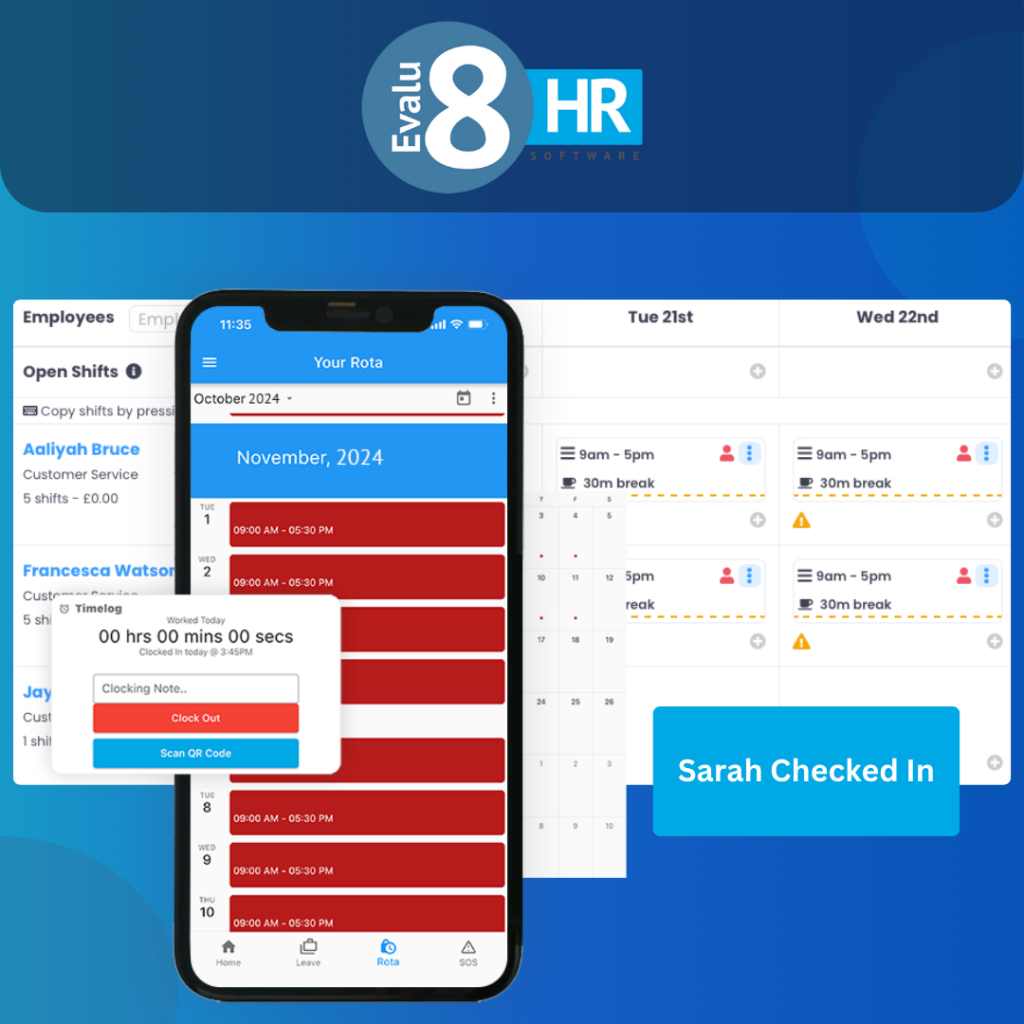
How Evalu-8 HR supports safer hospice scheduling
Preventing unsafe rota patterns becomes significantly easier when managers have clear visibility of schedules and working patterns.
Evalu-8 HR’s rota management software for hospices connects scheduling with contracted hours, absence tracking, and time data in one structured system.
This allows hospice managers to see overtime accumulation, working patterns and leave before publishing rotas.
Configured working patterns help ensure shifts align with agreed contracts. Centralised oversight reduces reliance on memory or manual checks. Instead of discovering fatigue risk after the fact, potential issues can be identified earlier.
Evalu-8 HR rota types for hospices
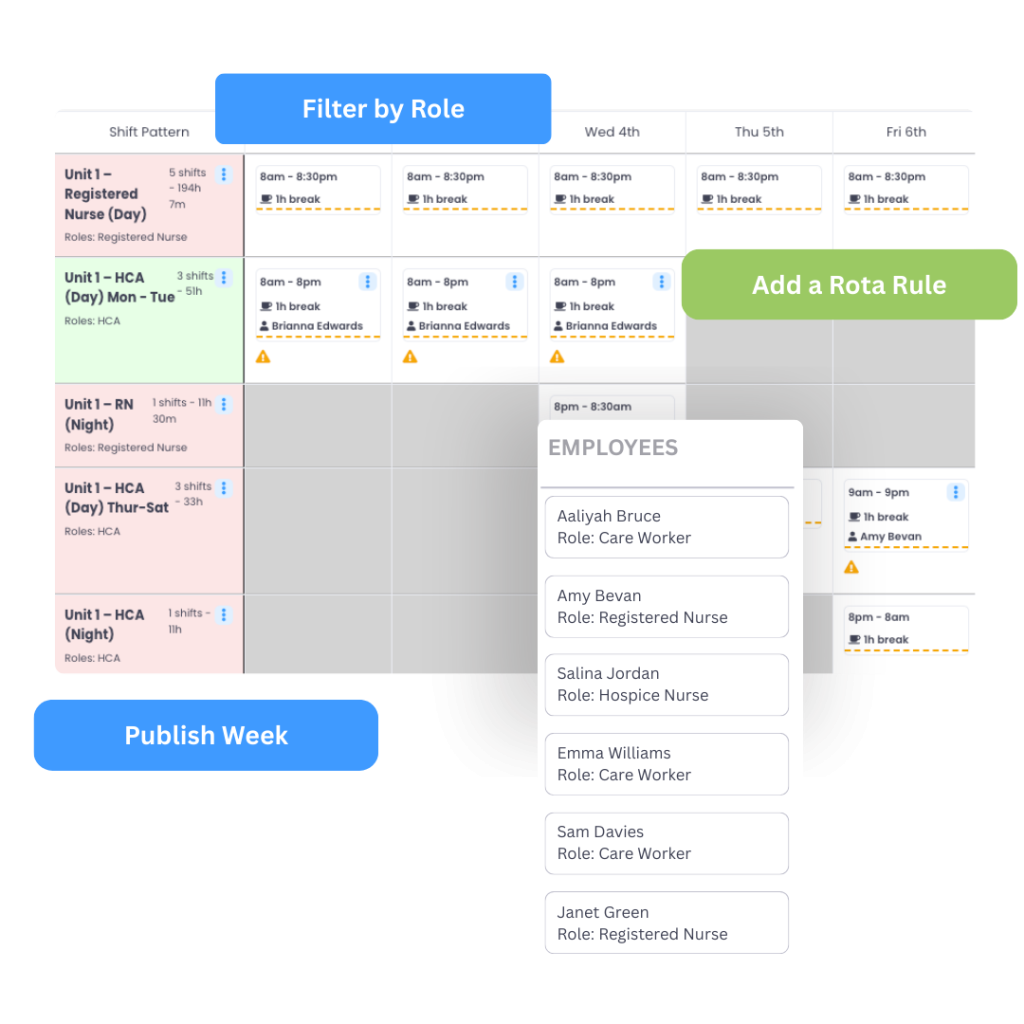
Coverage-based rota
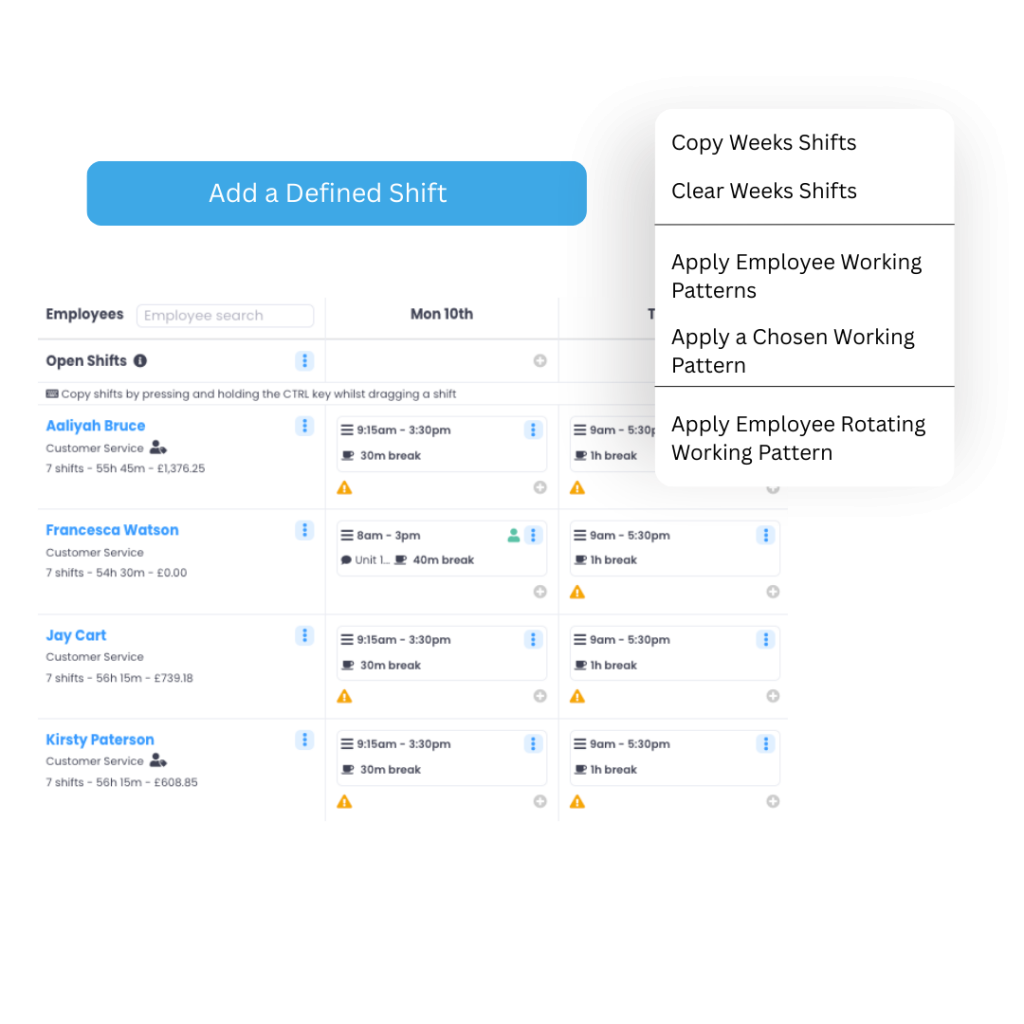
People-based rota
A coverage rota focuses on making sure the right roles are covered on each shift, rather than assigning specific people straight away.
In a hospice, this helps ensure every shift has the required mix of nurses, carers, and support staff to maintain safe staffing levels.
A people rota schedules specific individuals directly into shifts based on availability and contracted hours. This gives managers a clear view of who is working each shift and makes it easier to manage leave, sickness, and shift changes.
With Evalu-8 HR‘s rota management software, hospices can:
- Monitor overtime thresholds in real time
- Reduce short rest gaps between shifts
- Improve fairness in night and weekend rotation
- Support compliance with rest principles
- Move away from fragmented spreadsheet tracking
The objective isn’t to restrict flexibility. It’s to introduce clarity that protects both staff wellbeing and patient care.
In hospice environments, safer rota management is part of safer care delivery.
Want to see how structured rota management works in practice?
Visit our rota management software for hospices page.
Why this matters for hospice retention
Fatigue contributes significantly to burnout and turnover in care environments. Hospices depend on experienced, emotionally resilient teams. When rota patterns consistently stretch recovery time, morale and retention suffer.
Safe scheduling supports:
- Staff wellbeing
- Compassion resilience
- Clinical confidence
- Team stability
Preventing unsafe rota patterns is not only about compliance. It is about sustaining the workforce that hospice care depends on.
Summary
Preventing unsafe rota patterns in hospices requires more than filling shifts. It requires structured oversight of rest rules, working hours and fairness over time.
When rota management moves from reactive spreadsheets to structured visibility, fatigue risk becomes easier to manage. In hospice care, safe rotas support safe care.
FAQs: Preventing unsafe rota patterns in hospices
Unsafe rota patterns in hospices typically include insufficient rest between shifts, repeated long shifts without recovery time, excessive overtime and uneven distribution of night or weekend work. These patterns can increase fatigue risk and affect both staff wellbeing and patient safety.
Fatigue affects concentration, emotional regulation and decision-making, all of which are critical in hospice environments. In end-of-life care settings, even small lapses in attention can impact clinical accuracy, communication and overall patient experience.
Hospices can improve oversight by reviewing shift patterns over extended periods rather than week-by-week. Structured rota management software helps by tracking contracted hours, highlighting overtime accumulation and improving visibility of rest periods before schedules are finalised.
Yes. Rota management software reduces fatigue risk by applying consistent scheduling rules, improving visibility of working patterns and helping managers identify potential rest breaches before publishing rotas. This proactive oversight supports safer staffing decisions.