
What buyers should know before choosing rota software for hospices
Rota software for hospices should do more than assign shifts. It should help managers plan safe staffing coverage, compare contracted hours with scheduled hours, reflect leave and sickness in the rota, and manage mixed contracts or flexible working patterns. For hospices, the strongest systems combine rota planning with wider HR visibility, reducing spreadsheet reliance and making schedules easier to trust. Evalu-8 HR is one example of rota software designed to support both operational coverage and day-to-day staffing complexity in hospice environments.
Why hospice rota software needs a different standard
Buying rota software for a hospice is not the same as buying a generic staff scheduling tool.
Hospices often need to balance inpatient care, community support, mixed contracts, day and night coverage, leave, sickness, fairness and staff wellbeing all at once. That means the rota is not just a timetable. It is part of how safe care is delivered.
This is why many generic scheduling tools fall short. They may make it easier to place names against shifts, but they do not always help managers answer the more important questions:
Is this shift properly covered?
Are contracted hours still aligned?
Has leave been accounted for?
Is the rota fair across the team?
Can I trust this schedule before it goes live?
That is the real standard hospice buyers should be using.
What usually triggers the search for rota software
Most hospices do not go searching for software because they suddenly become interested in software.
They start looking because the current process begins to crack.
That usually happens when spreadsheets become harder to trust, when rotas take too long to build, or when managers feel they are constantly rechecking the schedule to make sure nothing has been missed. In some cases, the trigger is staff frustration around fairness, nights or contracted hours. In others, it is simply the growing complexity of managing multiple teams or services.
By the time a hospice is actively evaluating suppliers, the real issue is rarely just “we need a rota tool”.
It is usually:
we need better visibility
we need less fragility
we need fewer manual checks
we need a rota process that scales
What good rota software for hospices should help you do
The best systems do not just help you fill shifts. They help you manage the logic behind the rota.
A buyer should expect the system to support the operational reality of hospice scheduling, including coverage planning, contract visibility, staff wellbeing and flexible working arrangements.
In practical terms, good rota management software for hospices should help you:
- plan the right staffing levels for each shift
- compare contracted hours with scheduled hours
- reflect leave and sickness in the rota before publishing
- manage mixed contracts and working patterns
- review fairness across nights, weekends and less desirable shifts
- reduce last-minute rota corrections
- move away from spreadsheet dependency
If a system only improves the look of the rota but not the reliability of the process, it is probably not strong enough.
Must-have features hospice buyers should look for
Not every hospice will need exactly the same setup, but there are certain capabilities that are consistently valuable when comparing systems.
Coverage-based rota planning
Hospices often need to define the staffing requirement first, then assign people to meet that need. This is especially important where different units, day and night shifts, or role mixes need to be maintained safely.
People-based rota visibility
At the same time, managers also need to view the rota from the employee side. That means checking working patterns, contracted hours, fairness and shift distribution across the rota cycle.
Contracted hours vs scheduled hours
A strong rota system should make it easy to see when someone is drifting above or below their agreed hours, rather than leaving managers to find this manually later.
Leave and absence integration
If annual leave and sickness sit outside the rota, the final schedule becomes much harder to trust. Buyers should look for a system where absence is visible during rota planning, not after.
Support for mixed contracts and flexible working
Hospices often rely on a mix of full-time, part-time and flexible staff. The system should cope with that without turning the rota into a workaround exercise.
Visibility of gaps before publishing
One of the most practical features in a rota system is the ability to quickly see whether shifts are fully covered. This reduces rechecking and helps managers finish the rota with confidence.
Multi-unit or shared staff pool support
If staff can move across units or services, the software should make those interactions visible. Otherwise, one area can be covered at the expense of another without anyone noticing early enough.
Want to see how rota management software could support your scheduling?
Click here
What to avoid when choosing rota software for hospices
Not every rota system is built for the realities of hospice scheduling.
Some tools look polished in a demo, but quickly create frustration once managers start dealing with leave, mixed contracts, nights, weekends and coverage requirements in real life. That is why it is important to look beyond surface usability and think carefully about what the software will actually help your team manage day to day.
Hospice buyers should be cautious of systems that:
Make mixed contracts hard to manage
Hospices often rely on a mix of full-time, part-time and flexible staff. A rigid system can create more admin rather than less.
Keep rota planning separate from leave, sickness and contracts
When these sit in different systems or spreadsheets, managers still have to manually piece the picture together before publishing the rota.
Lack clear indicators of coverage
If managers cannot quickly see when a shift is fully covered, the final review process becomes slower and less reliable.
Still rely on manual checks in the background
A system may look digital on the surface, but if managers still need spreadsheets or side notes to check fairness, hours or leave, the process is not really fixed.
Do not scale with rota complexity
A basic rota tool may work for a small team, but struggle once you add multi-unit scheduling, shared staff pools, rotating patterns or more detailed coverage planning.
The real test is simple: does the software reduce uncertainty, or just move it somewhere else?
For hospice teams, the best rota systems are the ones that make planning more visible, more connected and easier to trust before the rota is published.
The questions hospice buyers should ask before choosing software
Before selecting a provider, it helps to ask practical questions rather than broad ones.
For example:
Can the system support both people-based and coverage-based rota planning?
Can managers clearly see when a shift is fully covered?
How are leave, sickness and contracted hours shown during rota building?
Can the system support mixed contracts and flexible working patterns?
How easy is it to review fairness across nights and weekends?
Does the software work well for hospices with more than one team or unit?
Will the rota still be manageable as the hospice grows?
These questions tend to reveal more than generic feature lists.
How Evalu-8 HR fits what hospice buyers are looking for
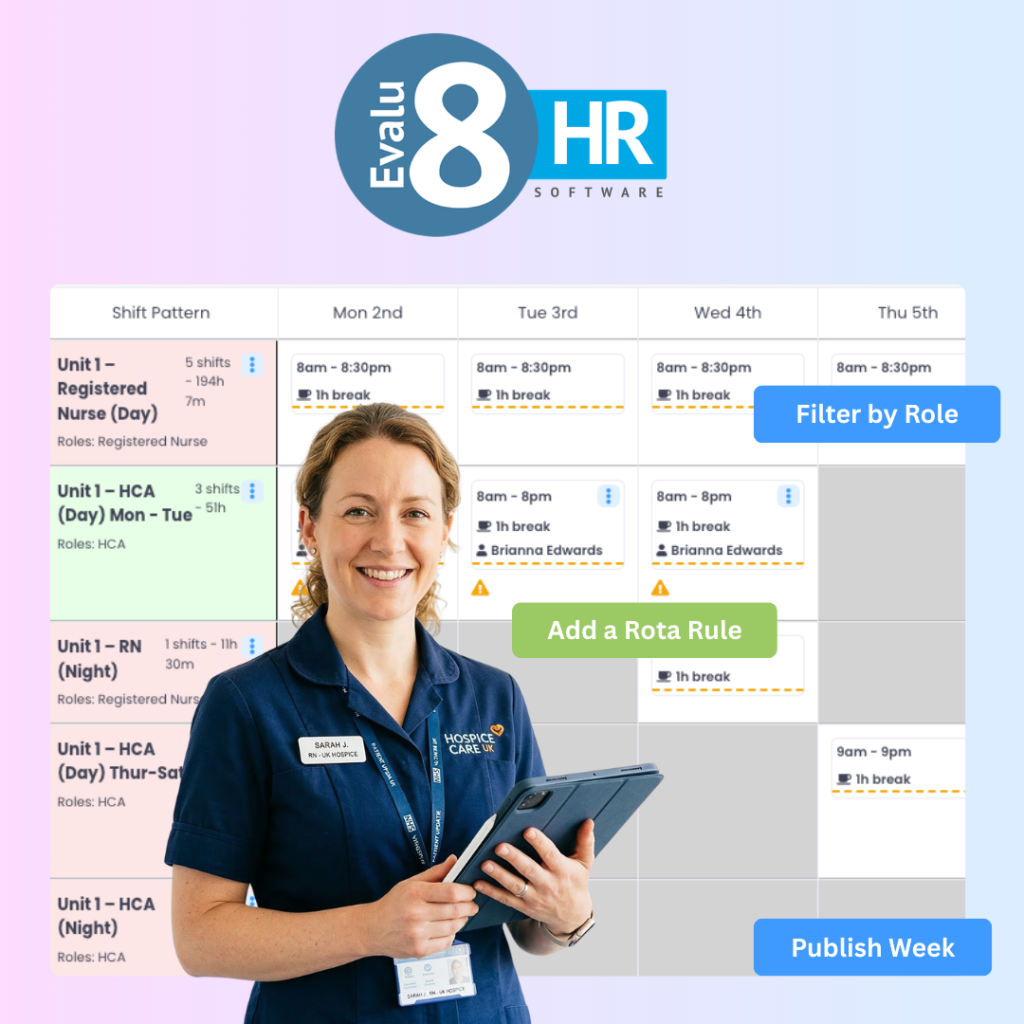
Evalu-8 HR is designed to support organisations that need more than a simple rota builder. For hospices, that matters.
Rather than treating rota planning as a standalone admin task, Evalu-8 HR connects scheduling with contracted hours, absence tracking and working patterns. This gives managers a fuller picture while building the rota, making it easier to maintain safe coverage and reduce avoidable errors.
For hospice teams, Evalu-8 HR supports several of the areas buyers usually care about most.
It supports both coverage-based and people-based rota planning
Coverage-based rota
People-based rota
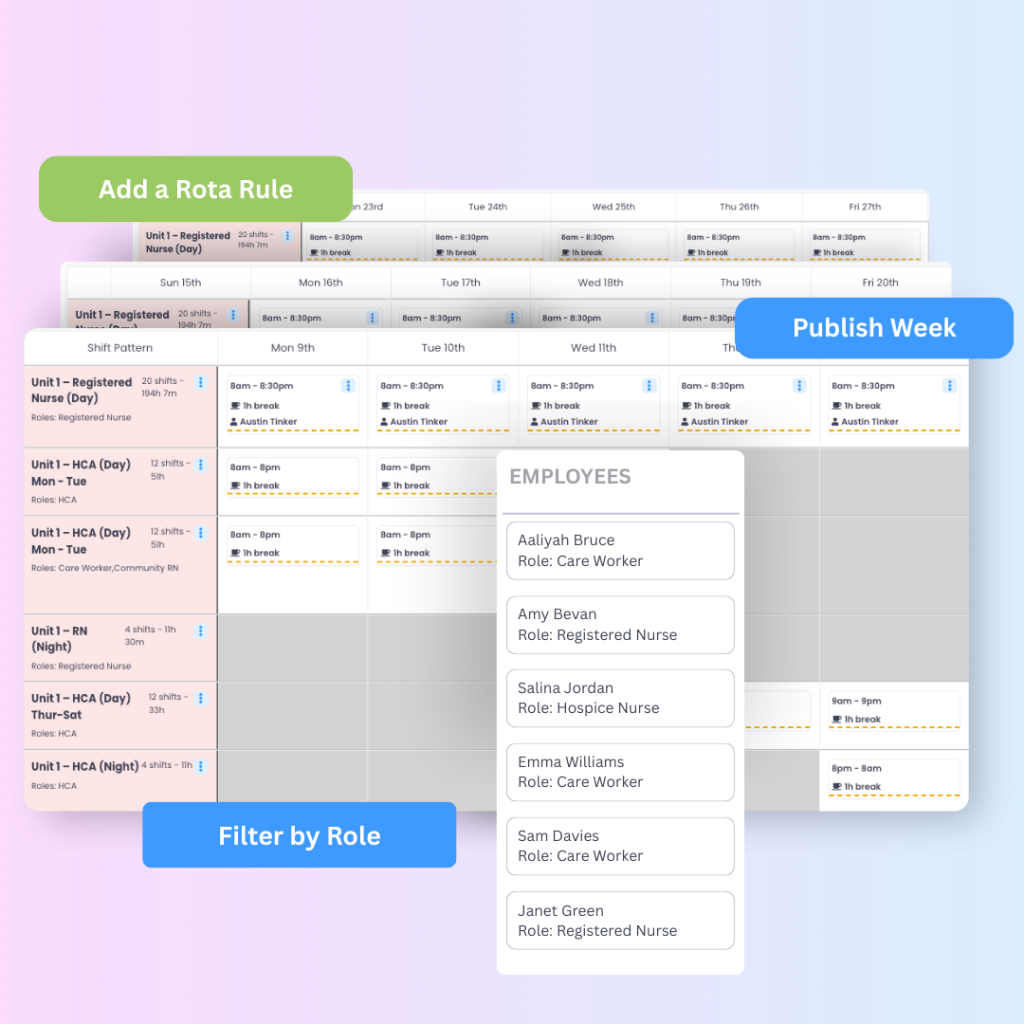
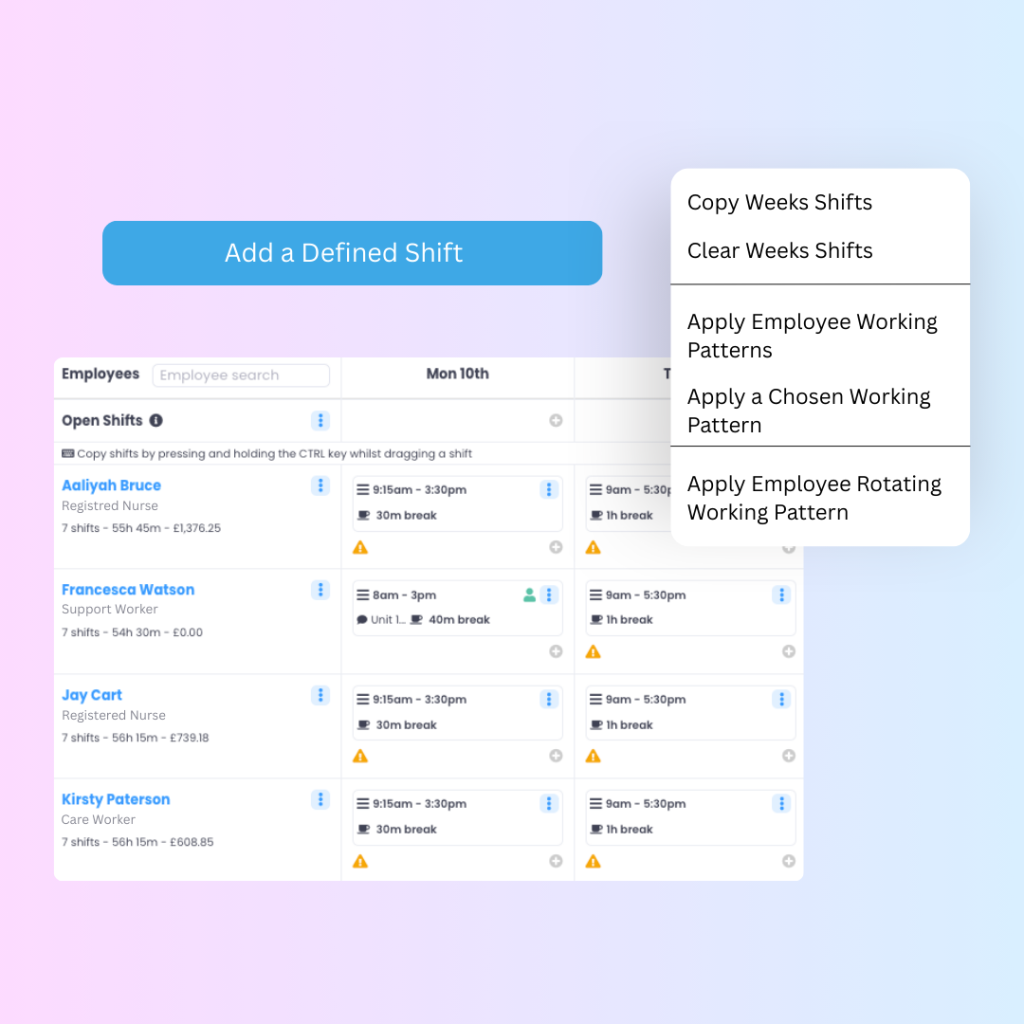
This is important because many hospices need both. Some parts of the rota start with required staffing numbers by shift or unit. Other parts depend on fairness across individuals, contracted hours and working patterns.
It makes rota completion easier to see
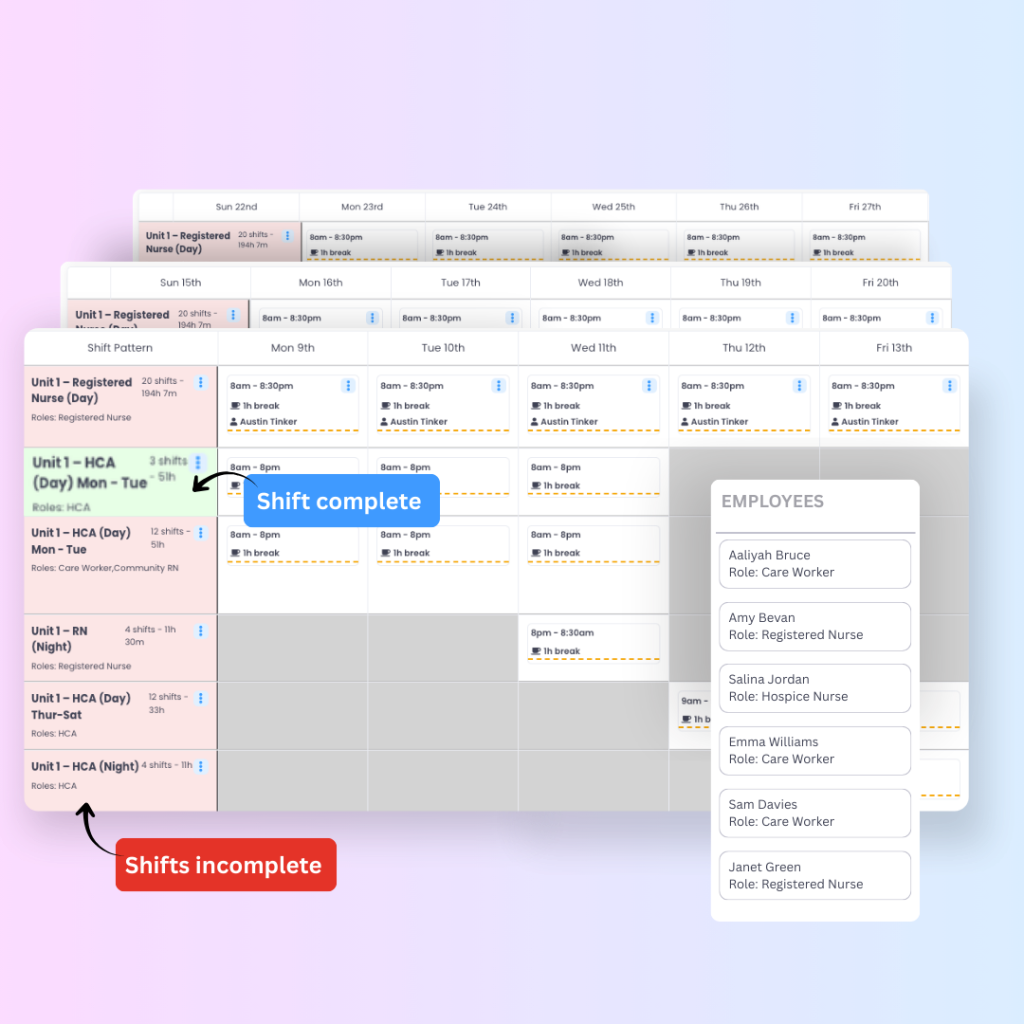
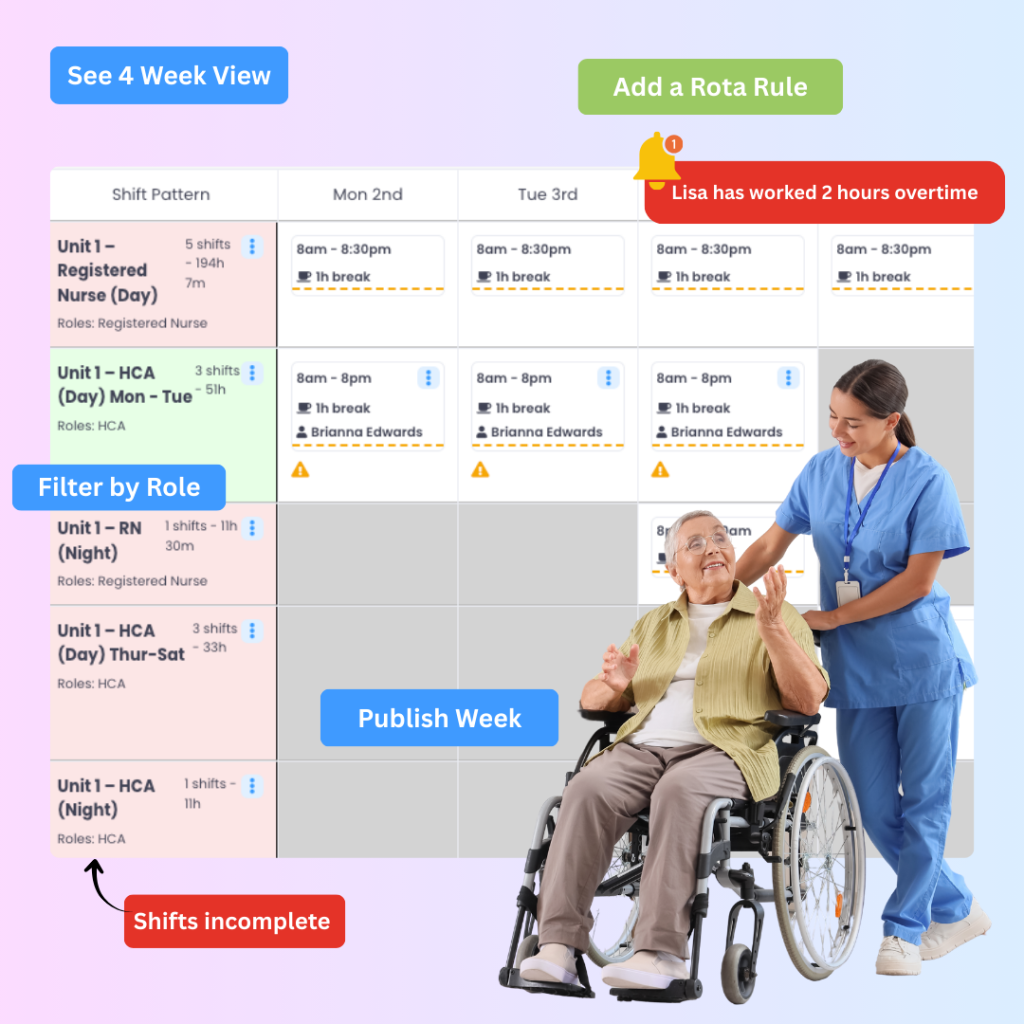
Features such as colour changes on the rota help managers see when a shift is fully covered, which makes the final review process quicker and more reliable.
It connects the rota to real staffing context
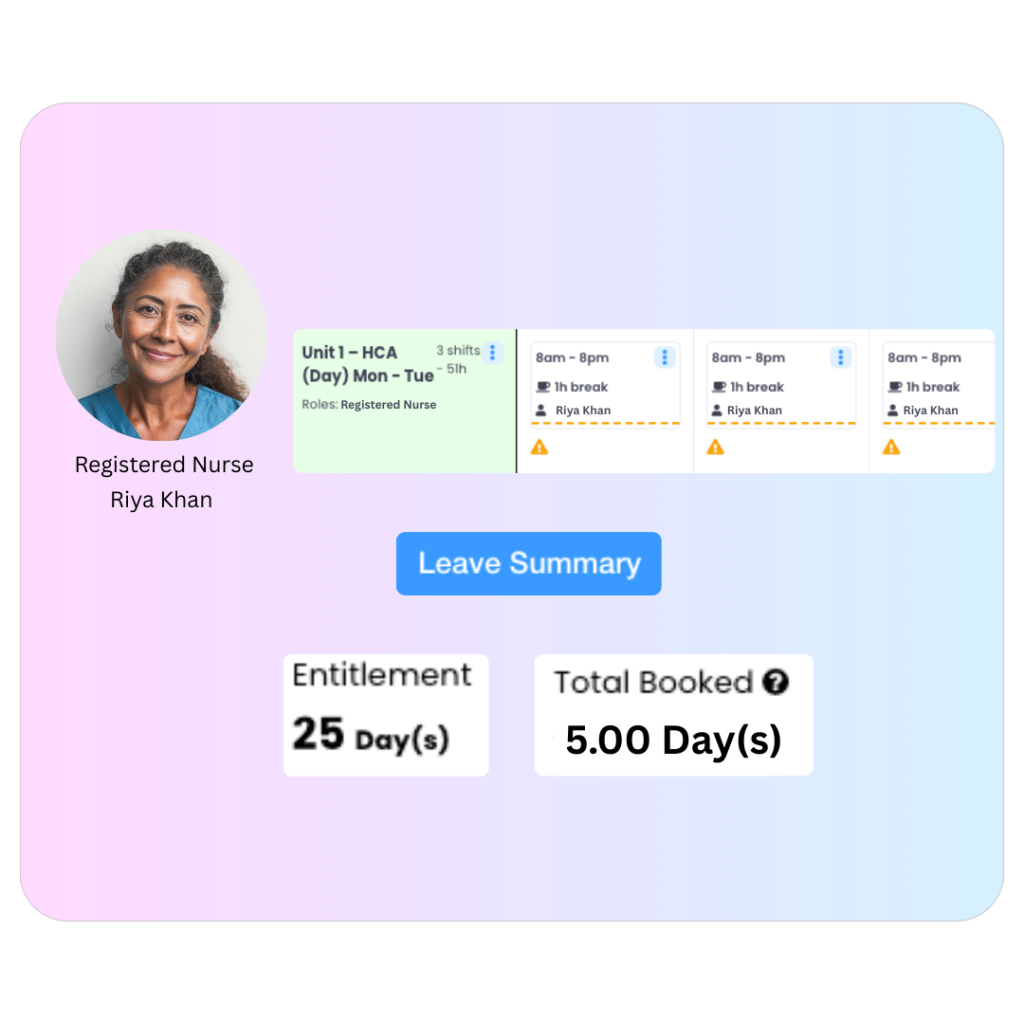
Because leave, sickness, contracted hours and availability sit alongside the rota, managers do not need to piece the picture together manually from separate sources.
It helps hospices manage complexity without losing visibility
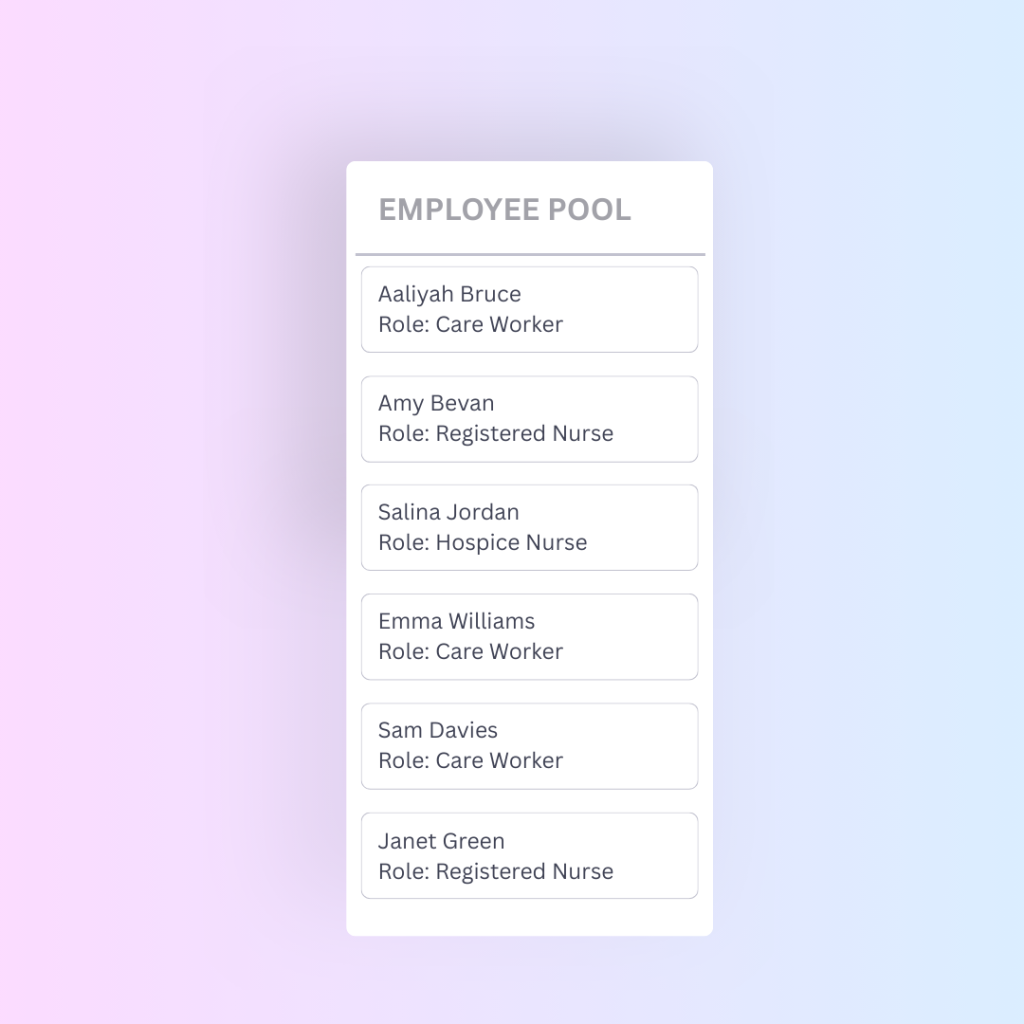
That includes day versus night coverage, mixed contracts, rotating patterns, multi-unit planning and shared staff pools.
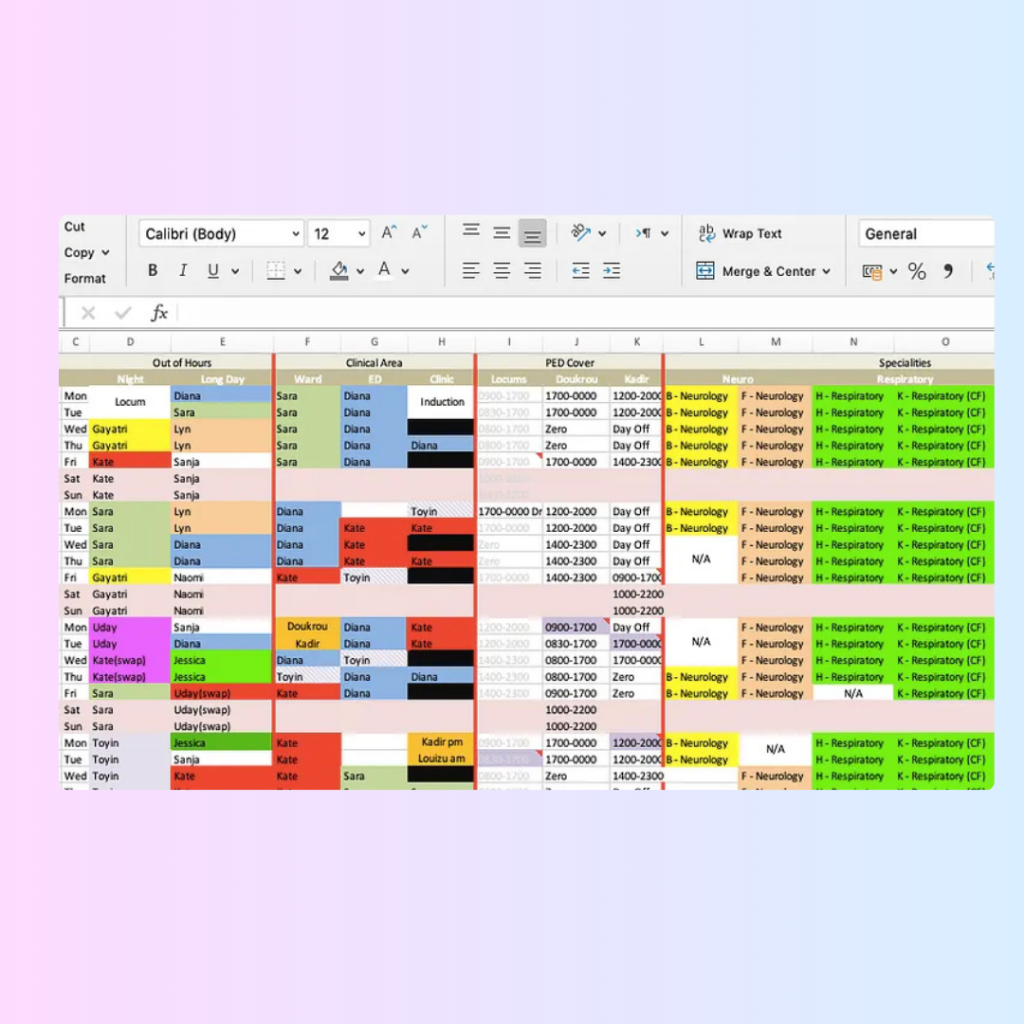
It reduces the reliance on fragile spreadsheet processes
Before
spreadsheet-based rota planning
After
Structured hospice rota software
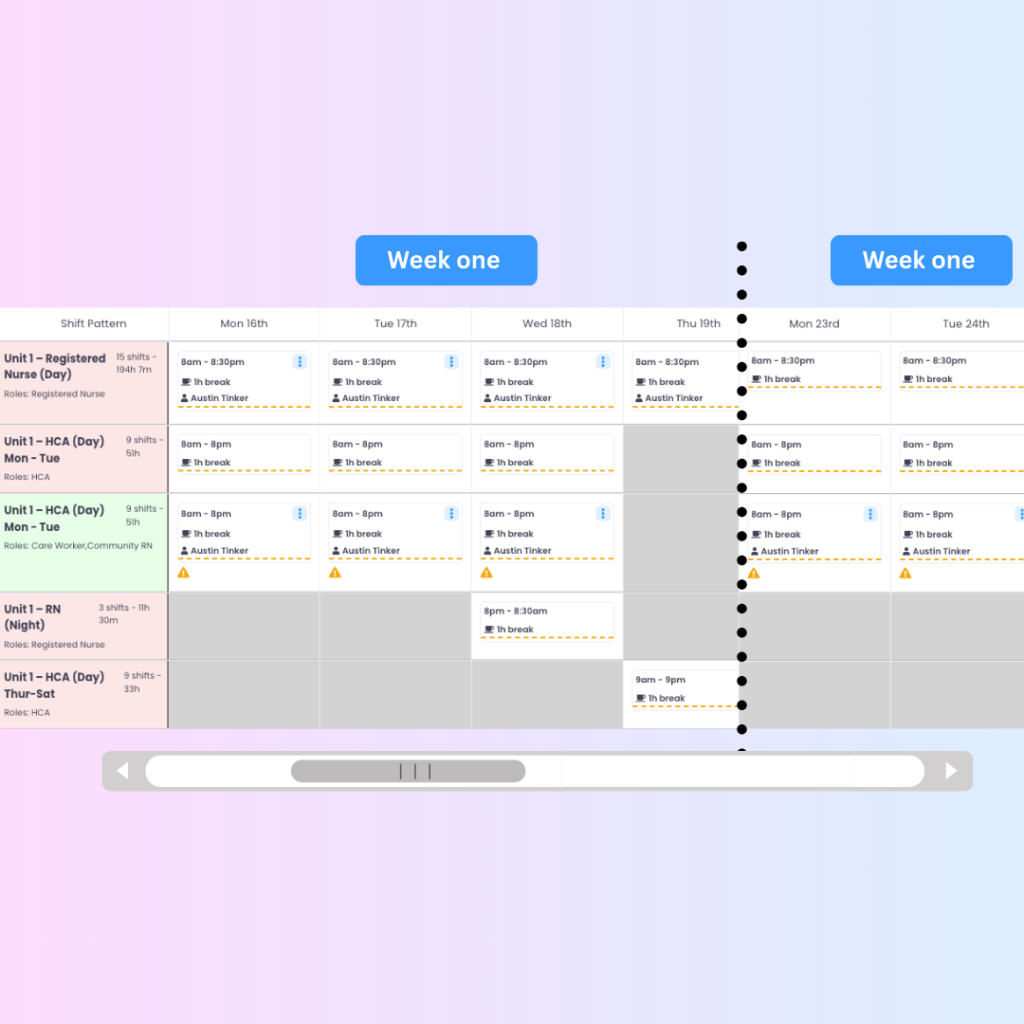
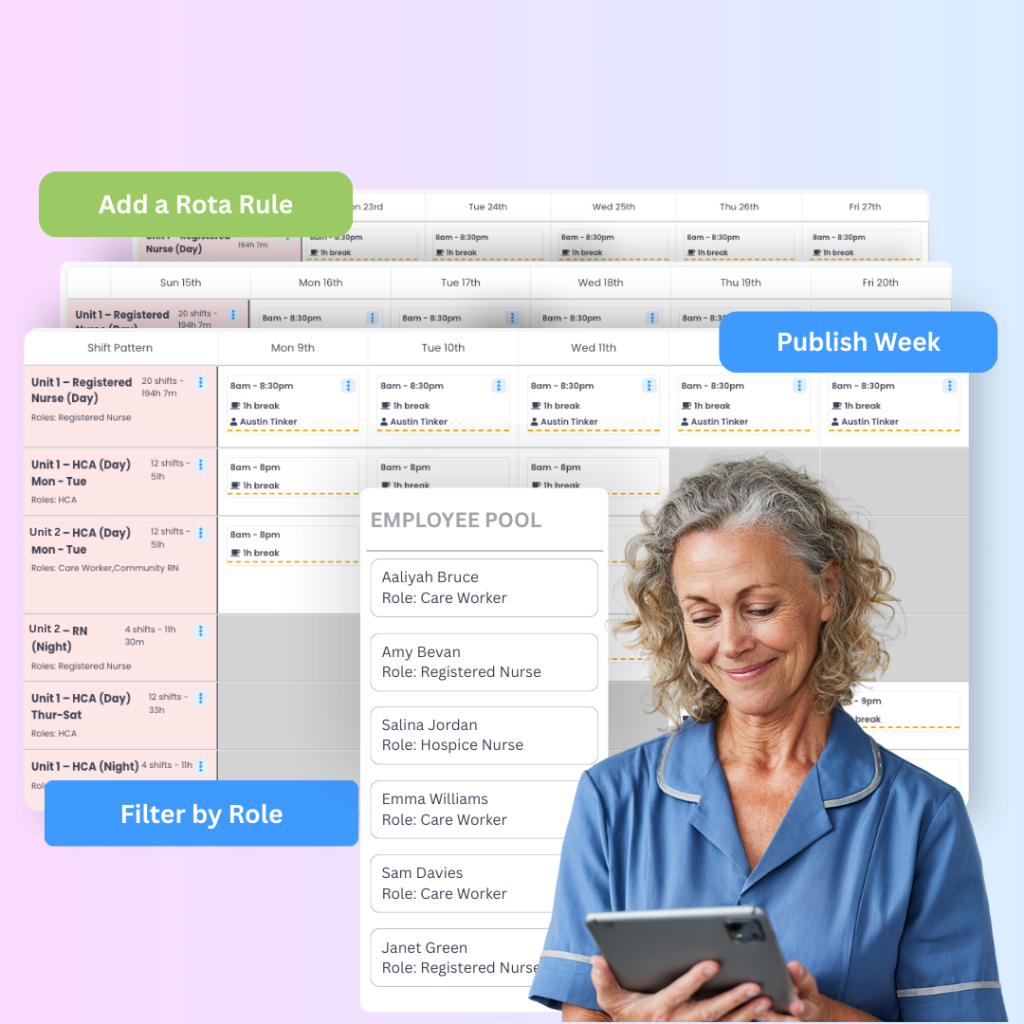
Instead of using multiple trackers to build, check and update schedules, managers can work from one clearer system and review rotas across multiple weeks at a time, such as three or four weeks, making patterns, coverage and fairness easier to spot.
Evalu-8 HR is particularly relevant for hospices that want rota software to do more than hold shifts. It is built to support clearer decision-making around how staffing is actually planned.
Want to see how rota management software supports structured scheduling
Visit our rota management software for hospices page.
Who Evalu-8 HR is likely to suit best
Evalu-8 HR is likely to be a strong fit for hospices that:
manage complex shift patterns
need better visibility of leave and contracted hours
want to move away from spreadsheet-based rota planning
need coverage-based rota support
operate across more than one team or service
want rota planning connected to the wider HR picture
It may be especially useful for organisations that have reached the point where manual rota planning is no longer just inefficient, but risky.
Signs you are ready to buy hospice rota software
If you are unsure whether now is the right time to invest, these are usually the clearest buying signals:
- rotas take too long to build or check
- managers do not trust the final rota without manual review
- staff raise concerns about fairness or missed hours
- nights, weekends or leave are hard to balance properly
- coverage gaps are being spotted too late
- spreadsheets are becoming harder to maintain than the rota itself
When those signs are present, the question is usually not whether software is needed. It is whether the current process can keep up much longer.
Summary
The best rota software for hospices should do more than schedule shifts. It should help managers balance coverage, contracts, leave, fairness and staffing visibility in one place.
For buyers, the real decision is not just which system has the longest feature list. It is which system makes hospice rota planning more accurate, more visible and easier to manage day after day.
Evalu-8 HR is one option built with that kind of complexity in mind. For hospices looking to move beyond spreadsheets and into a more structured approach to rota planning, it offers a stronger operational fit than basic scheduling tools.
FAQs
Rota software for hospices is a scheduling system designed to help hospice teams plan shifts, manage staffing coverage, track contracted hours and connect rota planning with wider HR processes such as leave and absence.
Generic rota tools can work for simple shift planning, but hospices often need more visibility of coverage, leave, mixed contracts and working patterns than basic tools provide.
Hospices should look for visibility of contracted hours, leave integration, support for coverage-based planning, fairness across the rota cycle and a system that can handle mixed contracts and changing staffing needs.
Yes. Evalu-8 HR is designed to support more structured rota planning, including coverage-based rotas, mixed contracts, leave visibility and clearer rota oversight for hospice teams.