

An HVAC RAMS may describe refrigerant recovery, cleaning a coil, applying sealant, using an adhesive, or completing brazing work, while the related safety data sheets and COSHH assessments sit in a different folder. The method tells the engineer what to do, but the information explaining exposure, handling, storage, first aid and emergency response is difficult to reach.
Keeping RAMS and COSHH together does not mean pasting every safety data sheet into a large job pack. It means making sure the safe sequence reflects the actual substances and exposure involved, while the engineer can reach the supporting assessment and current product
Start with the product and the way it will be used
Maintain a controlled inventory of products used by the team, including the manufacturer, exact product name, current safety data sheet, and the tasks for which it is approved. Similar-looking cleaners, oils and sealants can have different hazards and controls, so do not rely on a generic description when the product is known.
The safety data sheet is a source for the assessment, not the assessment itself. HSE guidance is explicit that an SDS helps users assess risk but does not replace a COSHH assessment. The business still needs to consider how much is used, how exposure can occur, where the work happens, who may be affected, and which controls are suitable.
That distinction matters in HVAC work. A cleaner used briefly outdoors does not create the same exposure as the same product sprayed in a small plantroom. Brazing in a ventilated roof area presents different surrounding conditions from work above a ceiling in an occupied building.
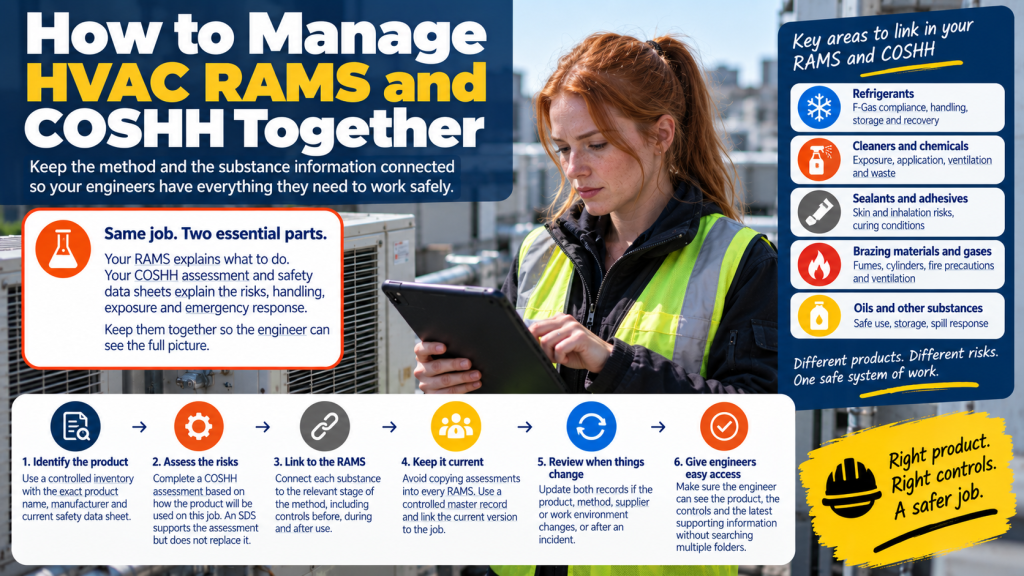
Connect each RAMS stage to the relevant substance controls
The method should identify where a substance enters the work and what must happen before, during, and after use. This includes transport to site, storage, decanting where applicable, application, ventilation, spill response, waste, and return of containers or cylinders.
For refrigerants, the RAMS should reflect the actual gas and task while remaining connected to the company’s F-Gas arrangements. GOV.UK guidance states that individuals working with F-gas need the correct personal qualifications, and companies servicing stationary refrigeration, air-conditioning and heat-pump equipment for other businesses require appropriate certification.
For cleaners, sealants, oils and adhesives, check skin and inhalation exposure, compatibility, curing or drying conditions and interaction with occupants or ignition sources. For brazing materials and gases, deal with fumes, cylinders, fire, and ventilation as part of the method rather than leaving them inside an unattached SDS.
Avoid duplicating information that will drift
If the same COSHH assessment is copied into dozens of RAMS, a product change or revised control can leave several old versions live. Keep a controlled master assessment and link or attach the current version to the relevant RAMS.
The RAMS should explain how the control applies to this job, while the COSHH record holds the fuller assessment of the substance and task. Record the product version or identifier so the team can see that the two records match.
Evalu-8 EHS allows RAMS and COSHH to sit within the same EHS environment, alongside training, equipment and other safety records. That can reduce the gap between the substance listed in the safe method and the assessment the engineer is expected to follow.
Review both records when something changes
A new product, supplier substitution, different application method, or changed work environment may affect both the COSHH assessment and the RAMS. Decide which record owns the core substance control and which job-specific detail must be updated.
If a near miss, spill or reported symptom suggests the existing control was not effective, review the assessment and any reusable RAMS content that relies on it. Do not correct only the document from the job where the problem was found.
The practical test is whether the engineer can see what product is being used, understand the controls for the way it will be used on that site, and reach the current supporting information without searching several folders. When those pieces agree, RAMS and COSHH operate as one safe system of work rather than two compliance records that happen to mention the same substance.