
RAMS, which stands for Risk Assessment and Method Statement, are an integral part of project management. They help ensure the safety and well-being of workers and the general public during construction projects. As a H&S professional, you may wonder if you can write your own RAMS. In many cases, you can, as long as you have a good understanding of the task, the risks involved, and the control measures needed to carry out the work safely.
In this article, we will delve into the basics of RAMS, explore their importance in project management, examine the legal requirements, and provide steps to help you write your own RAMS in under 10 minutes. As more businesses move away from static templates and manual processes, RAMS software is also becoming a useful way to create, manage, and update RAMS more efficiently.
How Evalu-8 EHS Simplifies Your RAMS Process
Evalu-8 EHS’ integrated RAMS feature lets you draft, share, and update your Risk Assessment and Method Statement in minutes using industry-vetted templates and real-time collaboration tools. Automated review reminders and a full audit trail help ensure your documents stay current and compliant, while seamless integration with rota planning and time and attendance means the right RAMS reaches the right team member exactly when they need it, with no extra admin and no paper chase.
As part of a wider RAMS health and safety software approach, Evalu-8 EHS helps businesses manage RAMS more consistently within their broader health and safety processes. This means teams can keep documents easier to review, update, and communicate without losing sight of the fact that a RAMS still needs to be written and checked by a competent person.
Helpful Summary
Overview: This article explains how to create your own RAMS (Risk Assessment and Method Statement) quickly and effectively. It covers the basics of RAMS, outlines key legal considerations, and walks through a four-step process: identifying risks, assessing their severity, implementing controls, and reviewing the document so you can produce a clear, practical RAMS in less time.
Why trust us: We work closely with health and safety processes in real-world operational environments and understand the pressures of keeping people safe, meeting legal duties, and keeping projects moving. This guidance is informed by established health and safety principles, common industry practices, and the practical realities of managing risk on site.
Why it matters: Well-written RAMS are more than paperwork. They help prevent accidents, protect workers and the public, and support smoother project delivery. A clear and up-to-date RAMS can reduce confusion, improve communication on site, and help create a more proactive safety culture.
Action points:
- Use the four-step process to draft your RAMS quickly and clearly.
- Involve supervisors and operatives to uncover practical risks and site-specific hazards.
- Prioritise risks by likelihood and impact so controls are focused where they matter most.
- Put control measures into practice and sense-check them with the people doing the work.
- Review and update your RAMS whenever project conditions, materials, methods, or risks change.
Steps to writing your own RAMS
Identifying potential risks
The first step in writing your own RAMS is to identify potential risks associated with the project. This requires a comprehensive assessment of the tasks involved, the working environment, and the equipment used. Engage with relevant stakeholders, such as supervisors and workers, to gather insights and ensure all potential risks are considered.
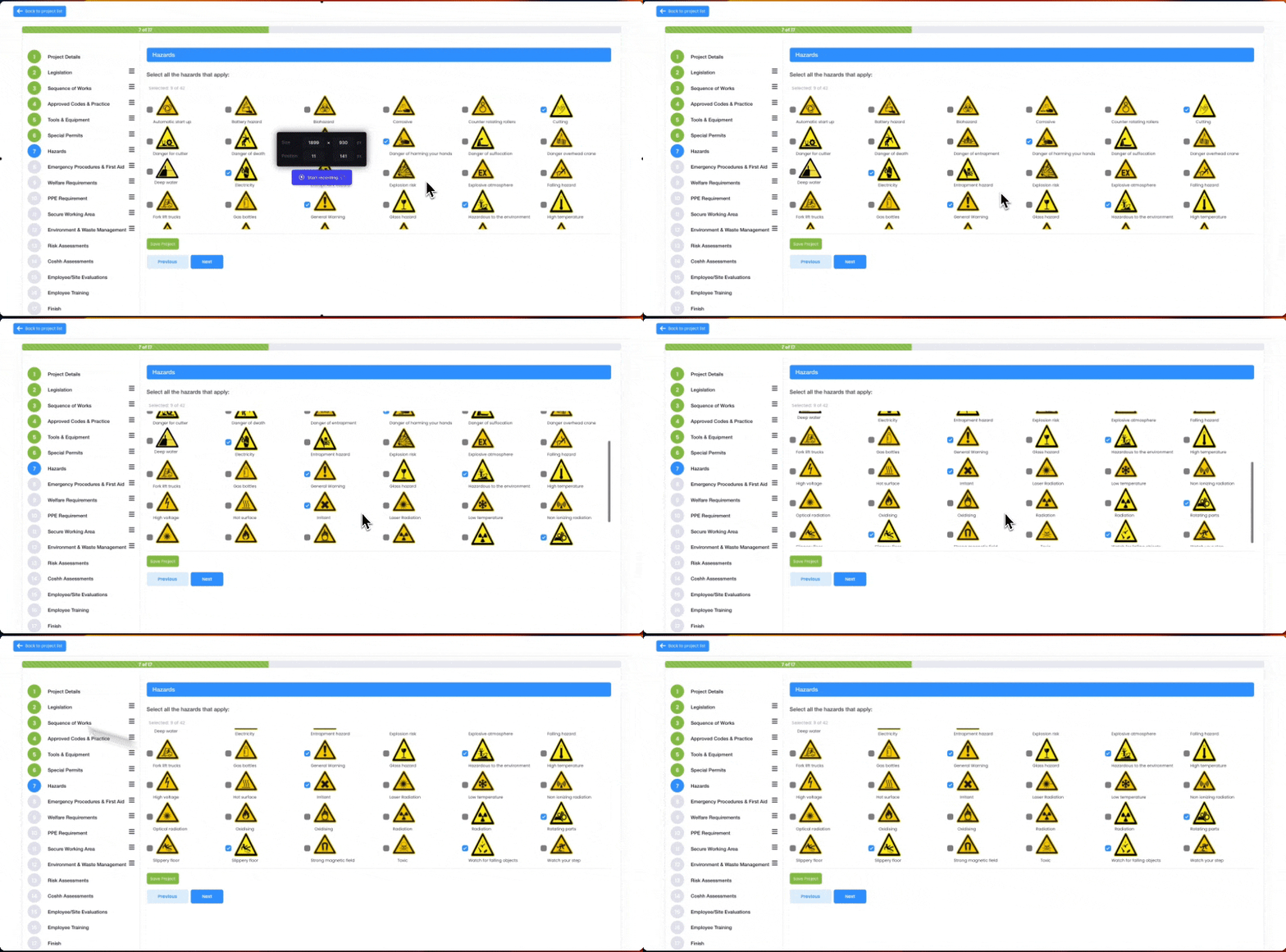
Quickly identify and include risks in your RAMS with Evalu-8 EHS software
During this process, it is useful to consider previous incidents, near misses, or recurring issues from similar projects. Learning from past experience can help you identify risks earlier and put better controls in place from the outset. Industry guidance, site-specific information, and relevant regulations can also help shape a more accurate and practical RAMS.
Assessing the severity of risks
Once potential risks have been identified, the next step is to assess how serious they are. This involves looking at both the likelihood of the risk occurring and the potential consequences if it does. By assessing severity in a structured way, you can prioritise the most important risks first and focus control measures where they will have the biggest impact.
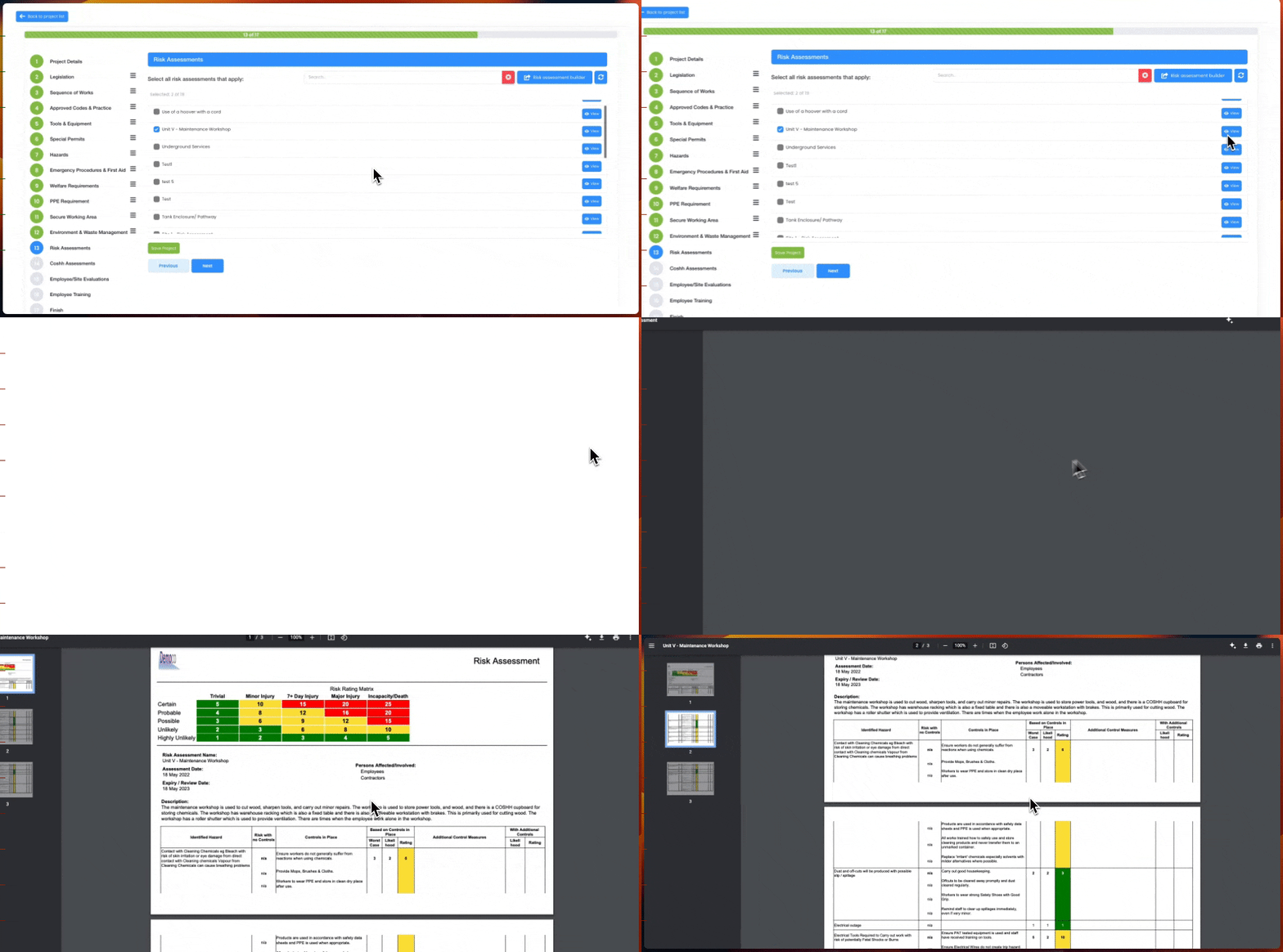
Easily include Risk Assessments in your final RAMS document with Evalu-8 RAMS software
When assessing the severity of risks, it is crucial to consider both the immediate and long-term impacts. While some risks may have immediate consequences, others may have long-lasting effects on the health and safety of workers. By taking a holistic approach to risk assessment, you can ensure that all potential hazards are adequately addressed.
Implementing control measures
After assessing the severity of risks, the next step is to implement control measures. These measures should be designed to eliminate or minimise risks and should be specific to each task and hazard identified. Effective control measures may include providing training to workers, implementing safety signage, and ensuring the use of personal protective equipment.
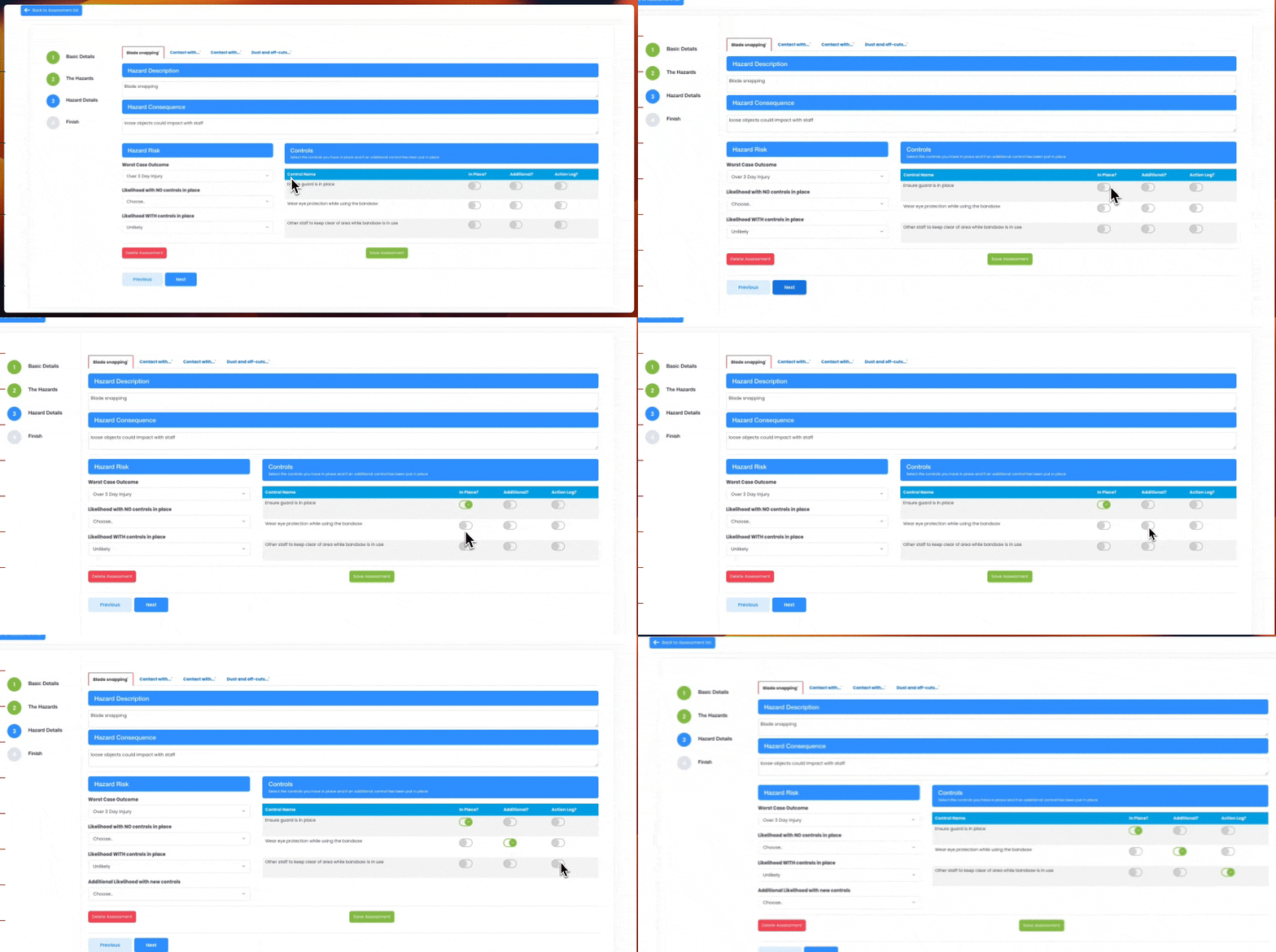
Include control measures in one click
It is important to involve workers in the development and implementation of control measures. Their firsthand knowledge and experience can provide valuable insights into the practicality and effectiveness of proposed measures. By fostering a culture of collaboration and open communication, you can create a safer working environment for everyone involved in the project.
Monitoring and reviewing the process
Lastly, it is crucial to monitor and review the effectiveness of the RAMS on an ongoing basis. Conduct regular inspections and provide a feedback loop for workers to report any issues or suggest improvements. This continuous monitoring and review process will help identify any changes in project conditions and ensure that RAMS remain up to date and relevant.
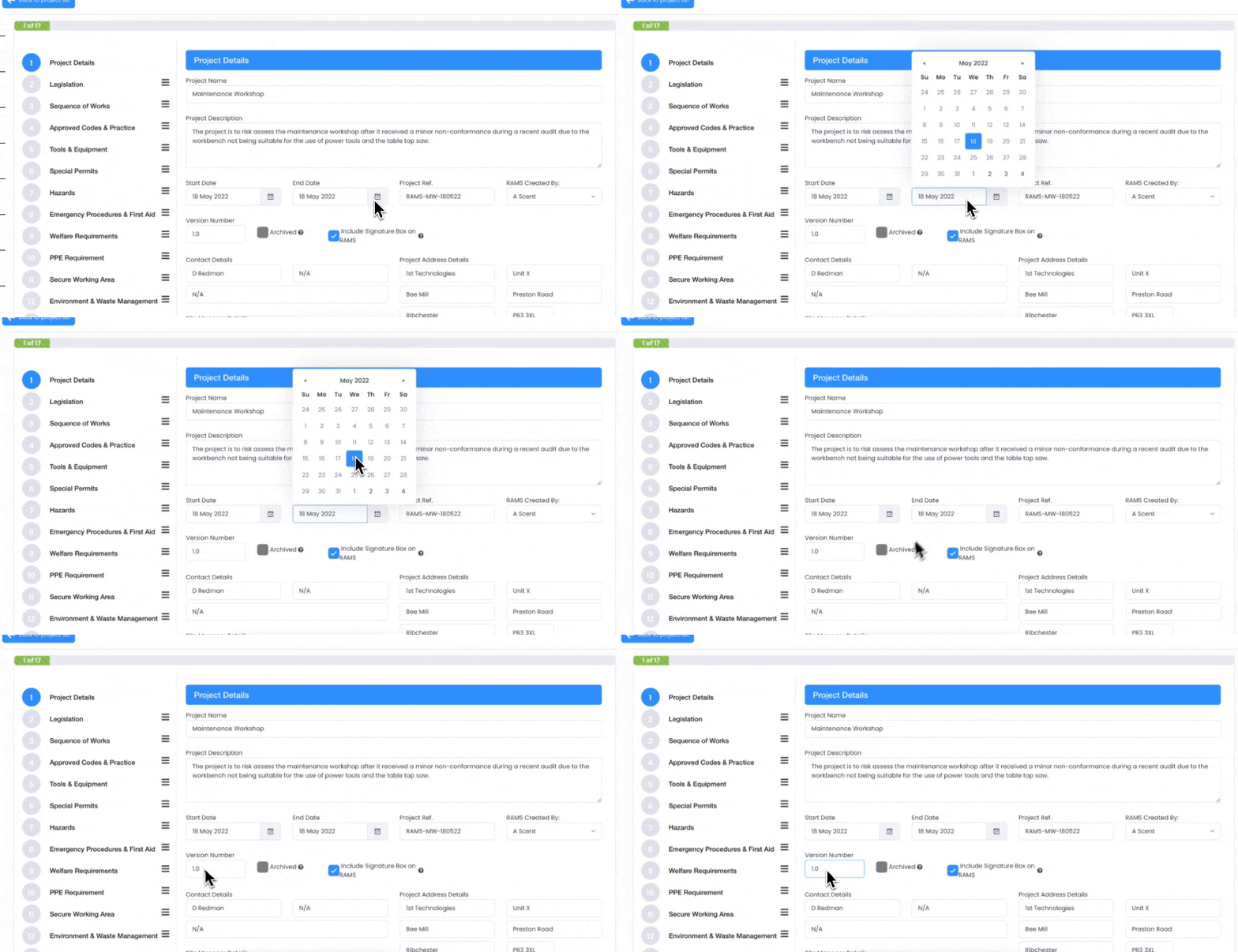
With Evalu-8 EHS, you can always have the most up to date version and you can set end dates for reveiw
Regularly reviewing the RAMS also provides an opportunity to learn from any incidents or near misses that may have occurred during the project. By analysing these events, you can identify any gaps in the risk assessment process and make necessary adjustments to prevent similar incidents in the future. This proactive approach to safety management helps create a culture of continuous improvement and ensures the well-being of everyone involved in the project.
See how to write a RAMS in under 10 minutes with Evalu-8 EHS
Common mistakes to avoid when writing RAMS
Overlooking minor risks
One common mistake when writing RAMS is focusing solely on major risks and overlooking minor ones. While major risks may have more severe consequences, minor risks can still lead to accidents and injuries. It is important to assess and address all risks, regardless of their severity, to maintain a safe working environment.
Neglecting to update RAMS
Risks and project conditions can change over time. Neglecting to update RAMS regularly can render them ineffective and increase the likelihood of accidents. Make sure to review and update RAMS whenever there are significant changes to the project scope, tasks, or operating procedures.
Inadequate training for staff
Providing adequate training for staff is essential to ensure they understand the RAMS and can implement the necessary safety procedures. Inadequate training can lead to misunderstandings or missed steps in the RAMS, which can increase the risk of accidents. Invest in comprehensive training programs and provide regular refresher courses to keep staff up to date.
In conclusion, while writing your own RAMS is possible, it is important to understand the basics, comply with legal requirements, and follow a structured approach. RAMS are essential for project management, ensuring the safety of workers and preventing accidents. By avoiding common mistakes and continuously reviewing and updating RAMS, you can create an effective framework that promotes a culture of safety within your organisation.